

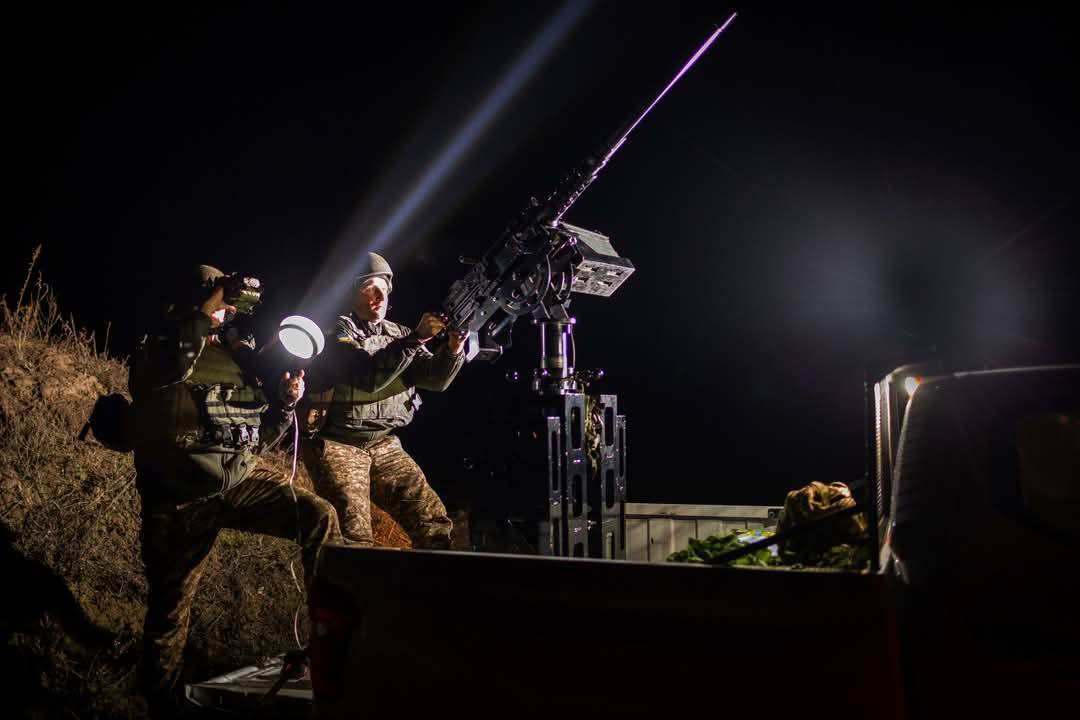

In May, Ukraine’s air defense increased the effectiveness of intercepting Russian drones and missiles despite a rise in attack intensity.
According to daily reports from the Air Forces of the Armed Forces of Ukraine, during mass attacks last month the Russian forces used a total of 8,351 airborne weapons. By comparison, there were about 6,700 in April.
Thus, the intensity of attacks has remained at record levels for several months in a row.
In May, Ukrainian air defense intercepted 7,588 drones and missiles:
- UAVs such as Shahed, Gerbera, Italmas, etc.: 8,150 launched, 7,476 intercepted; interception rate – 91.73%
- Cruise and ballistic missiles: 211 launched, 112 intercepted; interception rate – over 53%
The overall interception rate during mass strikes reached 90.75%. Among missiles destroyed in May:
- 2 Kh-47M2 Kinzhal aeroballistic missiles (highly difficult to intercept)
- 50 Kh-101 cruise missiles
- 10 Iskander-M / KN-23 ballistic missiles
- 11 Kalibr cruise missiles
- 14 Kh-59/Kh-69 guided air-launched missiles
- 24 Iskander-K cruise missiles
Ukrainian defenders of the sky are demonstrating results unmatched by any other army, but air raid alerts must be heeded under all circumstances. When air defenses are repelling attacks, people must remain in shelters.
On the night of May 13, the Rusian forces launched a massive attack lasting more than 30 hours, attempting in multiple waves to overload Ukraine’s air defense system.
A total of 1,567 drones and 56 missiles of various types were used. The drone interception rate was 93%, and the missile interception rate was 72%. Air defense forces operated almost continuously, using only short pauses for equipment reloading and personnel rest.
An especially large and complex attack occurred on the night of May 24. Its key feature was the use of a large number of airborne weapons with different flight profiles arriving almost simultaneously in several waves.
At that time, the Russian forces launched 600 drones of various types, 30 conventional ballistic missiles, as well as Kinzhal and Zircon missiles, which also follow ballistic trajectories toward their targets, more than 50 cruise missiles, and also fired two intermediate-range ballistic missiles Oreshnik.
Despite the complexity of the attack, Ukrainian air defenders intercepted 91% of drones and more than half of all missiles.
Even under record pressure, air defense continues to protect the population and critical infrastructure. Every downed missile and drone saves civilian lives, reduces destruction, and significantly disrupts Russian plans.
However, under such record-level strain, there is a critical need for interceptor missiles capable of shooting down ballistic threats. Ukraine therefore relies on partners’ support in acquiring PAC-3 missiles for Patriot air defense systems, which are capable of intercepting ballistic missiles. This was discussed in talks with partners ahead of the upcoming Ukraine Defense Contact Group meeting in the “Ramstein” format, scheduled for June.