


The situation in the south is quite difficult but without any drastic changes. One of the main features of the war in the steppe is a larger “kill zone” than on other parts of the front. This was stated on air by the spokesperson for the Southern Defense Forces, Vladyslav Voloshyn.
“The most intense fighting recently has traditionally been on the Huliaipole direction. It is also fairly tense on the other two Zaporizhzhia directions—Orikhiv and Oleksandrivka—and the enemy continues attempts to conduct strikes and kamikaze drone attacks in the Dnipro or Kherson directions,” Voloshyn said.
According to him, over the past 24 hours, 50 combat clashes were recorded in the south, most of them—36—on the Huliaipole direction. The Russian forces tried to assault Ukrainian positions in Huliaipole, both south and north of this settlement. In addition, the Russian attempted assaults near Bilohirya and north of Huliaipole, including Dobropillia and Pryluky, trying to storm Ukrainian positions and infiltrate deeper into our defenses.
Voloshyn noted that in recent days the Russian forces has conducted fewer kamikaze drone strikes, but the number of airstrikes continues to grow.
“Over the past day, more than 20 airstrikes were recorded using 70 guided aerial bombs,” he reported.
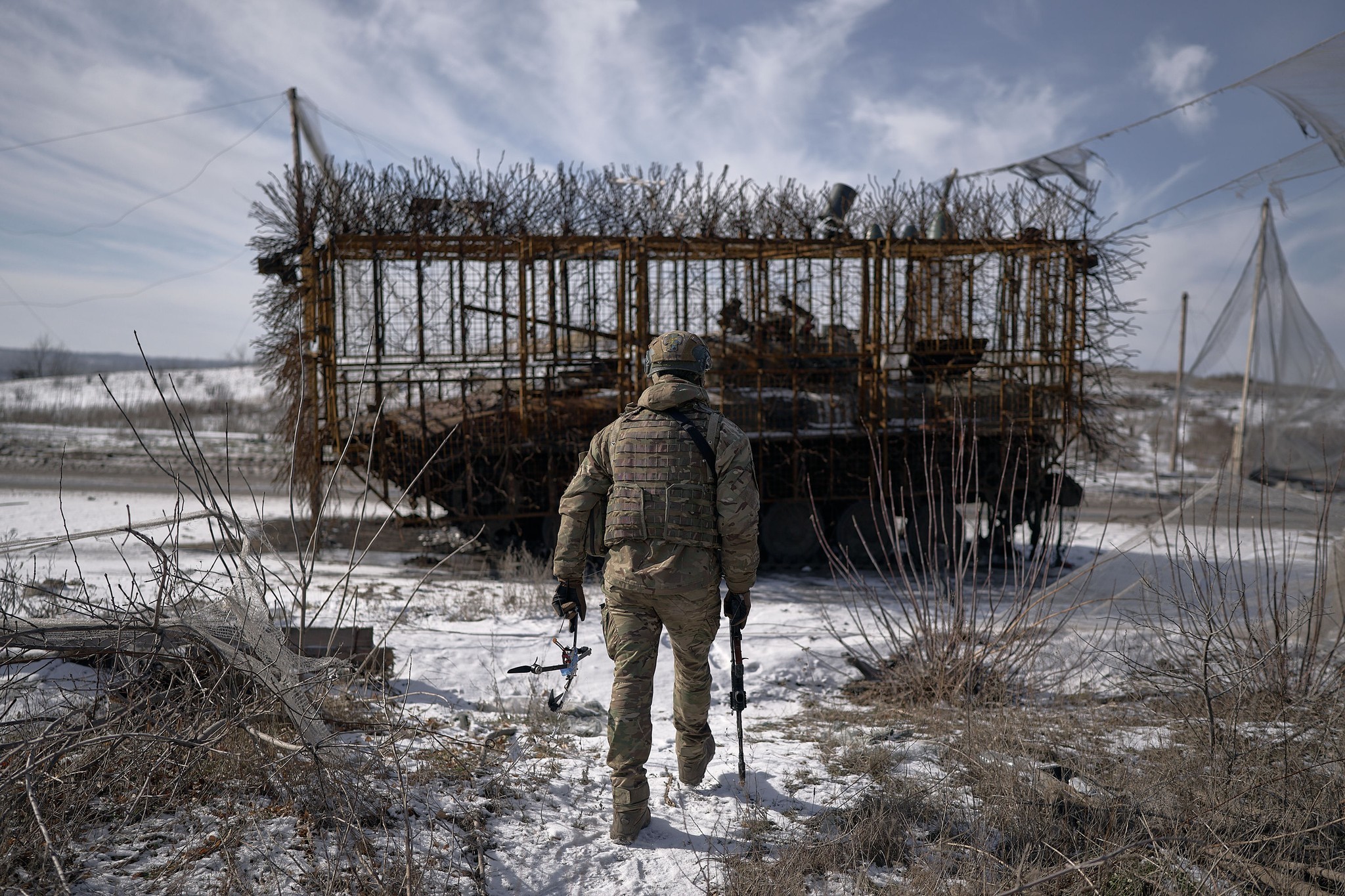
The spokesperson added that both sides are increasingly using unmanned aerial vehicles (UAVs) and ground robotic systems on the battlefield. The Russian forces employs up to 2,000 FPV drones, 150–200 loitering munitions, and 200–250 UAVs used for reconnaissance.
Moreover, the Russian troops has recently been widely using ground robotic systems for logistics and evacuating wounded personnel from the battlefield.
Describing the specifics of combat in the steppe, Voloshyn noted that the frontline here stretches over 100 km. The Russian forces cannot bypass Ukrainian positions unnoticed, so it resorts to other methods, such as extensive use of electronic warfare systems.
“One of the main features of the war in the steppe is that the ‘kill zone’—the area under dense, overlapping fire—is much wider than in other terrain. Today, this so-called ‘kill zone,’ the strip from the frontline in which everything that moves is targeted, already reaches roughly 15 to 20 km from the line of contact,” the spokesperson explained.