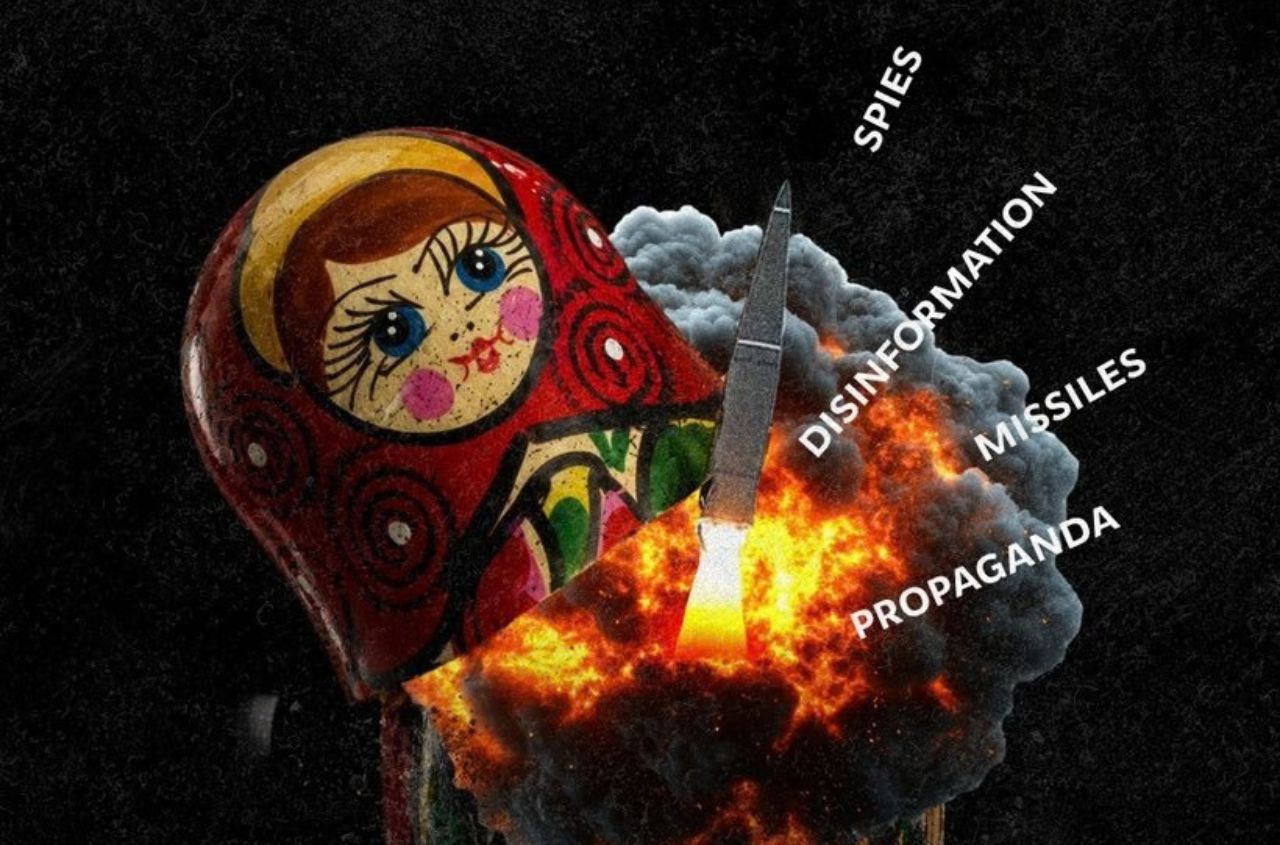




Moscow is increasingly using tools of economic coercion to keep former Soviet republics within its sphere of influence. The latest stage of this strategy has been large-scale restrictions against Armenian alcohol producers, which analysts describe as a politically motivated response to Yerevan’s rapprochement with the European Union. By exploiting the structural dependence of neighboring economies on its market, the Kremlin is turning trade relations into an instrument of hybrid warfare, repeating a scenario previously tested on Georgia, according to analysts at the Robert Lansing Institute.
Rospotrebnadzor announced the suspension of sales and the withdrawal from circulation in Russia of wines and cognacs from several Armenian producers, including Vedi-Alco, the Abovyan Brandy Factory, and the Shahnazaryan Wine and Brandy House. The agency stated that laboratory tests found that products such as Getap Vernashen, Armenian brandy 5 Stars, and Shahnazaryan XO did not meet mandatory physical-chemical standards. This move continues a series of trade restrictions, including bans on Jermuk mineral water and flower imports. It is evident that the removal of alcohol is a response to Yerevan’s attempts to pursue an independent foreign policy and a course toward closer ties with the EU.
Russia is deliberately targeting the alcohol sector because it is critically dependent on its market: previously, exports to Russia accounted for up to 90% of total production. By restricting imports, the Kremlin is using economic pressure as leverage over the Armenian leadership. Despite attempts to present this as a technical regulatory measure, the political context confirms the geopolitical nature of the sanctions. The measures coincide with Armenia’s distancing from Moscow after the Karabakh crisis, criticism of the CSTO, and the search for new partners in the security sphere. Moscow’s goal is to pressure not only the government of Nikol Pashinyan but also business groups whose stability depends on access to Russian consumers.
The situation mirrors the pressure campaign against Georgia in 2005–2009. At that time, under the pretext of sanitary issues, Moscow imposed an embargo on Georgian wine, mineral water, and agricultural products. In reality, this was driven by Georgia’s pro-Western course under Mikheil Saakashvili and its aspiration to join NATO. The Georgian case revealed key elements of Russia’s strategy: the use of regulatory bodies as political instruments, strikes at symbolic national industries, and exploitation of market dependence. Economic restrictions allow Moscow to punish neighbors while avoiding direct military confrontation, forming part of hybrid coercion alongside energy pressure and information operations.
Although the Georgian embargo caused damage, in the long term it failed: Georgia diversified its exports and modernized standards, accelerating its reorientation toward Europe. This precedent is important for Armenia, which may also be pushed by Russian measures to seek new markets in Asia and the Middle East to ensure national security. Moscow’s actions reflect concern over its weakening influence in the South Caucasus. However, the repeated use of coercion undermines Russia’s reputation as a stable partner, leading neighboring countries to see economic distancing from Russia as the only way to protect sovereignty.
The wine embargo against Georgia once served as a prelude to the 2008 war, demonstrating the Kremlin’s willingness to escalate. Today, similar tactics are being applied against Ukraine, Moldova, and now Armenia. Restrictions on Armenian exports are not merely a trade dispute but a signal to all post-Soviet states that foreign policy independence will carry financial consequences, analysts note. The Kremlin expects economic hardship to generate domestic discontent and strengthen pro-Russian forces. However, as experience shows, such policies often produce the opposite effect, ultimately breaking down the regional ties that Moscow is trying to preserve.