

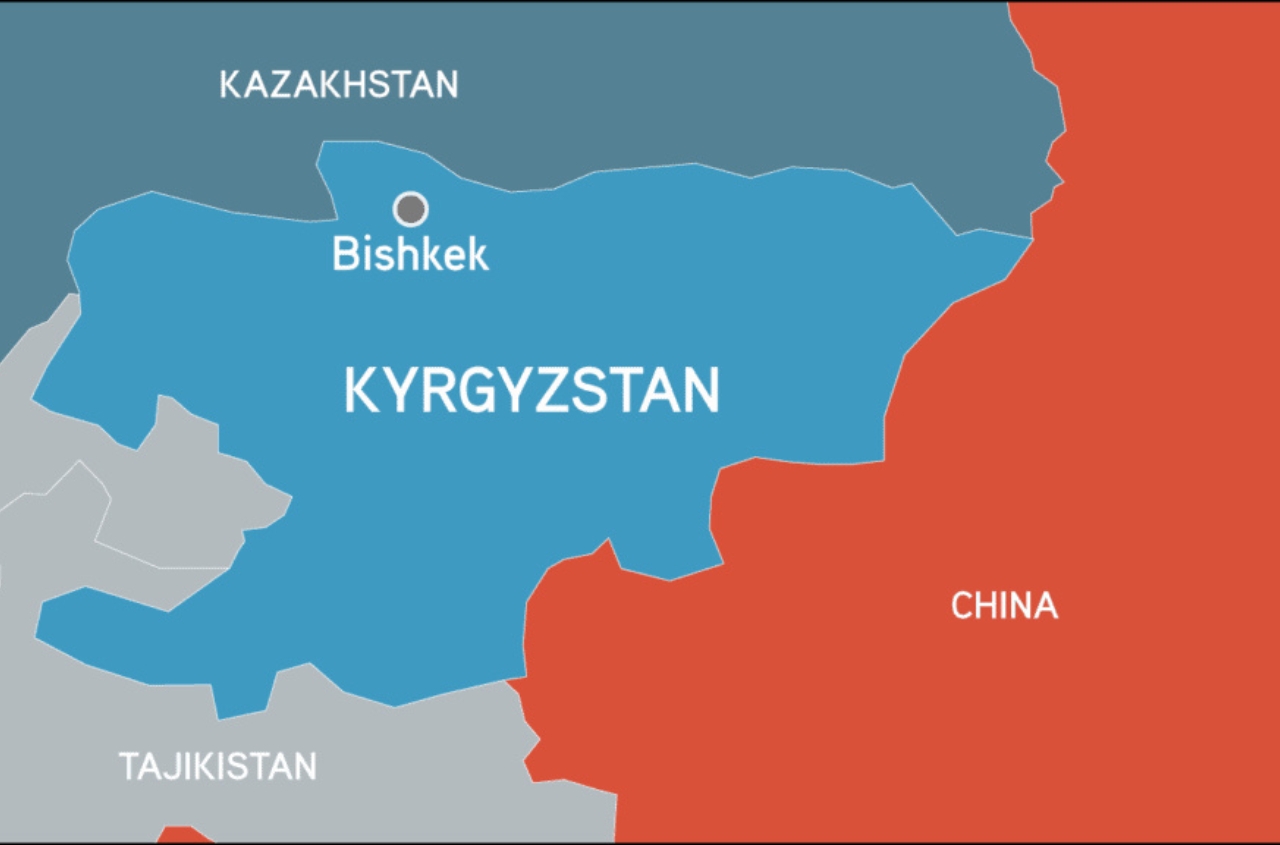

Kyrgyzstan is gradually reshaping its foreign policy, shifting from its traditional orientation toward Moscow to deeper military and military-technical cooperation with China. A symbolic milestone in this process was the recent official visit of Chinese Defence Minister Dong Jun to Bishkek and his talks with Kyrgyz Defence Minister Ruslan Mukambetov, reports the RLI. During the meeting, the sides focused on implementing previously reached agreements in military-technical cooperation, providing grant assistance, and strengthening the logistical and material base of Kyrgyzstan’s armed forces. As a result of the talks, 22 documents were signed, covering military education, exchange of experience, and expanded cooperation in modern technologies.
This visit highlights Kyrgyzstan’s strategic pivot, as it seeks to reduce risks linked to excessive dependence on Russia and is restructuring its foreign policy by deepening military, economic, and infrastructure cooperation with China. While decision-making used to be centered in Russia, resources and influence are now increasingly concentrated in Beijing. Kyrgyzstan needs to adapt to this new balance of power and build relations where real opportunities exist. For many years, the country relied on Russian protection, but border clashes in the Tajikistan area and the situation in Armenia have shown the limits of Russia’s support. Bishkek is now looking for reliable partners capable of providing practical, not merely rhetorical, assistance.
Kyrgyzstan intends to move away from paying for outdated Russian equipment, which is often only suitable for decommissioning, and instead prioritize modern technologies and drones from China, which better meet current requirements and improve military capability. China is able to provide immediate technical assistance, while Russia is engaged in war. Kyrgyzstan’s security increasingly depends on cooperation with China, which demonstrates economic strength, unlike Russia’s uncertain commitments. A dual-security model is emerging: Russia remains a residual player providing Soviet-era structures and symbolic guarantees, while China becomes the main provider of functional capabilities.
Cooperation with China involves strategic trade-offs: military assistance is often embedded in broader infrastructure cooperation, increasing financial and governance dependence. Expanded surveillance capabilities, while strengthening control, may also deepen authoritarian tendencies. Kyrgyzstan’s reorientation reflects a regional trend toward multi-vector foreign policy, but the balance is becoming asymmetric: Russia’s influence is declining, while China’s influence is growing through technology. Bishkek’s strategy is pragmatic: maintaining ties with Russia to avoid shocks, while deepening cooperation with China to fill capability gaps.
Trust in the CSTO (Collective Security Treaty Organization) within Kyrgyz elites has eroded; the organization is seen as a political instrument of Moscow rather than a collective defense mechanism. Military planners have drawn lessons from border clashes with Tajikistan, realizing the need for greater self-sufficiency. Beijing primarily supplies systems that enhance state control—from drones to integrated camera networks and facial recognition platforms. These dual-use systems strengthen internal security but can also be used to monitor opposition.
For the United States, this shift means reduced strategic access and the emergence of a competing security model based on technology and control, which marginalizes Washington’s influence. If current trends continue, risk-hedging strategies may evolve into a long-term structural shift in which China becomes the dominant security actor in the region.