

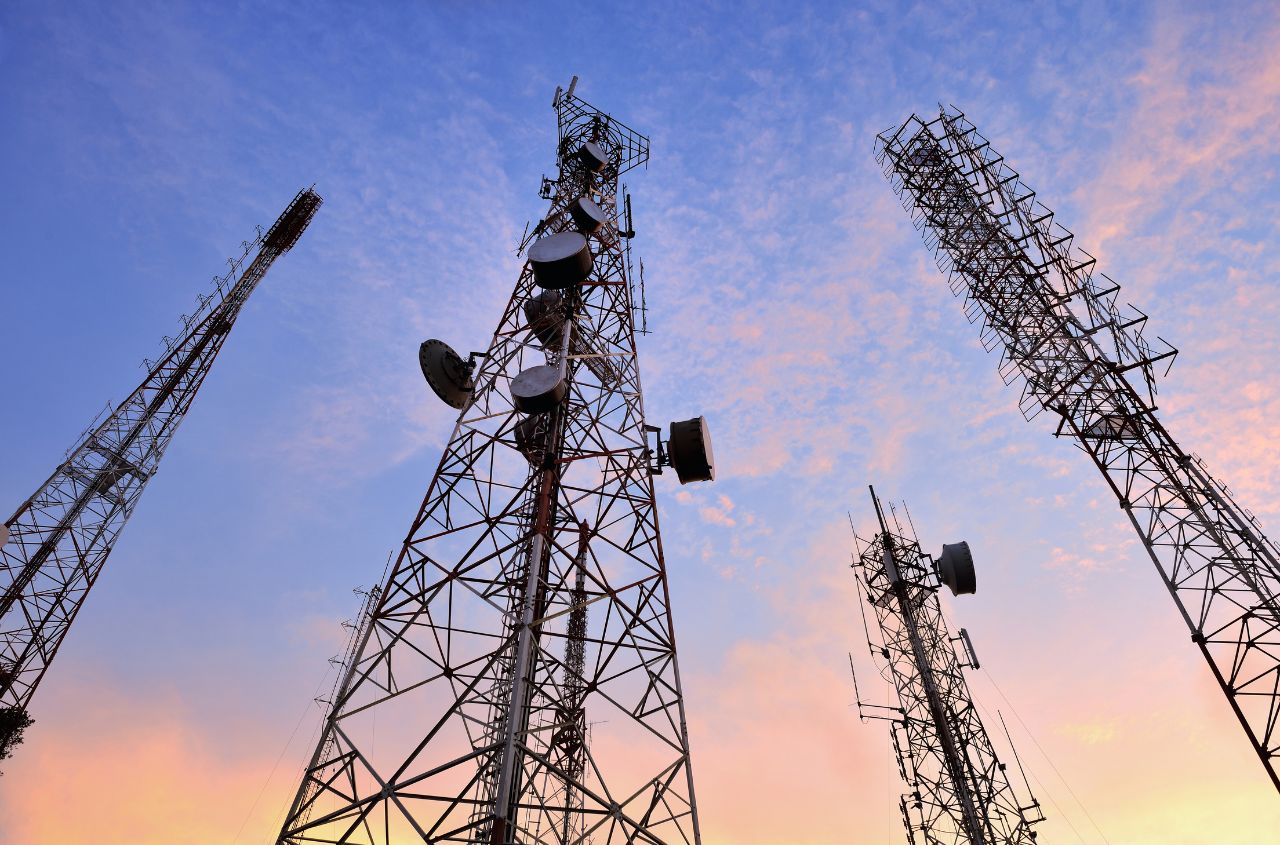
The need for the restoration and reconstruction of Ukraine’s telecommunications, digital, and media sectors amounts to $7.1 billion over 2026–2035, while total damages are estimated at $2.5 billion, according to the Rapid Damage and Needs Assessment (RDNA5) report, which assesses losses and needs resulting from Russia’s full-scale invasion.
The report notes that recovery priorities include repairing partially damaged telecommunications and postal infrastructure, and expanding backup systems such as emergency power and satellite connections.
According to the document, the restoration needs are concentrated in frontline and densely populated regions, with Donetsk, Zaporizhzhia, Kyiv, and Kharkiv regions accounting for over 65% of the demand. In terms of damages, Donetsk, Zaporizhzhia, Kherson, and Kharkiv regions account for 55% of total losses.
“Damages reflect lost revenues for private operators and postal service providers, increased operational costs due to repairs, and additional expenses for backup power generators,” the report states.
“Overall, the damage and losses disrupted access to information, education, and government services,” it adds.
The RDNA5 report was prepared jointly with the World Bank, the European Commission, and the UN. It covers the period from February 24, 2022, to December 31, 2025. According to the report, the total cost of recovery in Ukraine over the next decade is $588 billion, nearly three times higher than the country’s projected nominal GDP for 2025. The previous year’s needs assessment estimated $524 billion, the year before that $486 billion, and the year prior $411 billion.
RDNA5 estimates direct damages to Ukraine at $195 billion, compared with $176 billion in RDNA4 and $152 billion in RDNA3.