

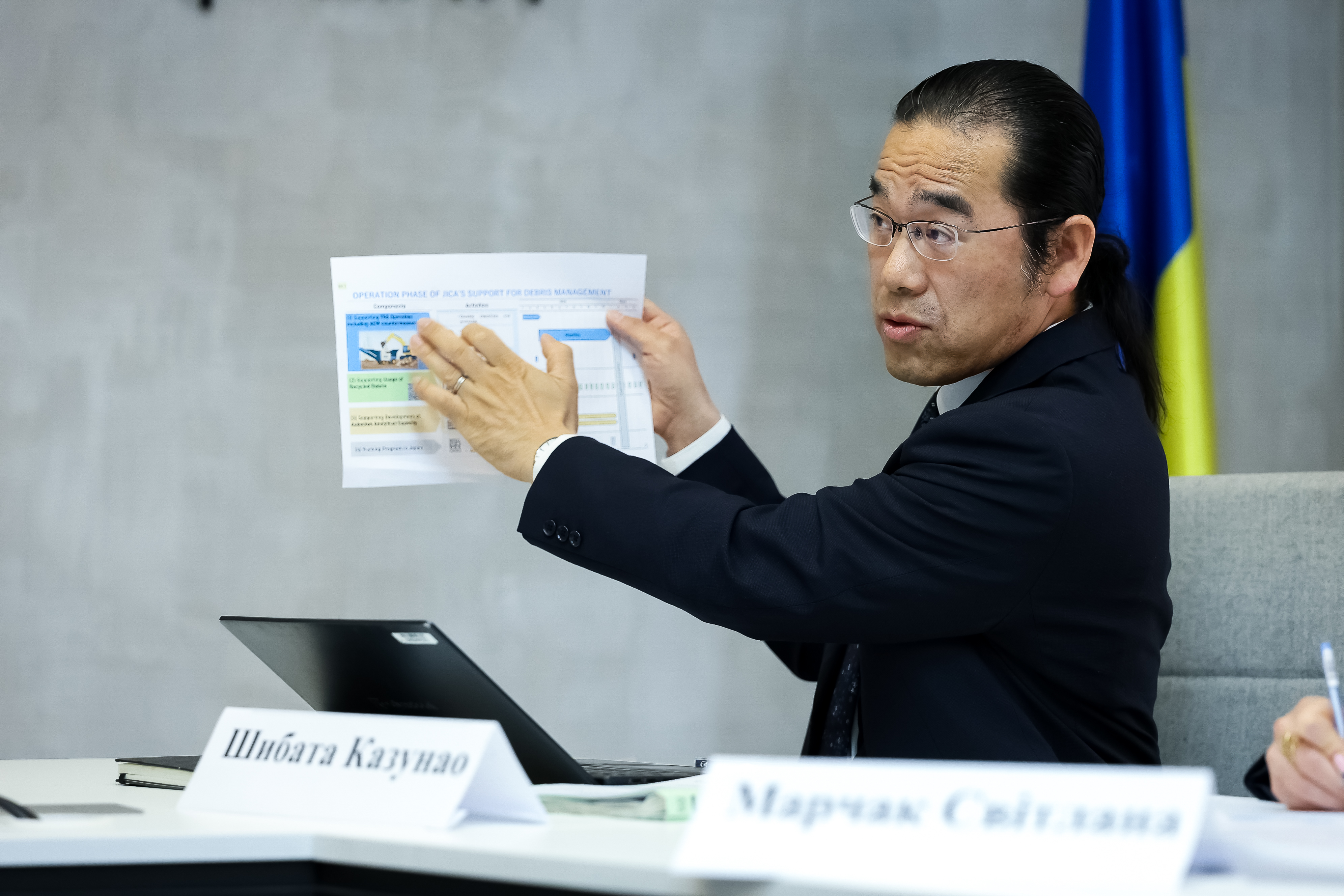

Ukraine and the Japan International Cooperation Agency (JICA) have reviewed a pilot project on construction and demolition waste management and discussed plans for the next cooperation phase covering 2027–2029.
The meeting brought together Ukrainian officials and JICA representatives, with a focus on moving from local initiatives to a nationwide system for handling war-related debris.
Deputy Minister Nataliia Kozlovska said construction waste is now present in at least six regions, stressing that “there is no region without destruction,” and calling for a scalable national approach. She outlined the need for clear roles for communities, contractors, and manufacturers, with an emphasis on recycling and reuse rather than landfill disposal.
Officials also highlighted key challenges, including the lack of unified rules for handling asbestos-containing materials and insufficient laboratory capacity for rapid testing of hazardous waste. JICA announced plans to supply laboratory equipment to Ukrainian institutions and expand training programmes for specialists.

The pilot project, launched in 2024, is being implemented in Kyiv region and five cities — Odessa, Dnipro, Kharkiv, Mykolaiv, and Kherson — and has already introduced waste-processing equipment, recycling initiatives, and training for local experts. Japanese partners also cited Borodianka as a successful example of turning demolition debris into materials for road construction.
Ukraine is also coordinating with the World Bank on similar projects, with officials now aiming to integrate international efforts into a single framework. The current JICA programme runs until September 2026, with both sides preparing its next phase.
According to estimates, around 14% of Ukraine’s housing stock has been damaged or destroyed, generating more than 6 million tons of demolition waste so far, though the actual volume is believed to be higher.