

A brief explanation about the anti-air drones the West is requesting from Ukraine to protect the Persian Gulf monarchies:
In short – this request from Western partners arose mainly because we know how to operate such defense systems on a larger scale and at a fraction of the cost compared to them.
But if we speak in more detail, readers might experience even a slight cognitive dissonance.
The fact is that Western countries had started working on this long before the full-scale invasion and did manage to create working prototypes of anti-air drones, which literally set the “trend.”
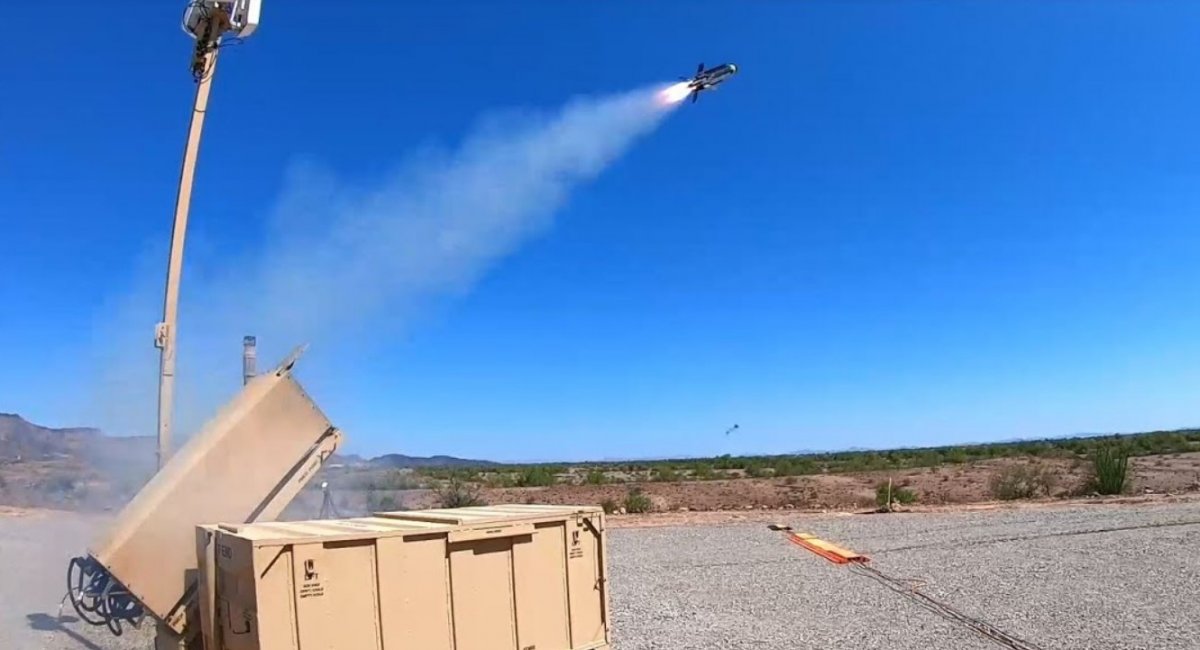
For example, the U.S. already had the FS-LIDS system in 2021. It combines subsonic Coyote Block 2 anti-air drones and their launchers, CUAEWS electronic warfare systems, multifunctional KuMRFS radars, optical-electronic UAV detection stations, and the FAAD C2 control system.
The engagement range for aerial targets is up to 15 km, but the Coyote Block 2 also has an option to operate in “surface-to-surface” mode.
Within FS-LIDS, the propeller-driven Coyote Block 1 could also be used, which is structurally very similar to the Switchblade. But, in short, as an interceptor, the Coyote Block 1 was, to put it mildly, largely ineffective.
At this point, a logical question arises: “So, why aren’t they succeeding?” Especially considering FS-LIDS was adopted by the U.S. Armed Forces back in 2018. The answer: it’s simply an insanely expensive system.
For illustration – in 2022, the Americans sold Qatar a single FS-LIDS system with a stock of 200 interceptor drones at an export price of $1 billion. Roughly the cost of one Patriot battery.
With such expenditure, it essentially didn’t matter what you shot down with, especially in the Persian Gulf. The reasoning was: if you have the money, why not shoot with a Patriot?
And in principle, this approach worked until recently, until the U.S. and allies in the Gulf faced particularly massive strikes from Iran, against which their resource and conceptual base proved unprepared.
It is precisely in this context that the request for help from Ukraine arose. Over more than three years of targeted efforts (starting from late 2022), we have learned to build and operate our anti-air drones—and we’ve learned to do it at a larger scale and far cheaper than our Western partners.