

At least 16 universities in Saint Petersburg—including MIPT, the Higher School of Economics (HSE), Bauman Moscow State Technical University, Plekhanov Russian University of Economics—and dozens of regional colleges are participating in a centralized Russian Ministry of Defense campaign to recruit students for the war in Ukraine. Students are promised up to 5.5 million rubles “per year,” a return to studies afterward, and “service in the drone troops, not on the front line.”
In January 2026, the Russian Ministry of Defense sent universities an official guide for persuading students to join the newly created drone units. Universities are required to report “completed work” to the Ministry of Defense’s main personnel directorate. Each faculty at Plekhanov University is required to send two students to the front every month, with group leaders forced to recruit them. A similar practice has been rolled out across universities throughout Russia. Students with academic debts are specifically targeted as the first group for “persuasion,” being offered an alternative to expulsion. They are given three days to decide.
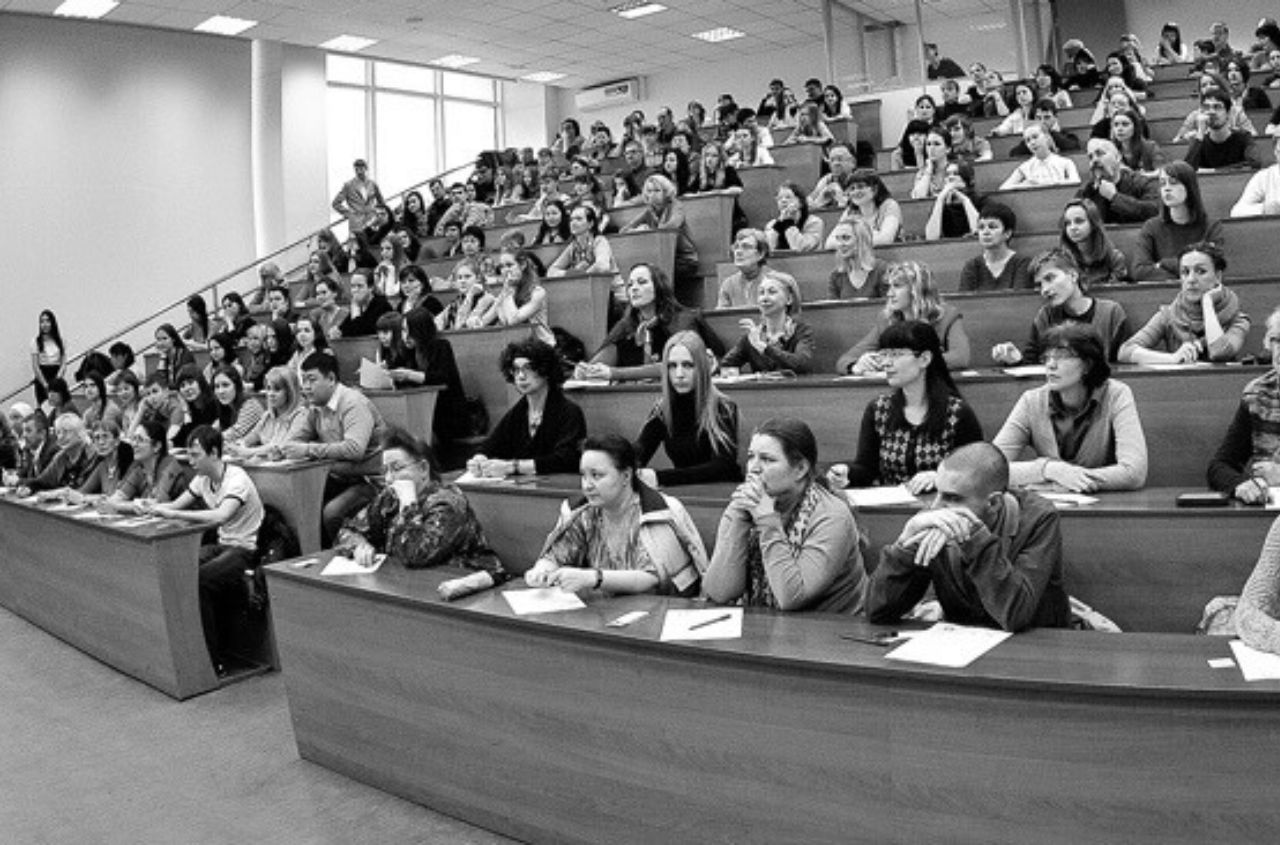
Recruitment advertisements have appeared in at least 16 Saint Petersburg universities: Saint Petersburg State University, GUAP, Polytechnic University, LETI, RANEPA, GASU, Makarov Naval Academy, Stieglitz Academy of Arts, Military Mechanics, and others—all postings appeared within the same week. Among Moscow institutions are MIPT, Bauman MSTU, and HSE. The standard “offer” includes money and a “special one-year contract” with academic leave granted for the duration of service. Saint Petersburg State University additionally offers 50,000 rubles from the university itself. At Bonch-Bruevich State University of Telecommunications, even women are being recruited, promised postgraduate places without exams upon returning. At the “shipbuilding” university (Naval Technical University), recruiters would pull students from classes one by one for a “discussion.”
The promised “right to leave after one year” turned out to be a fiction. HSE, which assured students of a one-year contract, in fact signed them to regular open-ended military contracts that cannot be terminated. Furthermore, standard Ministry of Defense contracts contain no restrictions by branch: command has the authority to assign a “drone operator” to any unit, including assault units.
When pressure fails, administrations resort to open humiliation. At the Novosibirsk College of Transport Technologies named after Lunin, Director Maria Kirsanova held a “disciplinary talk” after students massively refused to sign contracts. She called the students cowards for “coming to study to dodge the army.” This episode is symptomatic: the system expected obedience but encountered mass resistance—and responded with pressure and humiliation.
Universities in Russia are often the only chance for young people to change their lives. Now this opportunity is being openly manipulated: sign the contract, or lose your place. A system that cannot offer a real future relies on threats of expulsion and shaming students for fearing death.