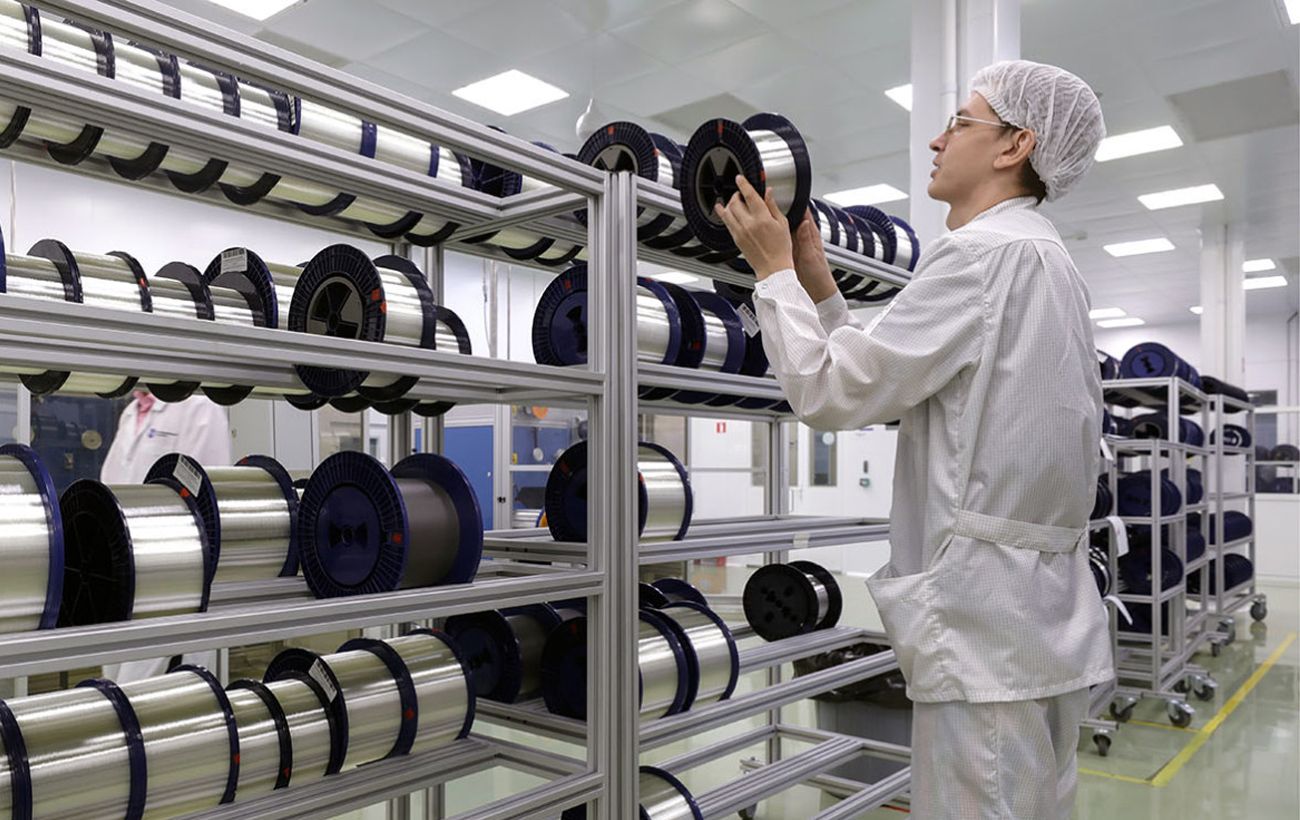

A new problem has emerged in Russia’s technology sector: the authorities have been forced to postpone the mandatory localization of optical fiber production by at least two years due to the shutdown of the country’s only plant manufacturing this product. The Russian Ministry of Industry and Trade has proposed temporarily allowing the use of imported optical fiber for cable production within Russia, while deferring the requirement to use domestic raw materials until 2028.
The decision was prompted by the stoppage of the “Optic Fiber Systems” plant in Saransk—the only facility in Russia producing optical fiber. The plant ceased operations following critical equipment damage, and the government estimates that existing stockpiles will soon be exhausted. Production is not expected to resume before the end of 2027.
This situation once again highlights the vulnerability of Russian industry, which heavily relies on a limited number of producers and imported technologies. Optical fiber is a key component of modern infrastructure—it is used in telecommunications, data centers, drone control systems, energy networks, and other critical sectors. With the shutdown of the only plant, the country has effectively lost domestic production of this strategically important material.
Even temporarily lifting the localization requirement does not guarantee a solution. China has already raised prices several times, creating risks of shortages and significant cost increases for building telecom networks, modernizing energy systems, and other infrastructure projects.
Experts note that before the shutdown, the “Optic Fiber Systems” plant supplied around 30–40% of Russia’s optical fiber demand. Annual consumption of this material in the country is estimated at least 15–20 million kilometers. As a result, Russia now faces the need to rely almost entirely on imports, further highlighting the structural problems in its economy and its technological dependence on external suppliers.