


The debt problem of China’s local governments is rapidly worsening and is becoming one of the main systemic risks for the country’s economy. Unlike the central government’s national debt, it is regional and municipal obligations that increasingly undermine China’s financial stability.
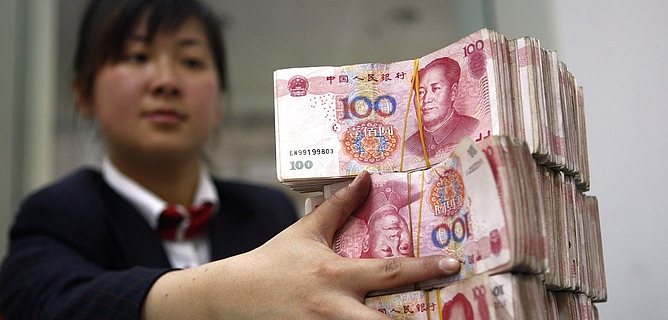
In 2025, infrastructure debts of municipalities amounted to around 60 trillion yuan (48% of GDP), while direct regional debts accounted for roughly another 40 trillion yuan. Servicing these debts is increasingly being financed through new borrowing via bond issuance.
The situation is further complicated by a slump in the real estate market. For many years, up to half of local budget revenues came from the sale of land for development. The collapse in real estate demand has caused land prices to fall sharply and reduced regional revenues, forcing local authorities to plunge even deeper into debt.
At the same time, the official debt of 100 trillion yuan represents only part of the picture. There are also so-called “hidden debts”—obligations of quasi-state infrastructure and municipal companies for which local authorities are effectively guarantors. Estimates suggest that these could amount to another 50 trillion yuan, bringing total local government debt to 150 trillion yuan, or roughly 120% of China’s GDP.
Just in January–February 2025, local governments in China issued bonds totaling 1.7 trillion yuan, approximately 240 billion USD. These unprecedented volumes indicate a growing short-term reliance of regions on debt financing.
China’s debt problem is structurally more complex than that of the United States because the yuan is not fully convertible. This limits Beijing’s ability to shift the debt burden onto the external world. In this context, China is increasingly using Russia as a situational economic and financial partner—particularly for resource security, alternative payment mechanisms, and geopolitical maneuvering—without assuming long-term obligations.