

Denys Shtilerman, co-owner and chief designer of the Ukrainian miltech company Fire Point, said the developers of the “Flamingo” missile system are working to extend the FP-2 drone’s range to deep strike levels while keeping its 105-kilogram warhead intact.
“Work is currently underway to increase the range of the FP-2. Our goal is to create a drone version that retains the same 105-kilogram warhead but can fly at full deep strike distances. This is not just a plan—it is being implemented right now. It’s no longer a project; it’s the execution of the solution,” Shtilerman told NV in an interview.
He also revealed that Fire Point is developing a previously unannounced FP-3 drone, though he declined to provide details.
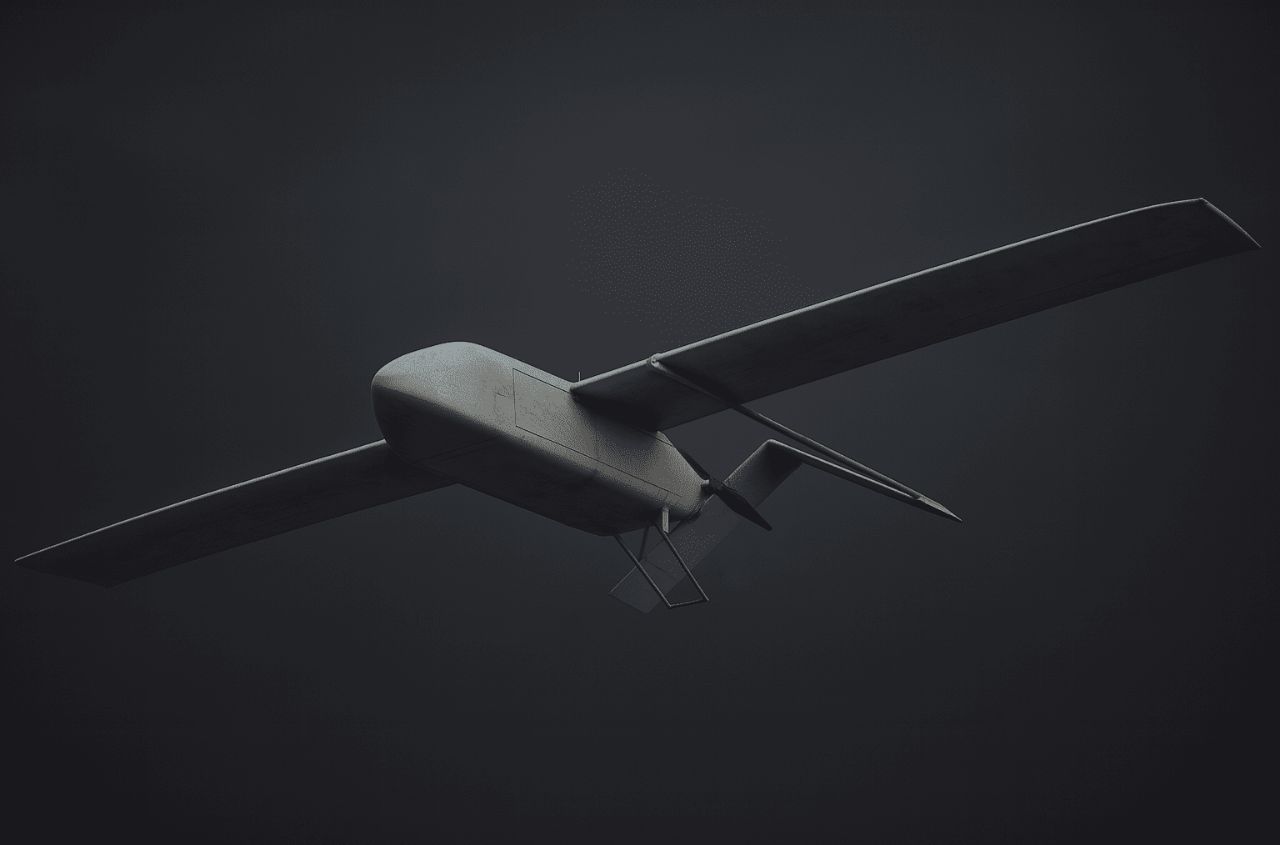
The FP-2 is a “middle strike” class UAV, designed after the long-range FP-1 but with a shorter range—roughly 200 km compared with FP-1’s 1,400 km—in exchange for a heavier warhead of 105–120 kg. Versions exist for autonomous strikes on static targets and radio-controlled attacks on moving targets.
One key advantage of the FP-2 is its real-time control capability. Similar to an FPV drone, operators can select targets, adjust flight paths during missions, and engage moving objects.
“The FP-2 was developed in response to military demand,” Shtilerman said. “Ukrainian forces were already using the FP-1 long-range kamikaze drones, but they requested a drone with controllability and a much larger warhead. We studied the requirements and found it didn’t require major redesigns. FP-2 was born quickly.”
First tests of the FP-2 began in 2024, initially with Special Operations Forces and HUR units. By 2025, the drone gained wide adoption, and Fire Point doubled production. The company plans further UAV expansions in 2026, though details remain under wraps.