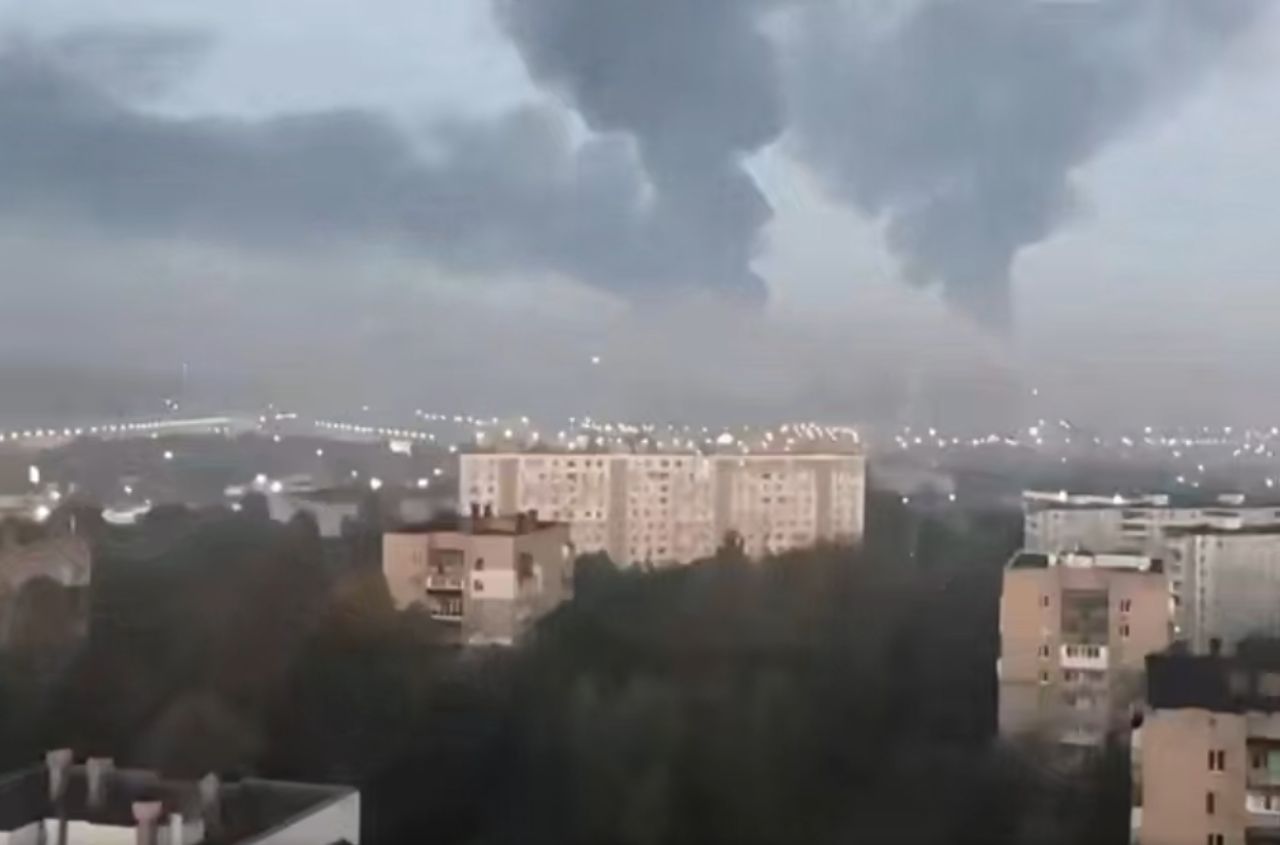


Russia carried out a large-scale combined strike on Ukraine. The main target of the attack was Kyiv and its surrounding areas, but there were also strikes in other regions. In total, there were 4 dead and more than 100 injured. What military resources were used and what military objectives were achieved?
The strike was carried out a week after the previous one, meaning missiles had been accumulated and then used. There is absolutely no “revenge” here. It is part of a plan.
Or does anyone in their right mind consider a “Oreshnik” strike on garages in Bila Tserkva to be “revenge”? That is nonsense.
Today’s attack should be viewed in a sequence:
- a statement (since both the assessment of the fact and the results are debatable) about the testing of the “Sarmat” system on May 12;
- three combined strikes on Ukraine over 10 days using 167 missiles + “Oreshnik”;
- Russian–Belarusian nuclear exercises;
- the aftermath of visits to China;
- threats to Baltic states;
- Lukashenko’s “peacekeeping” hysteria.
This is an obvious escalation that serves specific goals.
First, it acts as a demonstration of strength for external audiences.
In the West, it has become commonplace to talk about Russia’s problems at the front, in the economy, about Ukraine’s increasing long-range strikes, and about public dissatisfaction in Russia. The Kremlin is now showing the collective West that it can inflict pain. And to its senior partners in China — that it still has “cards to play.”
Second, it is an attempt to counteract within Russia the negative signal about Moscow’s vulnerability, which began with permission to hold a parade and continued with the strike on the Moscow oil refinery and several facilities in the Moscow region.
In Moscow, support for the war is the weak point. A shift in mood in Moscow would significantly complicate the continuation of the increasingly unpopular military adventure. Russian regions correctly interpreted the strikes on Moscow as signs of Kremlin weakness. So the Kremlin is trying to create an uplifting image by brandishing its nuclear “club” and attacking residential buildings and markets in Kyiv.
Third, it is an act of intimidation against Ukrainian civilians: the message is that if resistance continues, the suffering in the rear will only increase.
These three objectives and their results will be analyzed below. I want to emphasize the most important military outcome for Russia.
The fourth task is TRAINING — exercises.
- The Russians have already used IRBMs three times in combat conditions against a real, active air-defense system. These exercises help improve the missile.
- They are training to penetrate a layered air and missile defense system that includes early warning systems (U.S. and European), ground-based air defense systems (including Patriot PAC-3, IRIS-T, NASAMS, etc.), aviation (both Soviet and Western), drone interceptors, electronic warfare systems, and more.
- They are training to coordinate drone and missile attacks launched 1) from the sea, 2) from various ground-based systems, 3) from tactical aviation, and 4) from strategic aviation.
In other words, the direct military damage from the night attack (aside from human casualties) is comparatively small. But the amount of accumulated knowledge is significant.
What is important here?
First, in the West, no one has comparable experience. Second, this knowledge immediately becomes shared within the coalition of autocracies and dictatorships (China, Russia, Iran, North Korea, Belarus, etc.).
And it will be used NOT against Ukraine.
From this follow-up, the text argues:
The conclusion is straightforward (and Western governments in the EU and USA have likely already reached it, though for various reasons they do not say it publicly).
The core idea is that preparatory measures taken in Europe as a hypothetical defense against Russia are a dead end by design.
Let us assume that a ceasefire is suddenly established, which more or less holds for, say, six months. As part of ensuring it, some sanctions are slightly eased.
It is not difficult to calculate how many drones and missiles Russia would accumulate over that period. One year of truce would mean thousands of missiles and tens of thousands of drones. Is Europe ready to absorb that? Especially considering that (1) Russia is a step ahead; and (2) the most combat-ready air defense in the EU right now is in Estonia.
Therefore, the solution does not lie in symmetrically balancing military potential with Russia. That is impossible, because Russia has knowledge and experience that Europe will not be able to match in advance.
Instead, the solution lies in: (1) destroying Russia’s military potential and preventing its restoration, and (2) changing Russia’s political structure.
The solution is the TRANSFER (return) of the war onto Russian territory and its global communications.
This is what Ukraine has been trying to convince its partners of since the beginning of the full-scale Russian invasion, and as a preventive measure — even before 2022.
What Europe is doing (besides the obvious assistance, which we are grateful for)?
It invites Russia to Venice, awards it in Cannes, looks for ways to soften oil and gas sanctions, and drags Ukraine through demands that are deadly in today’s world, and so on.
Words of solidarity and condemnation of Russia from European leaders are all well and good. But words have long stopped meaning anything.
Russian forces are training on us, but the scope of application has long gone beyond Ukraine (FPV drones used by Hezbollah against Israeli tanks are the most basic example). Russia has significantly expanded its means of air-based terror, against which you can do almost nothing without Ukraine. In the Kremlin, this is perceived exactly in that way. On the ground, you also can do almost nothing against Russia’s newest infiltration tactics (as demonstrated by several exercises involving Ukrainian units).
As a result, regardless of your perception of the situation in Russia, the Kremlin is likely to see a path of military escalation in Europe as one of the real options to quickly “flip the board” and move toward a broader set of negotiations.
Without implementing strong preventive measures, such a scenario cannot be avoided. The path includes: full military integration with Ukraine, support for Ukraine’s defense efforts, a strict sanctions regime, and a force-based blockade of Russia’s maritime communications.
Russia will certainly try to intimidate you, but blackmail can only be stopped by force. This is the shortest route to normalization and peace. Otherwise, the stakes will only keep rising.
As for intimidation and the push toward peace: people in Kyiv largely say that while the missiles were falling and explosions were happening, it was genuinely frightening. But once the strikes ended, what remained was an overwhelming feeling of “we want the Russians to die,” which is stronger than fear.
In Kyiv, Kharkiv, Odessa, and other regions, people have long wanted peace. I have also repeatedly written that the best outcome is to get out of this war yesterday, or at the very latest tomorrow morning. The obstacle to this is in Moscow, in Russia.
This is what must be addressed, rather than encouraging the Kremlin through the return of athletes and by flirting with the idea of engagement with the “first lady of Russia” Alexander Lukashenko. It will bring no results.