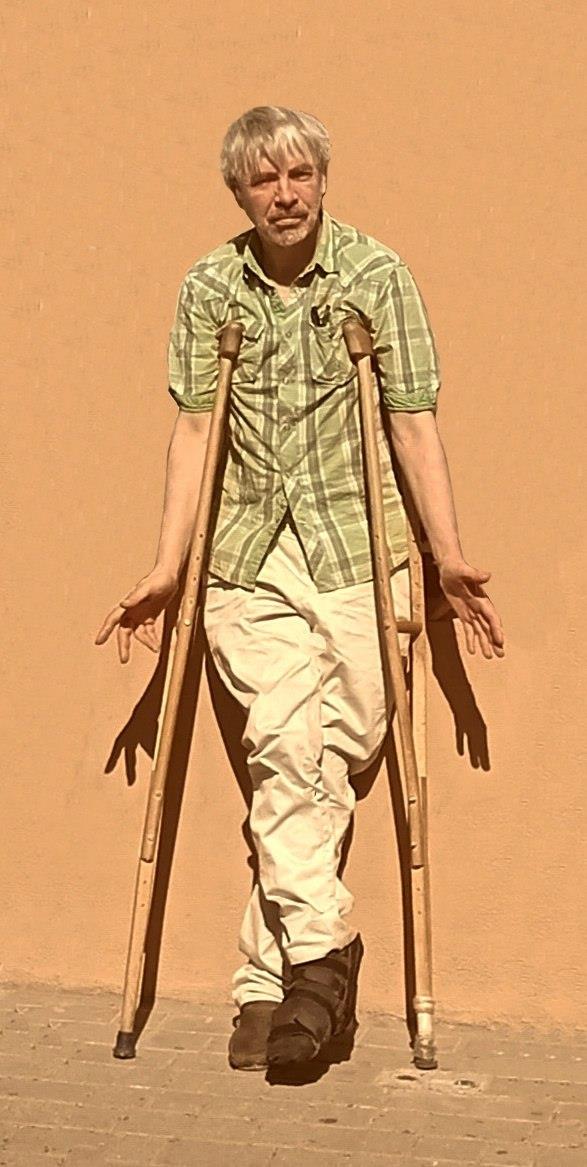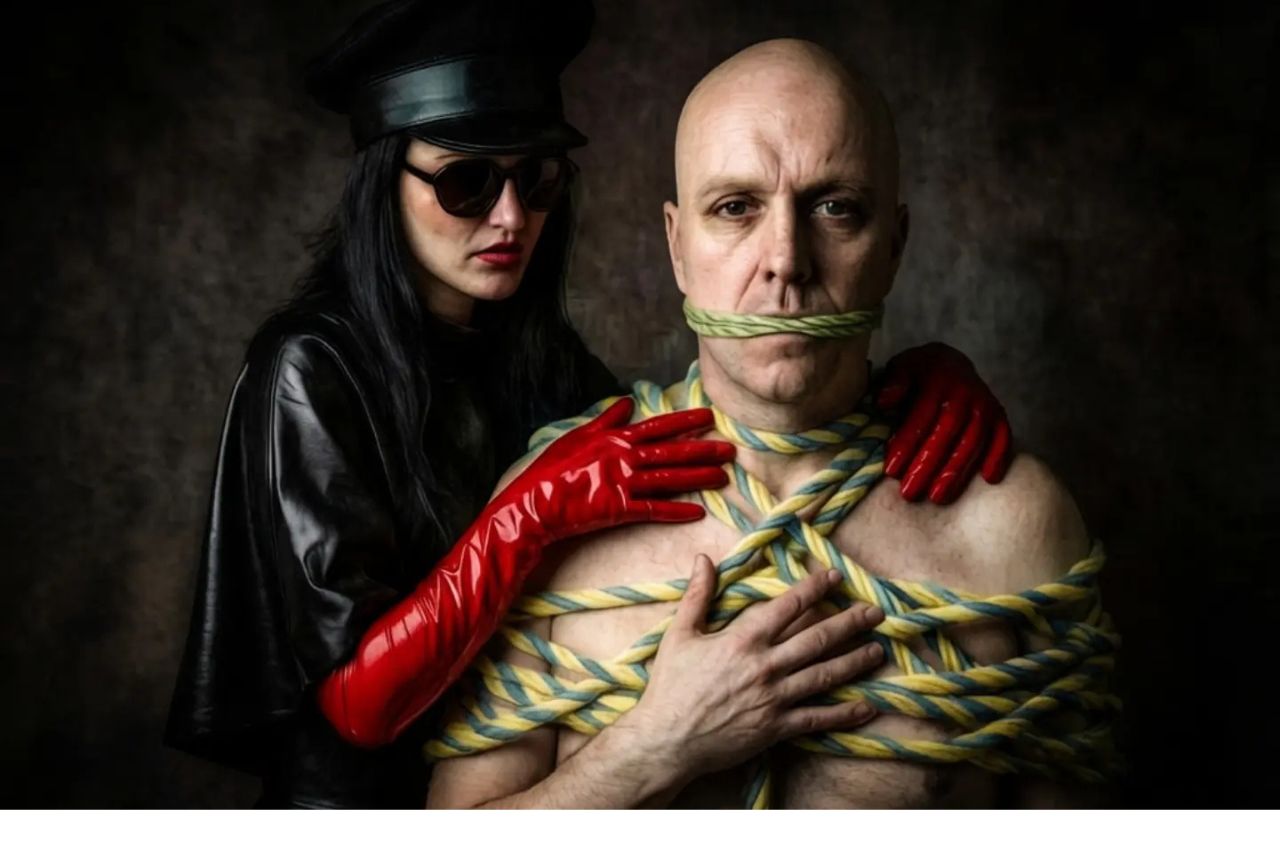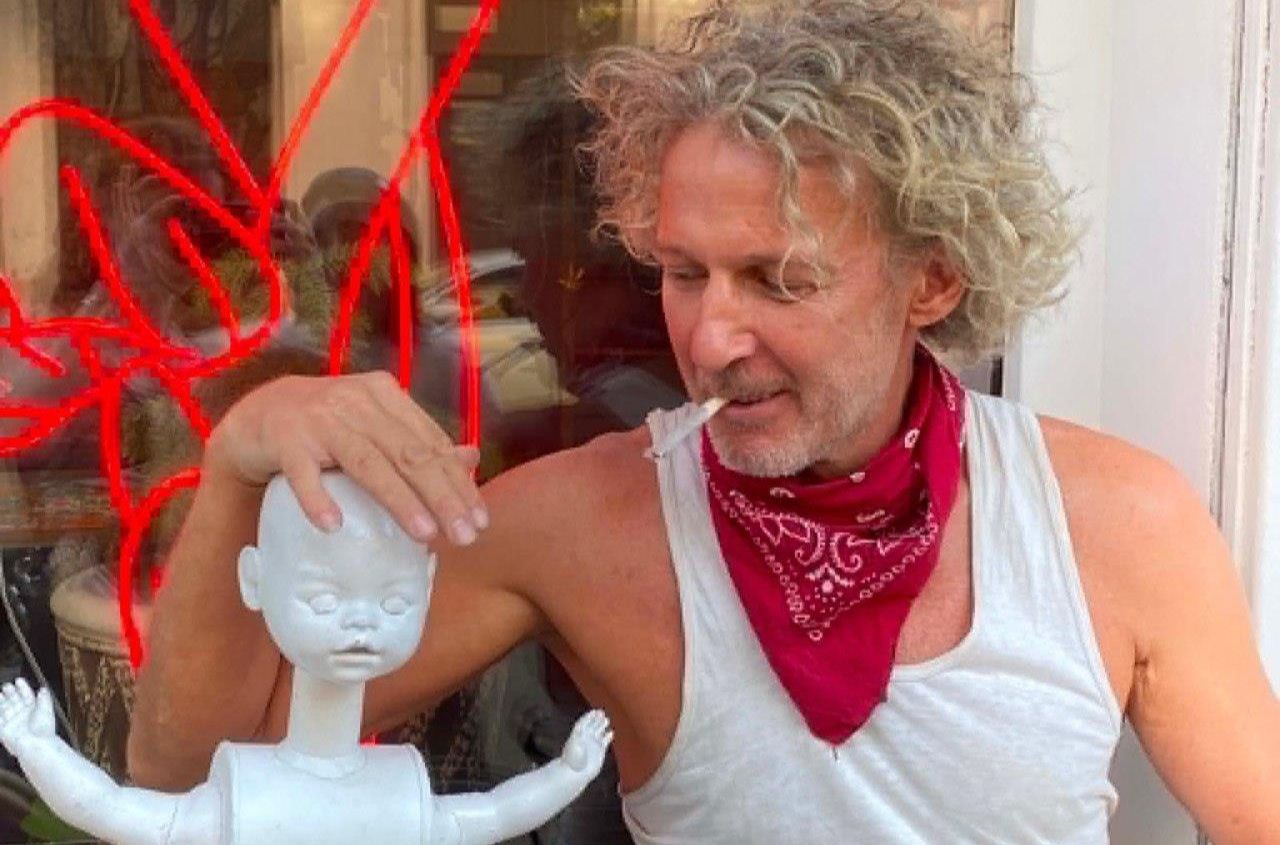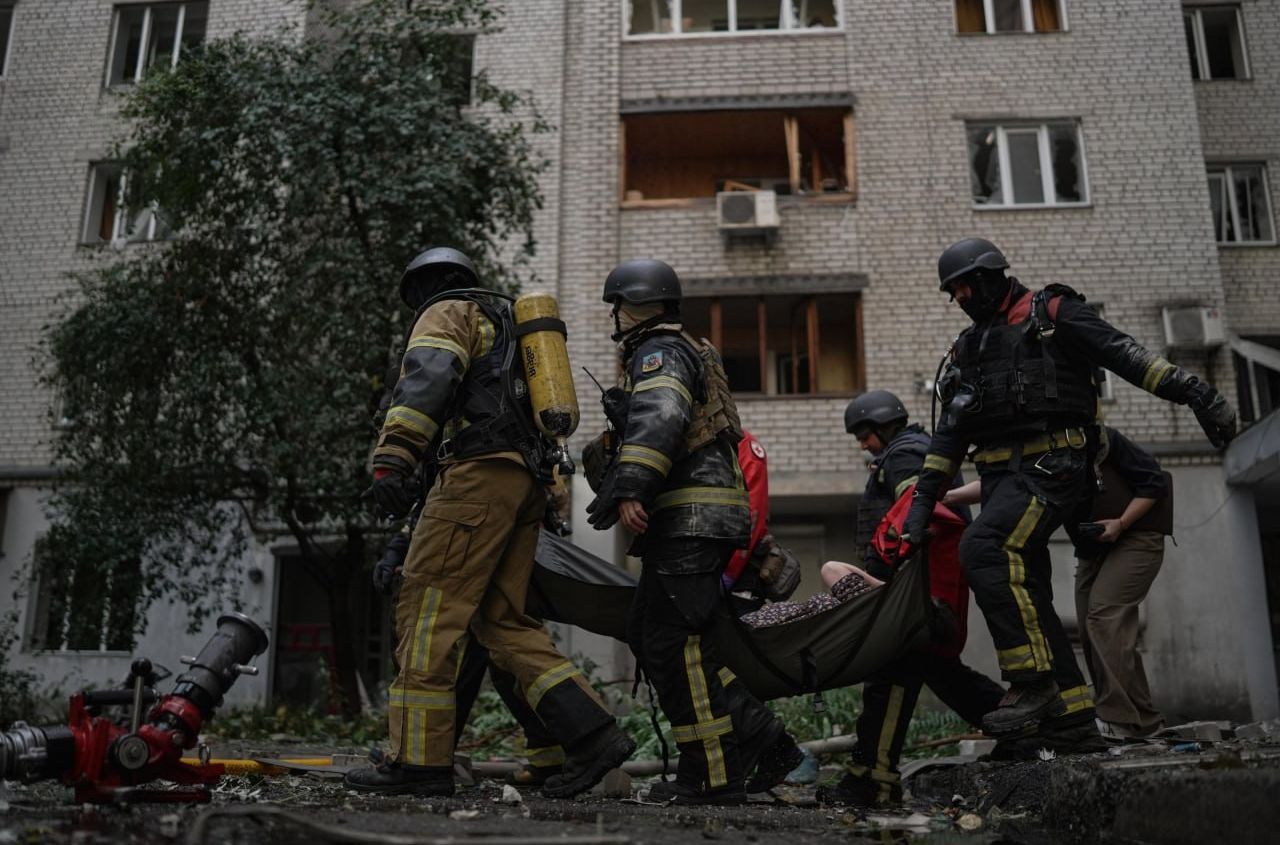


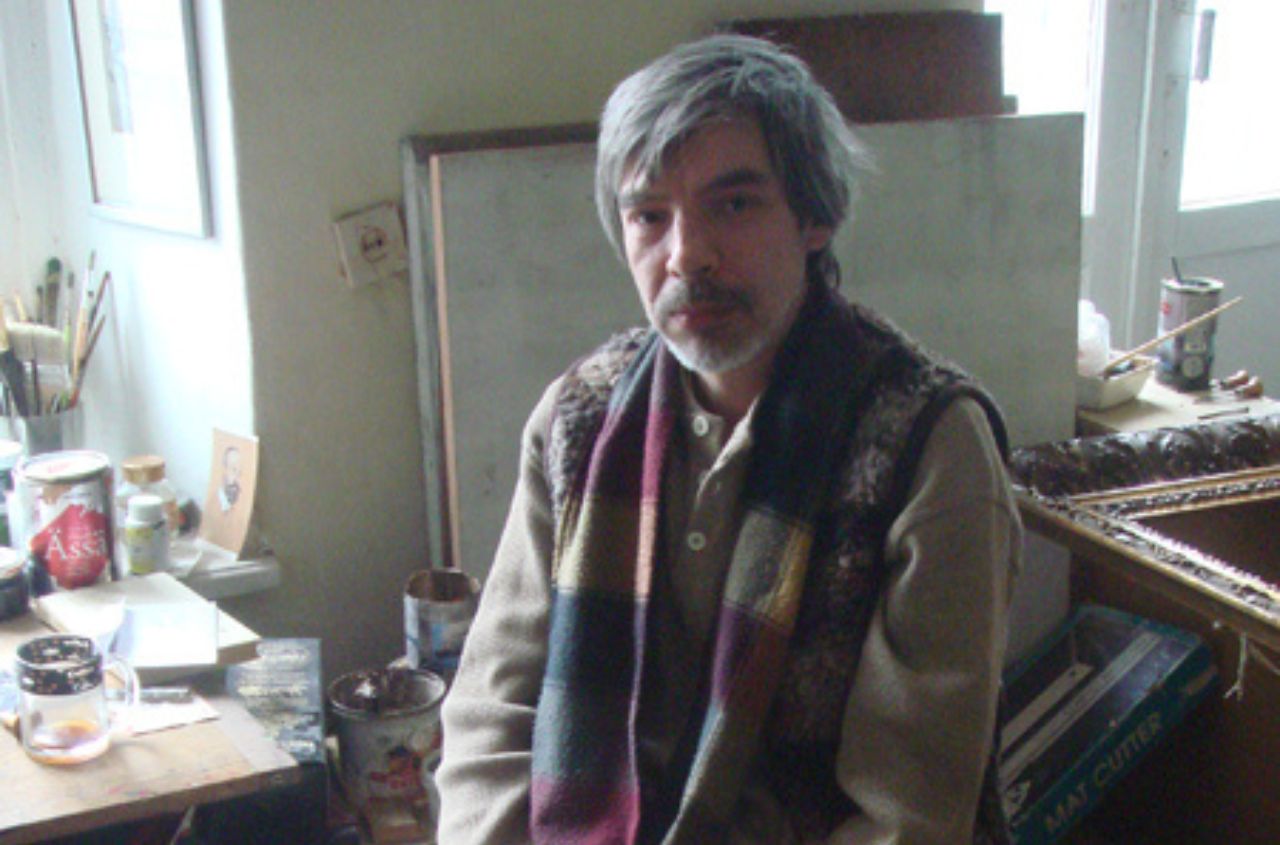

Main image: Aleksandr Lisovskii
The fifty-third interview through images by Andrey Sheptunov
Modern art in Odessa often finds itself hostage to its own powerful myth. A city accustomed to contemplating itself through the prism of colorful classics, the non-conformist avant-garde of past decades, and relaxed southern glamour, is reluctant to allow a harsh, reflective contemporary edge into its territory.
Yet, it is precisely on this border—between the inertia of past triumphs and the necessity of a new visual language—that the most powerful artistic statements are born. Aleksandr Lisovskii belongs to those authors who deliberately strip the space of its customary decorations, forcing the viewer to look past the facade and into the depths of our culture's tectonic shifts.
In his work, there is no room for compromise with decorativeness or the superficial conformism that the contemporary art scene sometimes suffers from. Lisovskii works as a researcher, dissecting reality without unnecessary sentimentality, but with surgical precision.
His canvases and installations are not merely aesthetic objects, but manifestos of inner freedom born from a constant, at times fierce, debate with academic traditions. This is an art that does not play down to the viewer, but demands absolute honesty and a readiness for profound intellectual effort.
One of the most captivating qualities of his method remains the ability to transform everyday chaos and fleeting artifacts into a pure, almost sacred geometry of meanings. In his optics, random routes, urban bustle, and mundane everyday objects lose their utility, transforming into monumental statements. Under his brush or within the space of an installation, the commonplace suddenly reveals a conceptual depth where a random detail of human life becomes the key to understanding grand existential questions.
The phenomenon of memory occupies a crucial place in this artistic system—not as sentimental nostalgia, but as a tangible, sometimes tragic substance. Lisovskii masterfully works with micro-histories, weaving personal family relics, archival texts, and authentic testimonies of bygone eras into a single semantic field.
Through a private drama recorded in the laconic lines of the artist's commentary or the material traces of the past, he constructs a poignant dialogue about the transience of time, where the worn edge of an old silver spoon can weigh more than grand history textbooks.
This art is deeply rooted in the spirit of the times, serving as an accurate and unbiased imprint of our complex, fragmented reality. The artist acutely senses that indefinite yet agonizing "cultural hunger" that drives an author to constantly search for new meanings in an era of total chaos. Entering into a paradoxical dialogue with the art of past eras, Lisovskii does not copy it but deconstructs it, extracting from the historical context that which can resonate with today's fears, hopes, and the complex search for identity.
An encounter with Lisovskii’s works is always a challenge for the viewer, an experience of productive bewilderment. The viewer must stop, overcome the initial optical barrier, in order to perceive an emotional explosion and a subtle, deeply hidden irony behind the external simplicity of lines or monochrome restraint. This is painting and conceptualism that continue to change and be rewritten in the mind of everyone who is ready to journey from visual shock to a true understanding of the power of contemporary art.
Below is an honest and profound conversation with Aleksandr Lisovskii, where instead of conventional answers, the author invites us to look at the world through the prism of his key works, visual manifestos, and personal memory.
1. Which of your works best conveys the feeling of a city stripped of its usual tourist glamour and stereotypical myths
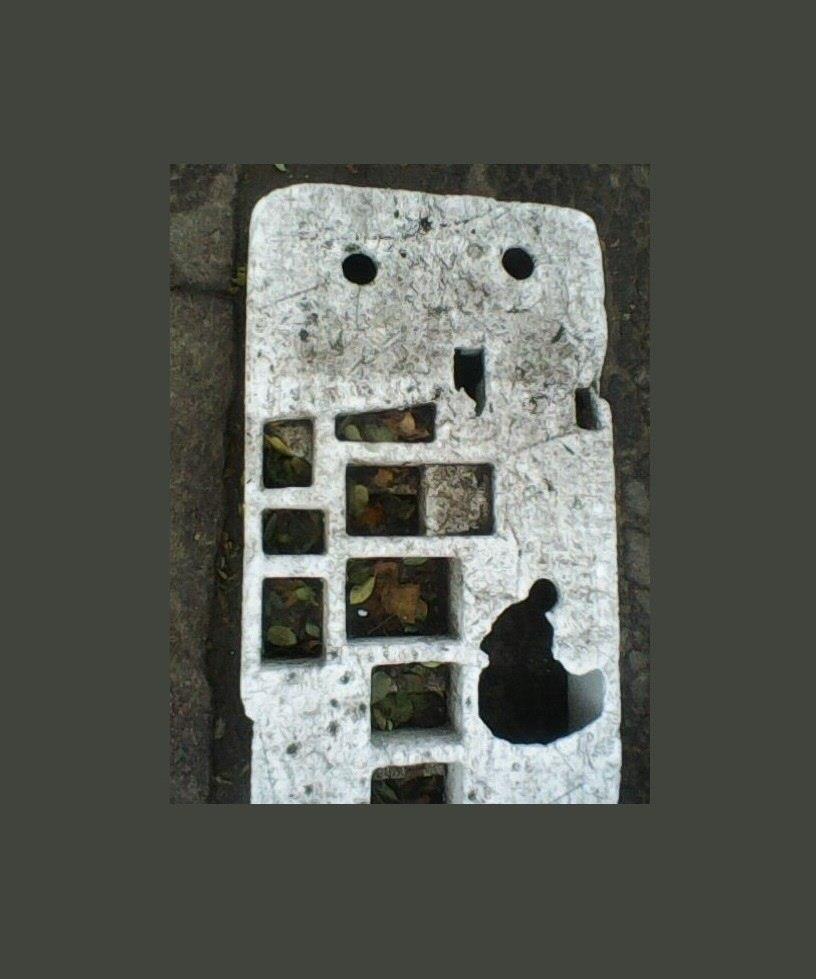
2. Which painting or installation most accurately reflects the state of that vague yet acute cultural hunger that drives the creator
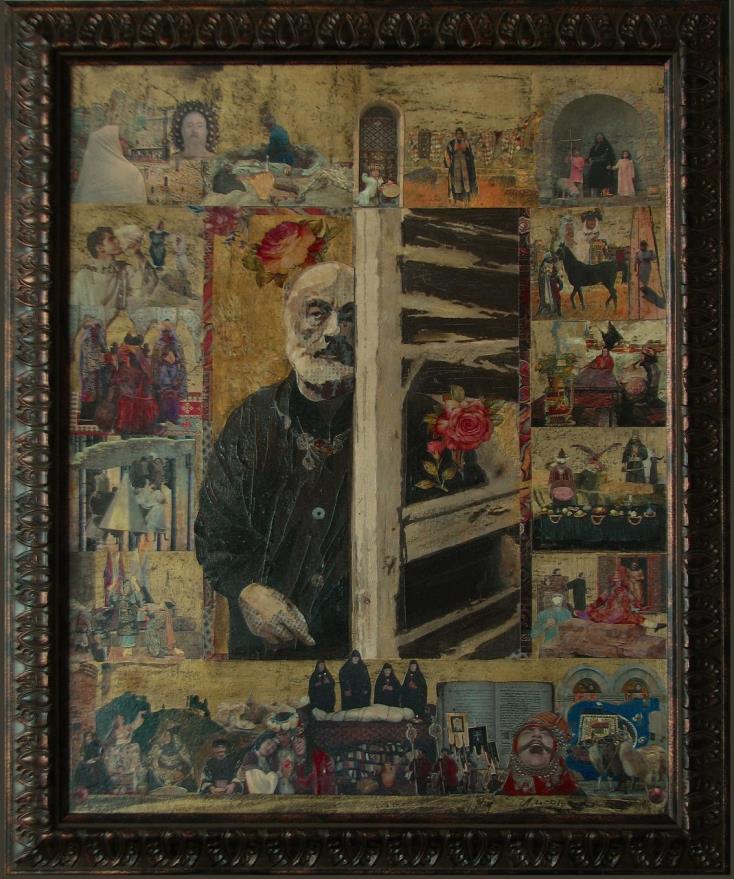
3. Which of your pieces forced viewers to stand in bewilderment the longest before they caught the hidden irony
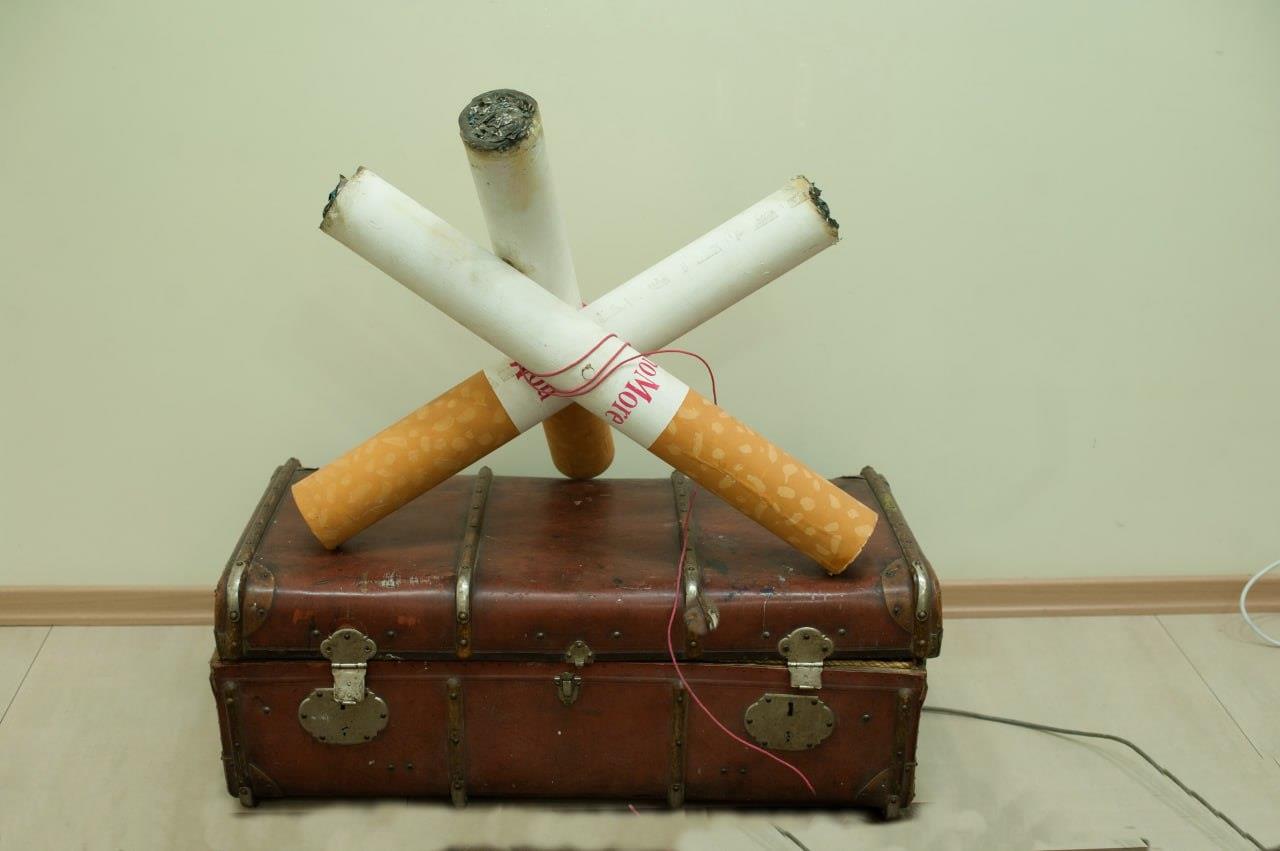
4. Show us a work in which the rhythm of urban bustle, random routes, or fleeting artifacts has turned into pure geometry
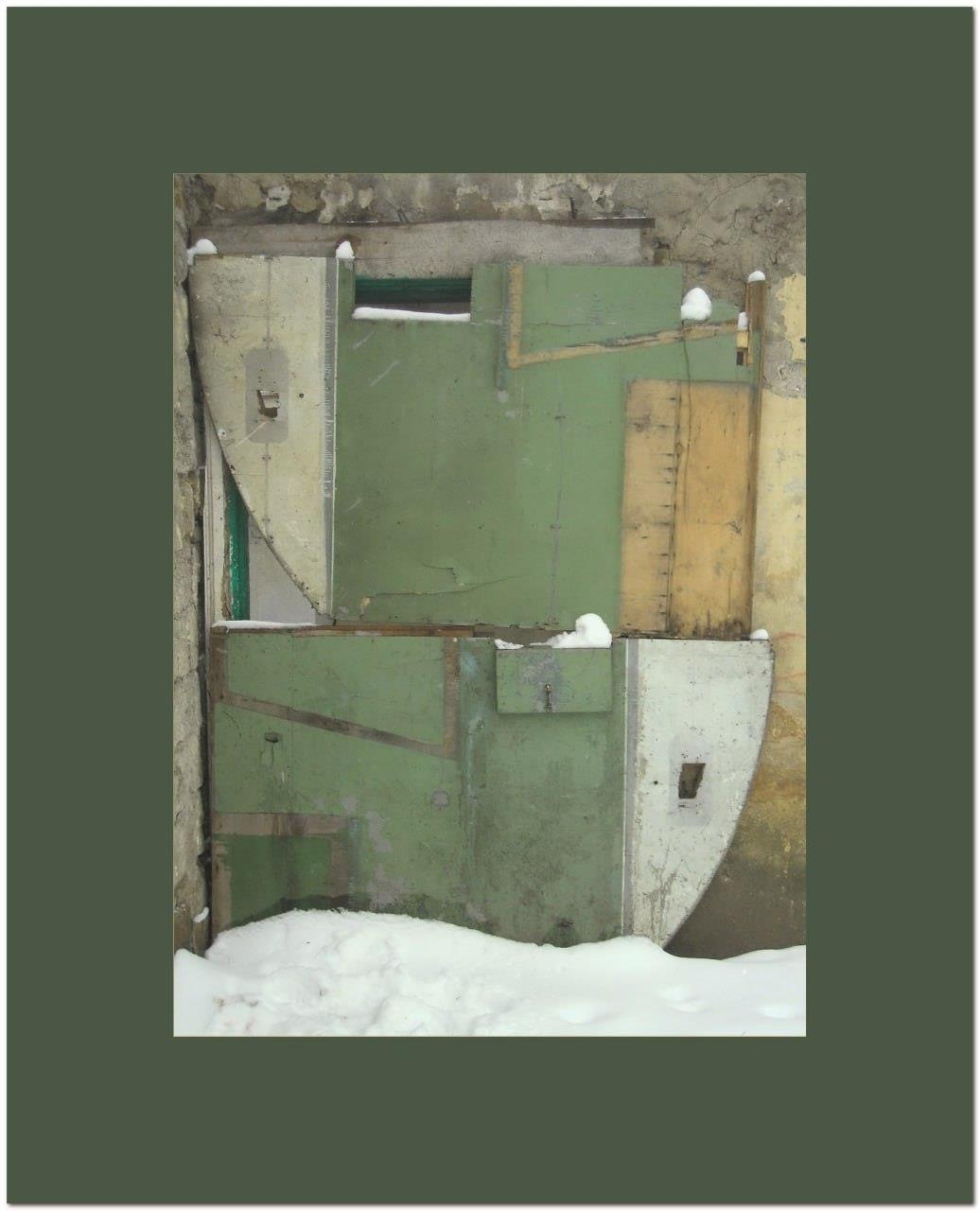
5. Which of your visual stories was created as a manifesto against conformism in the contemporary art community
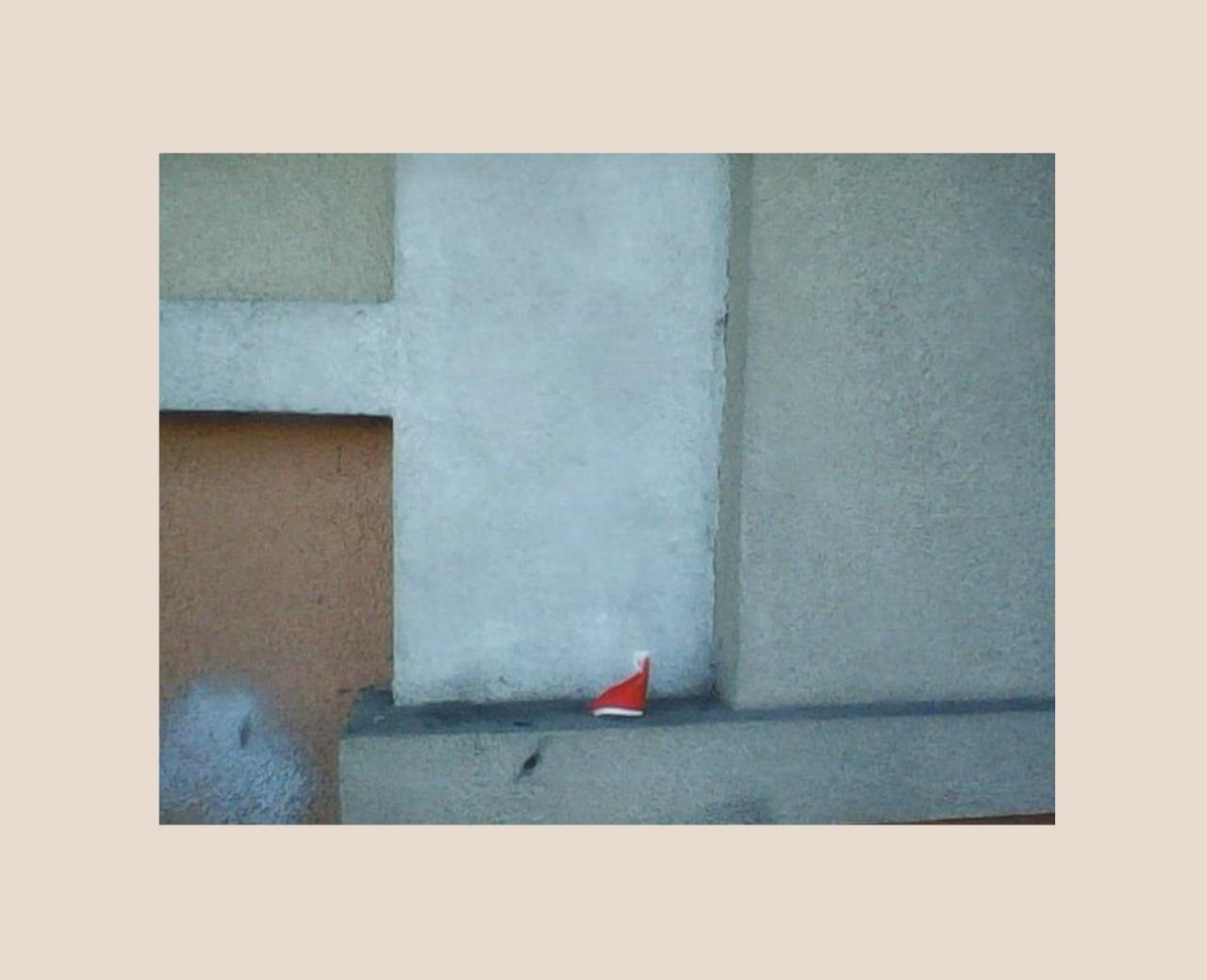
6. In which work is the deconstruction of familiar space manifested most vividly, making well-known locations look alien and mysterious
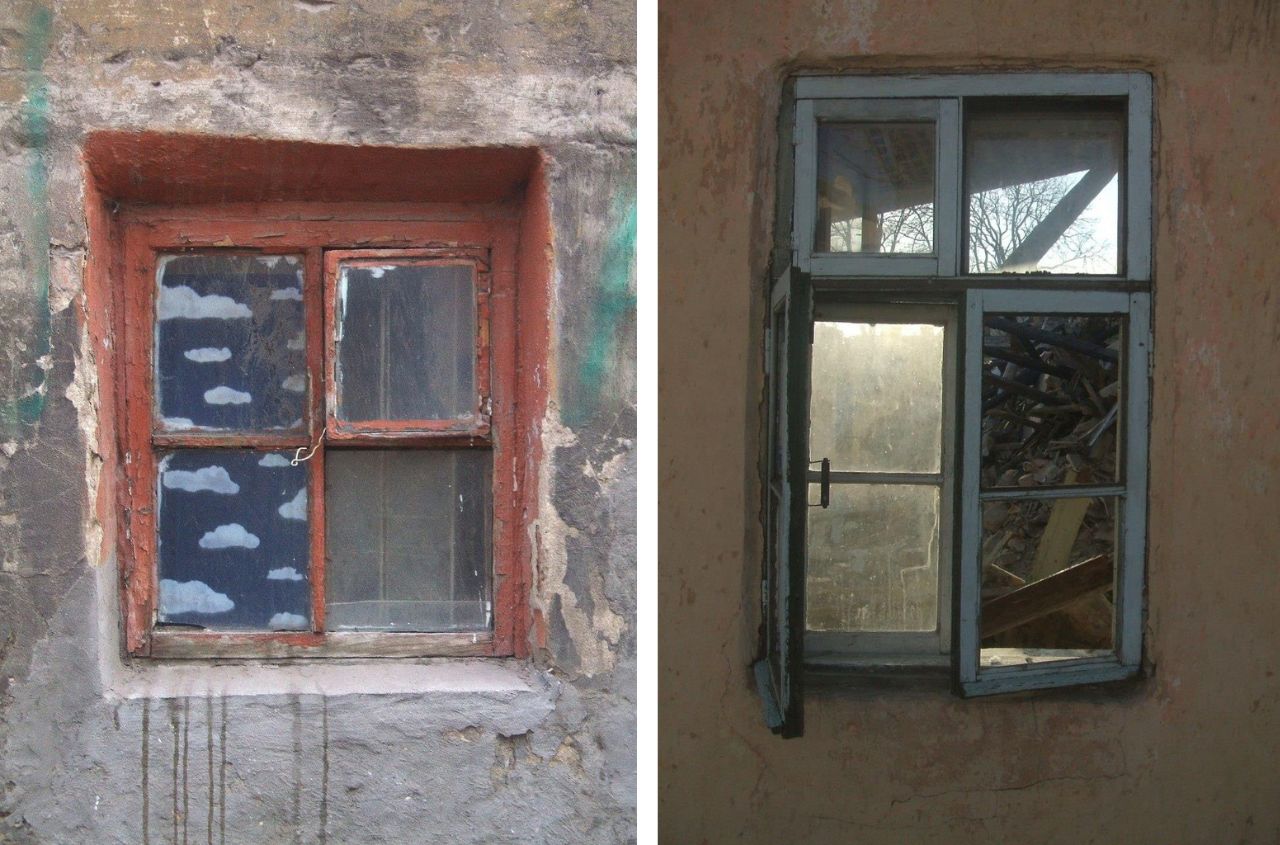
7. Show us a work that was initially conceived as a fleeting experiment or a joke, but grew into a monumental statement

8. Which of your paintings has literally absorbed the spirit of the times, becoming an exact visual imprint of a specific historical moment
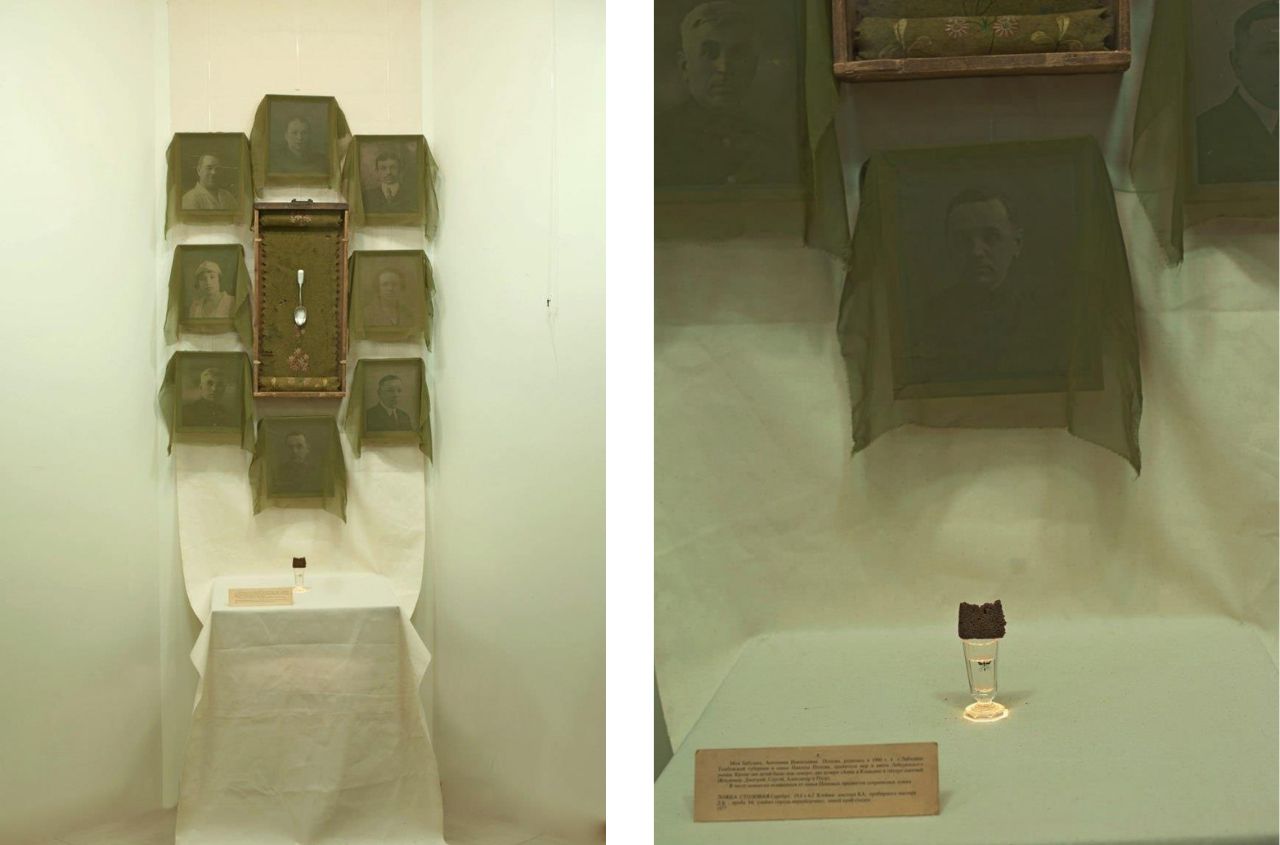
Artist's comment: “In the center, hanging inside a reliquary, is a silver spoon; around it hangs photographs of deceased brothers and sisters. On the table stands a memorial shot of vodka and a piece of black bread. In front is an explanatory plaque.
The text on the plaque reads: ‘My grandmother, Antonina Nikitovna Popova, was born in 1900 in the town of Lebedyan, Tambov Governorate, into the family of the keeper of weights and measures of the Lebedyan market, Nikita Popov. Besides her, there were seven other children in the family. Two daughters (Anna and Klavdia) and five brothers (Vladimir, Dmitry, Sergey, Aleksandr, and Petr). The spoon is one of the few remaining items from the Popov family.’ Then follows a technical description of the spoon, the silver fineness number, and a description of the hallmarks. The left edge is worn away.”
9. Show us a visual image that became a personal breakthrough for you in understanding what kind of meanings painting should operate with today
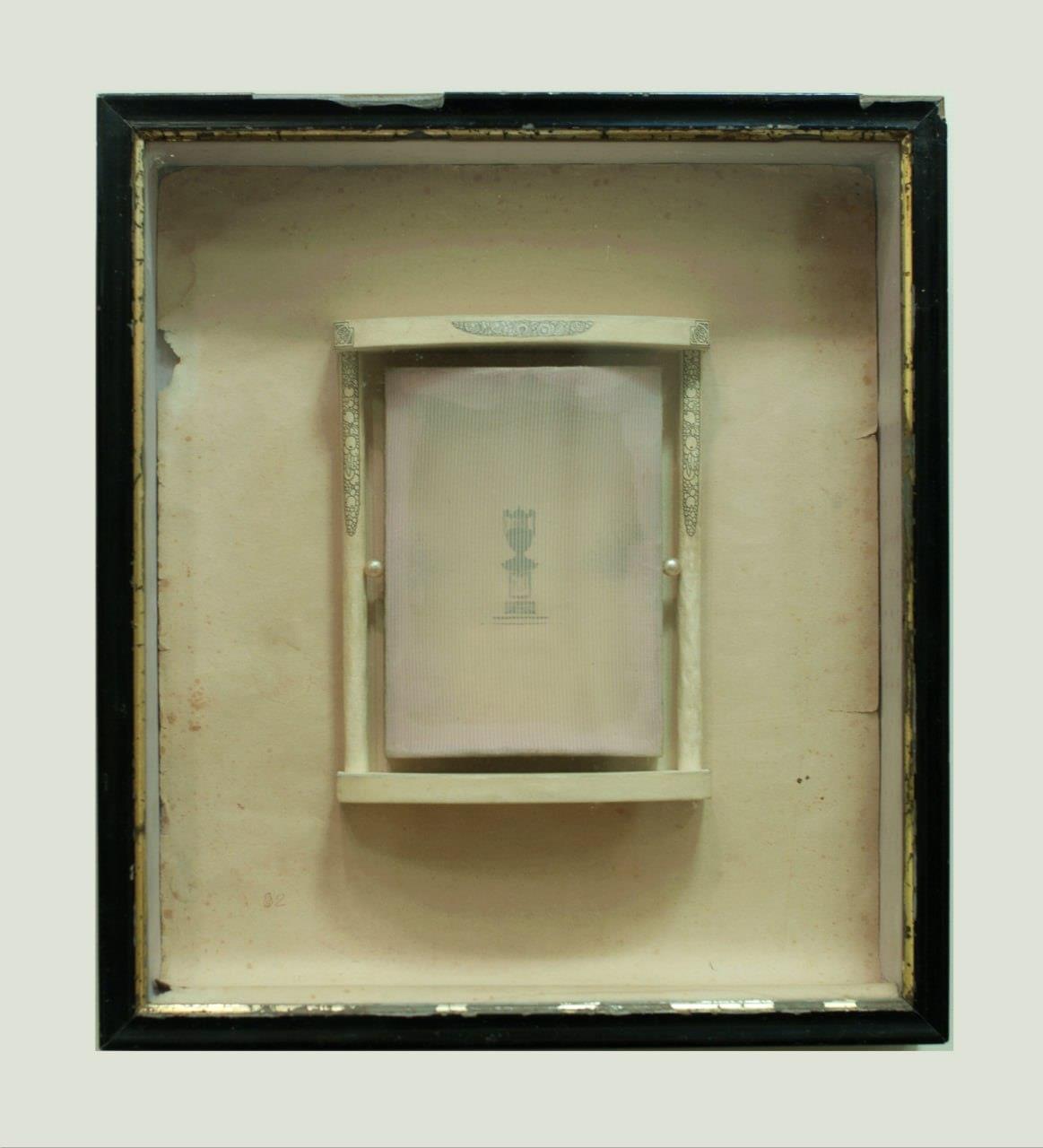
10. Which of your creations was crafted under the influence of a strong literary impulse, while retaining absolute visual autonomy
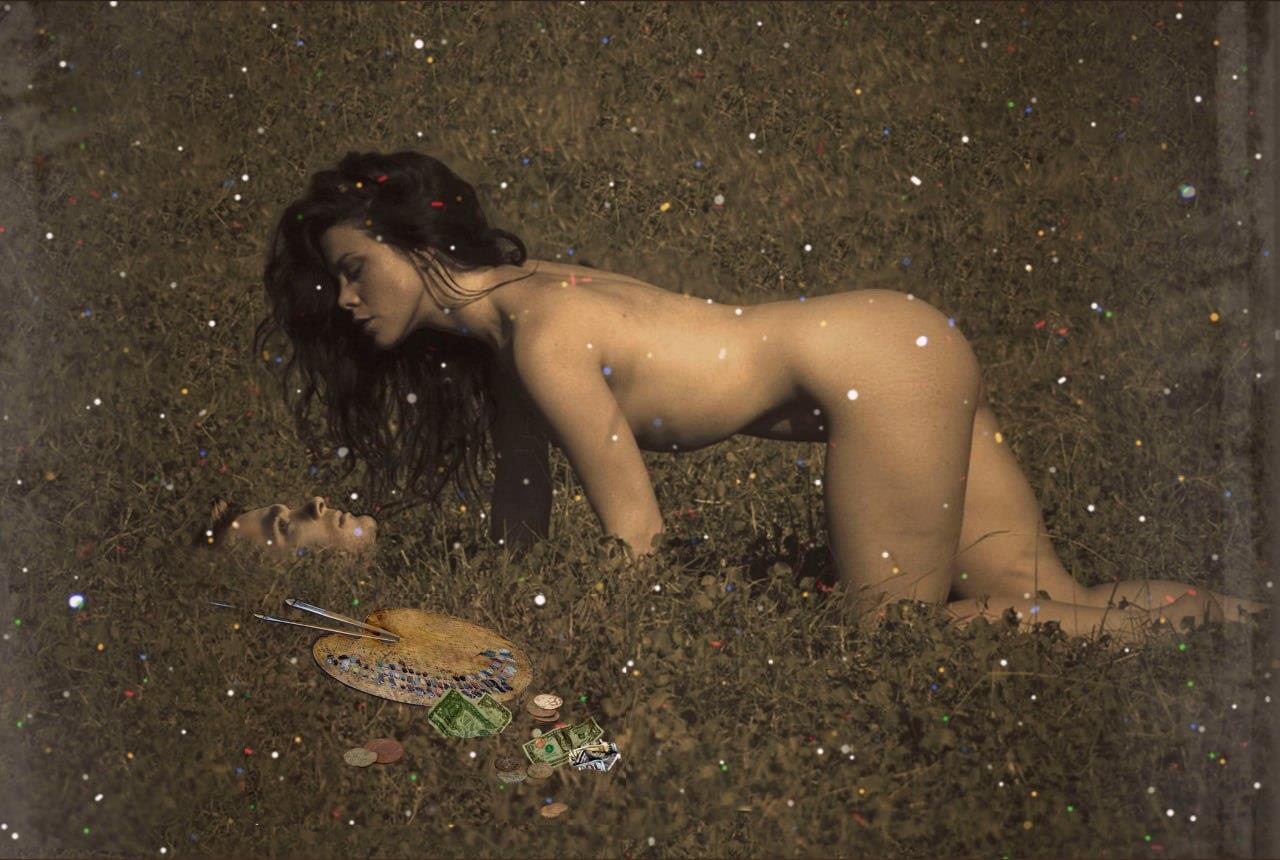
11. Which work from your portfolio enters into the most vivid and paradoxical dialogue with the art of past eras
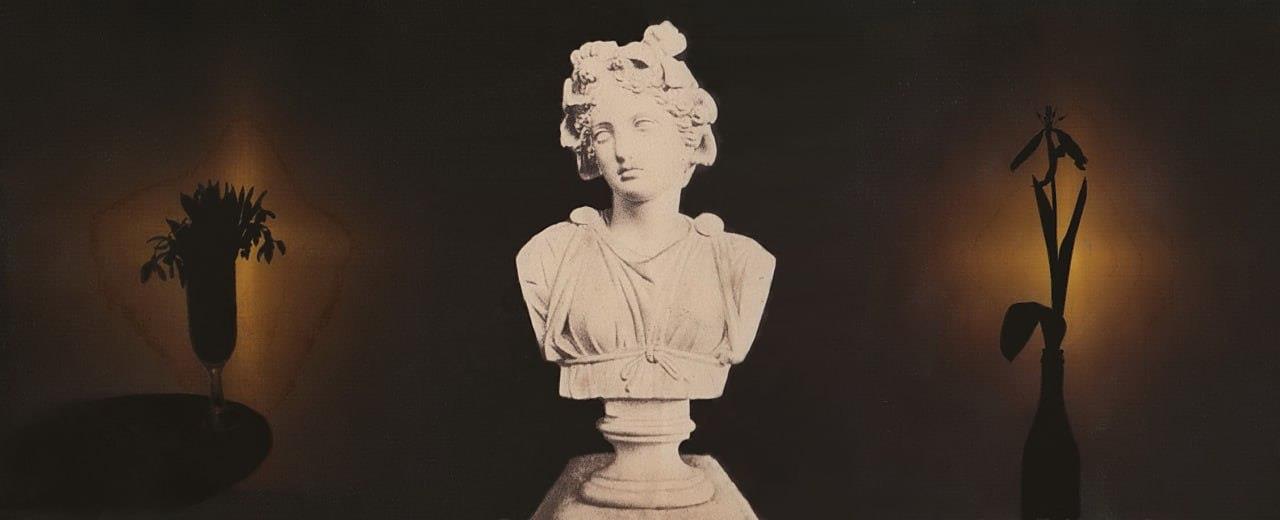
12. Which piece would you choose to visually explain the true power of contemporary art to someone who doesn't believe in it
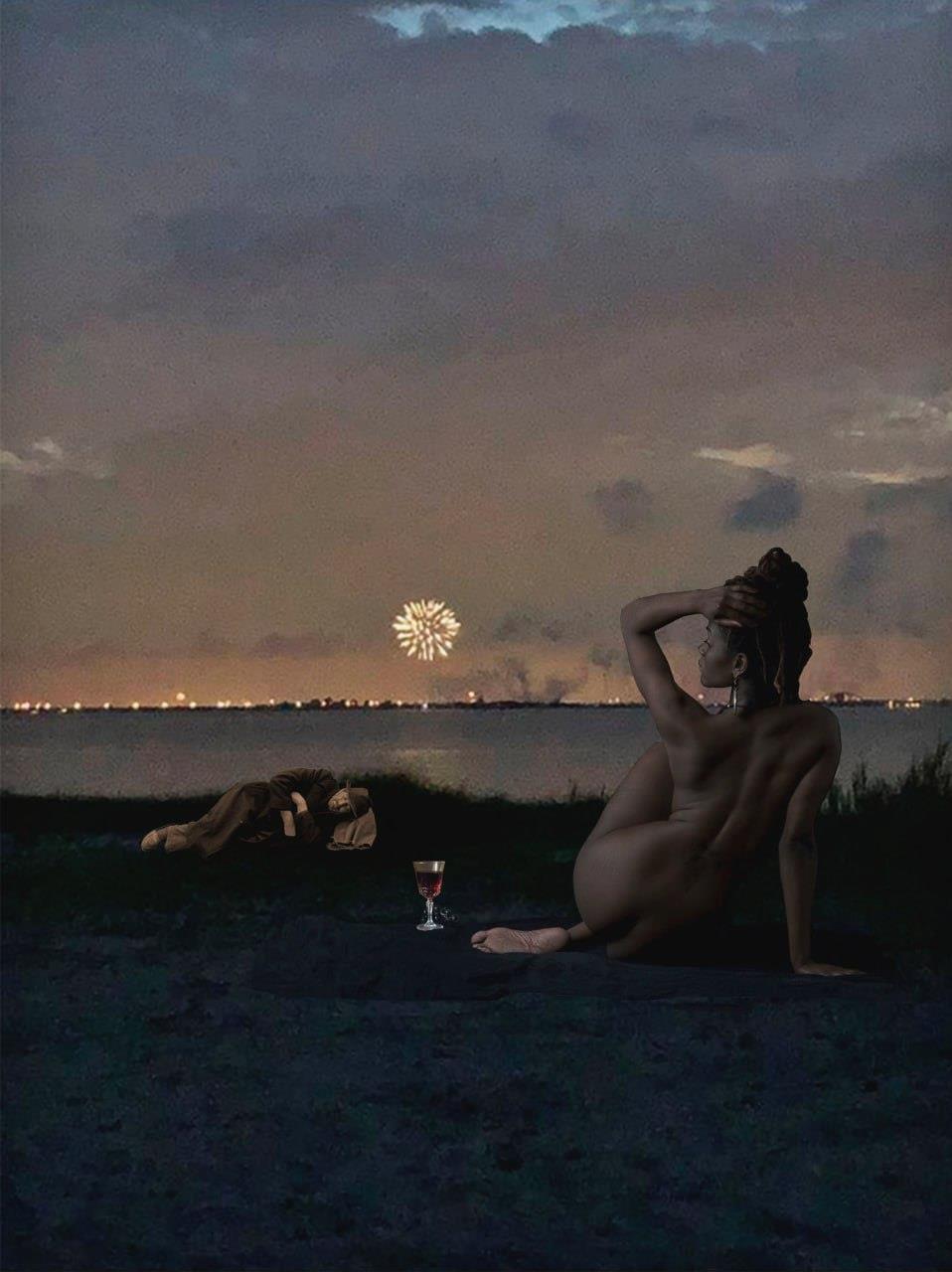
A conversation with Aleksandr Lisovskii leaves a long conceptual aftertaste, stripped of the predictability typical of art interviews. His works are not merely static exhibits, but a living, pulsating space where the viewer inevitably comes face to face with their own historical memory, internal deficits, and that very "cultural hunger."
Looking past everything superfluous, decorative, and conformist, the artist leaves us one-on-one with the naked essence of meanings, whether it is the strict geometry of an urban landscape or the poignant, aching intimacy of a family relic.
In a world where visual culture frequently chooses the path of safe contemplation or commercial compromise, Lisovskii’s stance remains a crucial anchor for the contemporary Ukrainian context. He clearly demonstrates that a powerful contemporary statement is born not from a desire to shock, but from a rare ability to hear the tectonic rumble of the era in the most unnoticeable, everyday fragments of reality. This art restores the viewer's right to intellectual effort, forcing them to grow internally with each new complex question.
Ultimately, Aleksandr Lisovskii’s work is an open book of visual texts that continues to be written here and now, changing alongside the surrounding chaos. And the best reaction to it is not a hasty verdict, but a long pause in front of the canvas or installation—a willingness to let this restrained emotional explosion in and to step out of the art space with a completely different, honest optics, purified of myths.