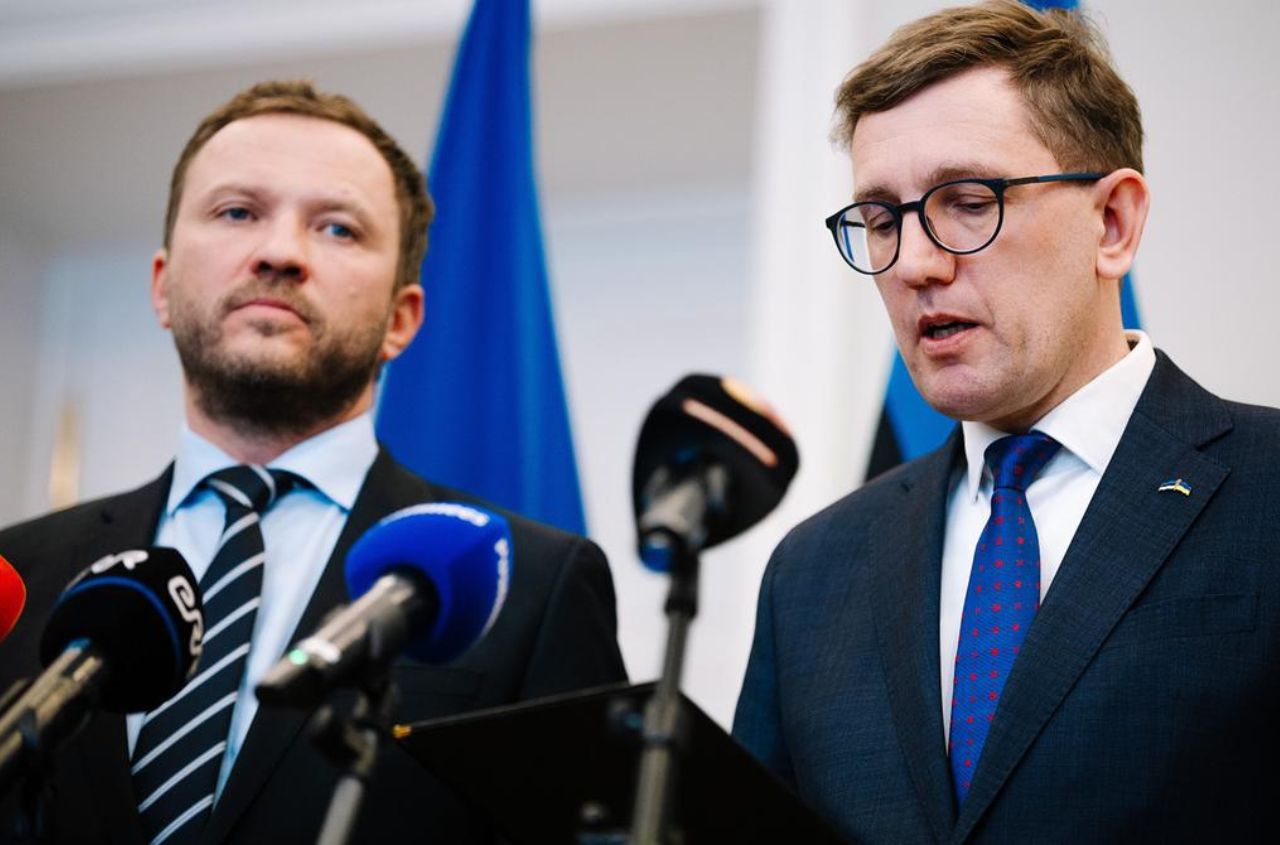



The Estonian Orthodox Church of the Moscow Patriarchate, despite changing its name and making amendments to its statutes, in practice remains under Russian influence. This is stated in the annual report of Estonia’s security service Kaitsepolitseiamet, published on April 13.
“The Russian aggression against Ukraine and Russia’s interference in Moldova’s elections clearly show how religion in Russia has become an instrument of the executive power,” the report says.
The activities of the Russian Orthodox Church (ROC) leave no doubt that it cooperated with Russian security services during the preparation phase of the aggression and continues to do so during the war and the annexation of occupied territories.
The “Kremlin in robes” abuses the argument of religious freedom to undermine security and public order in democratic societies, the report states. The intelligence service concludes that the Estonian Christian Orthodox Church subordinated to the Moscow Patriarchate (formerly the Estonian Orthodox Church of the Moscow Patriarchate) remains linked to the ROC.
In 2025, the church changed its name and made only superficial amendments to its statutes in order to create the appearance of independence from the patriarch, who continues to use Christian rhetoric to justify Russia’s aggressive war against Ukraine.
In addition, the church leadership is still headed by Metropolitan Eugene from Russia, whose residence permit in Estonia was not extended on security grounds, forcing him to leave the country.
Despite attempts by the Estonian church to present itself as independent and autonomous, its activities are in fact directed by the ROC.
The main instructions and coordination are carried out on behalf of Patriarch Kirill by the Department for External Church Relations of the ROC and the administration of dioceses in the “near abroad,” created on March 24, 2022, one month after the start of the full-scale war against Ukraine.
The ROC actively uses religion as a tool of political propaganda, justifying violence and promoting the ideology of the “Russian world.”