

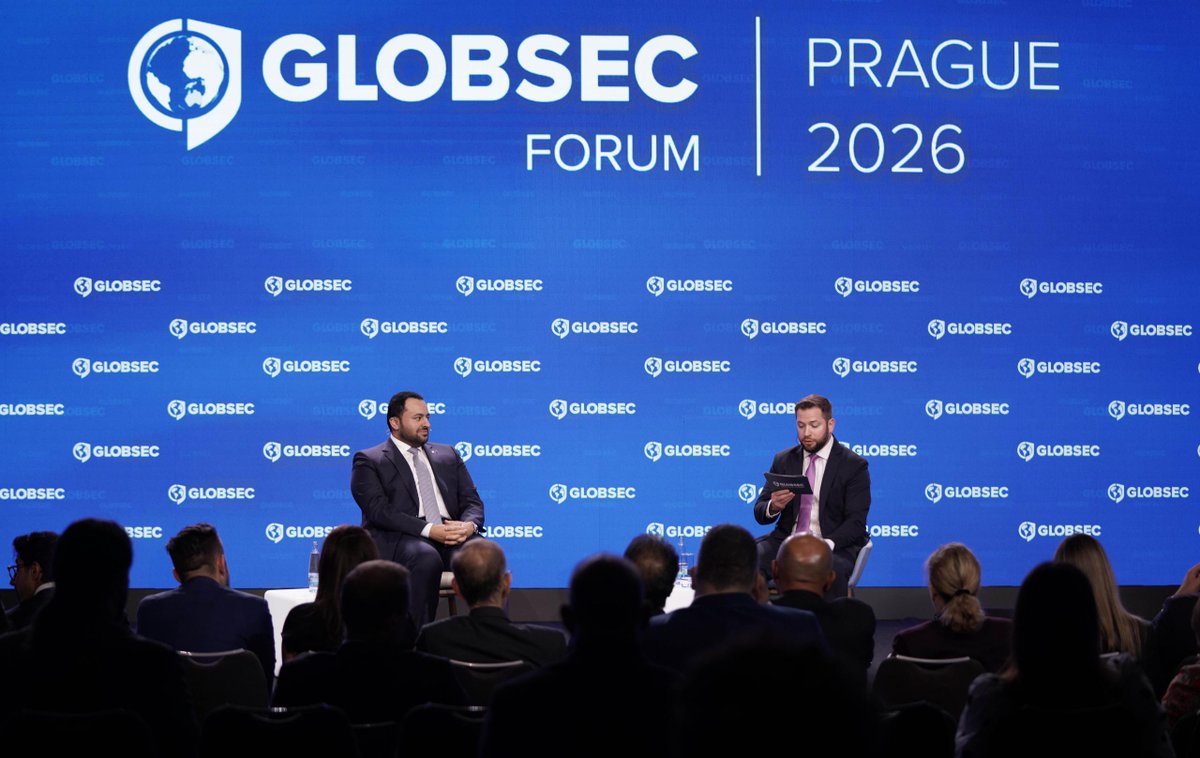
At the 21st GLOBSEC 2026 security forum in Prague, the key theme was “global systemic transformation” — ranging from Russia’s war against Ukraine to technological competition, energy risks, and a new architecture of European security. The event, considered one of Europe’s leading platforms on geopolitics and defense, brought together more than 1,800 participants from over 75 countries, including Roberta Metsola, Maia Sandu, Henna Virkkunen, former NATO Secretary General Anders Fogh Rasmussen, as well as representatives of governments, defense ministries, think tanks, the technology sector, and business.
The discussions demonstrated a shift in Europe’s approach to defense: increasing military budgets is no longer viewed as a sufficient indicator of security on its own. The focus is now on the ability to quickly convert funding into mass weapons production, ammunition stockpiles, logistics development, and preparation for a prolonged high-intensity conflict.
Participants viewed Ukraine not as an object of support, but as an element of Europe’s future defense architecture. Ukraine’s practical experience in UAVs, electronic warfare, air defense, digital command systems, and rapid military adaptation is seen as a resource for transforming defense planning within the EU and NATO. EU Ambassador to Ukraine Katarína Mathernová emphasized that Ukraine should be regarded as part of the European security system, while Czech President Petr Pavel described support for Kyiv as an investment in the continent’s security.
Special attention was also paid to Europe’s technological autonomy. Artificial intelligence, cyber capabilities, and space systems are increasingly determining military superiority, strengthening the need for Europe’s own technological base, protection of critical supply chains, and reduced dependence on external suppliers in defense and intelligence sectors.
EU enlargement was likewise discussed through a security lens. The future integration of Ukraine, Moldova, and the Western Balkans was presented as a tool of geopolitical resilience, while delays in the process were viewed as a risk to Brussels’ influence and an incentive for Eurosceptic and pro-Russian forces. Against this backdrop, interim integration formats — including access to the single market and EU programs — are being considered as a way to preserve political momentum until full membership.
Forum participants also linked escalating tensions around Iran with new risks to Europe’s energy security. Among the priorities identified were diversification of imports, protection of critical infrastructure, development of renewable energy, and small modular reactors.
The forum’s key message was that support for Ukraine is becoming increasingly integrated into the core model of European security. For Europe, Ukraine’s wartime experience is no longer only a matter of solidarity, but also a practical tool for adapting to a new strategic reality.