

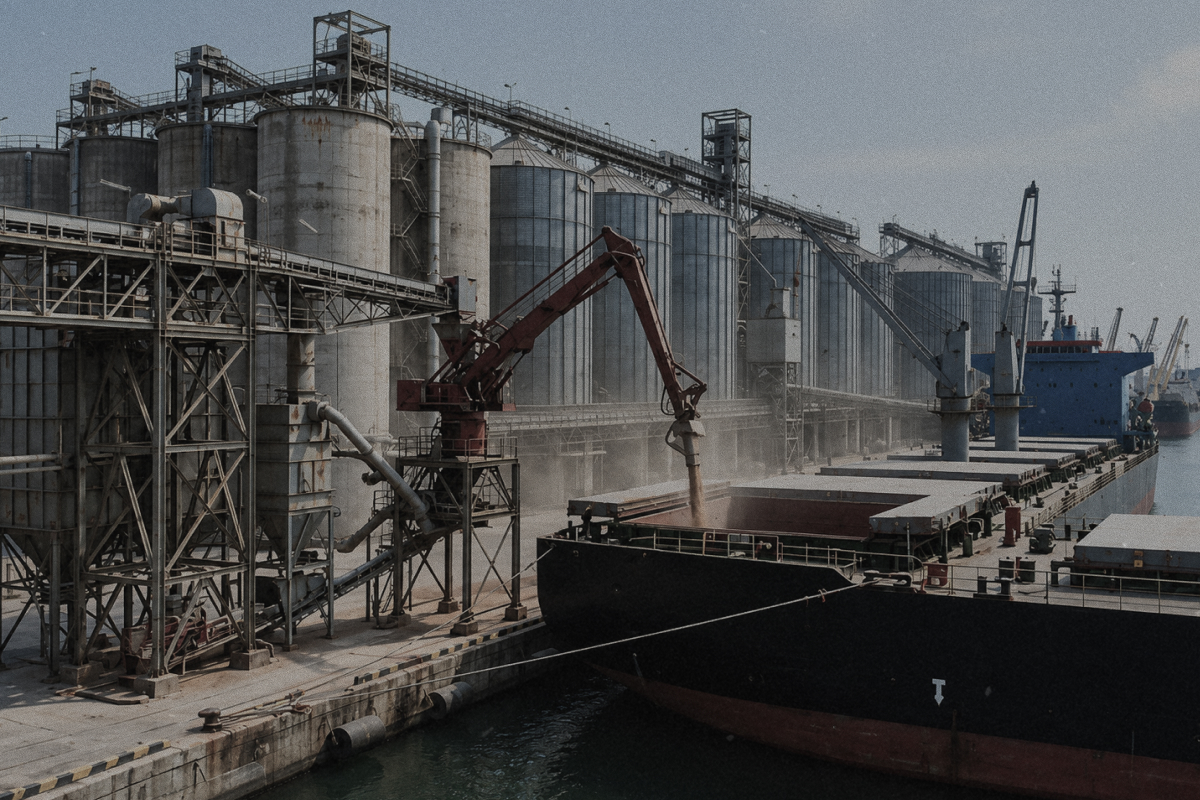

Russia’s grain market is experiencing a sharp deterioration. The shutdown of major terminals in the Azov-Black Sea basin, which accounts for 88% of Russia’s seaborne grain shipments, has triggered a collapse in purchasing prices and disrupted export plans. Over the past week, fourth-class wheat prices in southern Russia fell by 19% to RUB 8,900–10,000 per tonne, while the forecast for August exports was cut from 3.1 million to 1.8 million tonnes.
The decline in prices has already spread beyond the southern regions. Grain prices fell by around 8% in central Russia and 3% in the Volga region, while the cost of road transport to deep-water ports dropped by 10.4% to RUB 12,000 per tonne. The 2026 harvest could reach 140 million tonnes, while the wheat export forecast for the 2026/27 season has been reduced to 44.6 million tonnes. This means unsold grain is accumulating in elevators, storage costs are rising, and farmers are being forced to sell at reduced prices — particularly those with limited storage capacity.
Russia’s position on international markets is also weakening. Between August 11 and 18, the price of wheat with 12.5% protein content in Novorossiysk fell by $6 to $215 per tonne FOB, while comparable wheat in Baltic ports rose to $255 per tonne, widening the gap to $40. Over the same period, US SRW wheat climbed to $283 per tonne and Romanian wheat to $268 per tonne. The low price of grain in Novorossiysk no longer compensates for restricted access to ports and is instead encouraging importers to seek alternative suppliers.
It is impossible to fully redirect these export flows. Baltic ports can absorb no more than 20% of the lost volume, while the Caspian region and the Far East lack sufficient infrastructure. Overland transit through Azerbaijan to Armenia amounts to only 43,000 tonnes.
Owners of the suspended terminals are losing an estimated $50–70 million per month, while the financial pressure is expected to hit heavily indebted agricultural producers particularly hard. A shortage of working capital is already threatening farmers’ ability to purchase seeds, fertilisers and fuel, potentially leading to reduced winter crop planting and a smaller harvest next season.
Even a partial reopening of the ports would not quickly restore previous export volumes. Accumulated cargo, higher insurance premiums and shipowners’ reluctance to enter Russian Black Sea ports are likely to remain significant obstacles for some time.
Tuapse, which is now taking on much of the additional traffic, is becoming a vulnerable bottleneck in Russia’s entire grain export system. Meanwhile, as instability continues, foreign buyers are increasingly signing long-term contracts with alternative suppliers. As a result, Russia could permanently lose part of its export markets even if its logistics eventually return to normal.