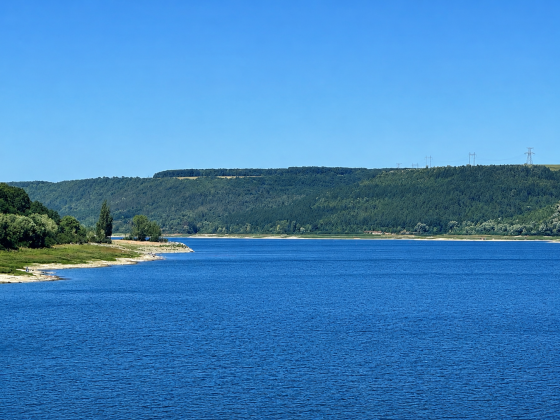



Odessa is highly vulnerable to Russian drone attacks because it is impossible to build a network of ground-based radars over the sea. It seems to me that Ukraine could draw on the experience of other countries — above all Israel and the United States — to strengthen the city’s defences.
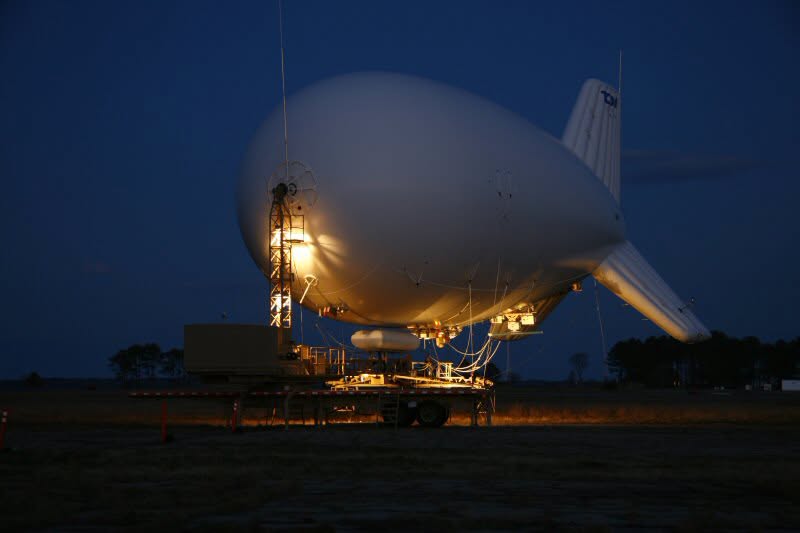
I am referring to an old and proven technology: tethered aerostats. A ground-based radar mounted on a 20-metre mast can detect a target flying just above the water at a distance of roughly 20–25 km. Russian Shahed drones and cruise missiles fly low over the sea precisely to remain below the radar horizon until the final minutes, leaving defenders very little time to intercept them. Keeping an airborne early-warning aircraft continuously in the air, meanwhile, is extremely expensive.
From an altitude of 300 metres, however, the horizon extends to around 70 km; from three kilometres, it reaches more than 200 km. Every additional hundred metres of radar altitude can buy valuable minutes for Odessa’s defence — time to prepare air-defence crews, activate electronic warfare systems and launch interceptors.
The concept has already been tested in practice. The United States operated a network of TARS radar aerostats along its southern border and in Florida. Israel deployed the large Sky Dew aerostat in the north of the country to detect low-flying drones and missiles beyond the horizon.
Several aerostats with different functions could potentially be combined. Some could remain “silent,” carrying only optical and acoustic sensors and thermal imagers. Others could carry lightweight active radars. Because these would be easier to detect, they could be switched on only when necessary.
An elevated electronic-warfare jammer could also potentially be more effective against low-flying targets than a ground-based system because terrain would interfere less with its signal. Aerostats could additionally provide meteorological reconnaissance and relay radio signals for Ukrainian forces, including maritime drones.
More unconventional options are also conceivable. Interceptor drones, for example, could potentially be deployed from aerostats. They would not have to spend time and energy climbing to altitude. In more experimental concepts, altitude itself could provide part of the energy required for an interceptor’s flight, although this remains a much more speculative idea.
The enemy would, of course, likely target not so much the balloon itself — fragmentation holes are not necessarily fatal to a helium-filled aerostat, which does not explode and may lose gas gradually — as its ground infrastructure: the winch, power supply and operating crew. This means that such sites would need to be mobile and capable of rapidly changing position.