


Ukrainian MilTech company Wild Hornets has launched serial production of its new HV VTX Pro video transmitter for the Hornet Vision digital communications system, which the company says could increase the effective range of FPV drones by up to 50%.
The new module is a key component of the video transmission system, sending the signal from a drone’s camera to a ground station or the operator’s goggles. According to Wild Hornets, the transmitter’s maximum power has been more than doubled to 4 watts.
The company estimates that under comparable conditions, the increased power could extend the effective operating range of its drones by up to 50%. For interceptor drones, the range could increase from around 20 km to 30 km under favourable radio-horizon conditions when using a 360-degree omnidirectional antenna.
Wild Hornets also expects the more powerful transmitter to provide a more stable, higher-quality video signal in environments affected by interference and electronic warfare.
For interceptor drones operating against targets at extremely low altitudes, the company says pilot assessments indicate that interception effectiveness could increase by at least 20%, depending on conditions.
The communications range could be extended further with a directional antenna. For strike FPV drones using such a configuration, the practical operating range would increasingly depend on battery capacity.
HV VTX Pro transmitters are already being installed on new Wild Hornets drones equipped with thermal imaging cameras for nighttime operations. The company plans to begin installing the modules on drones with daytime cameras in the near future.
Wild Hornets said the upgrade will not increase the cost of its drones for the Ukrainian military.
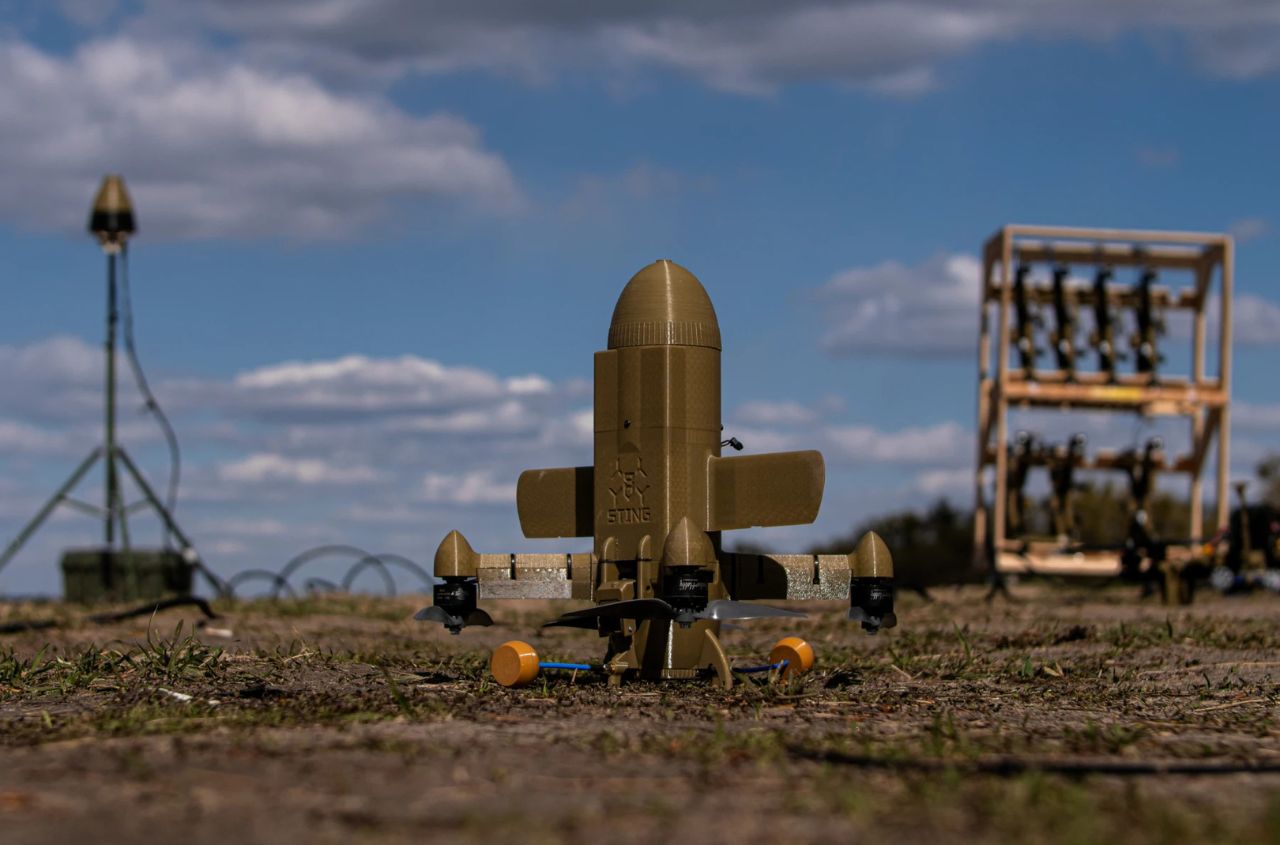
The Ukrainian company develops and manufactures unmanned systems, including the high-speed Sting interceptor designed to counter Russian Shahed-type attack drones. According to Wild Hornets, its products are currently used by more than 100 units of Ukraine’s Defence Forces.