

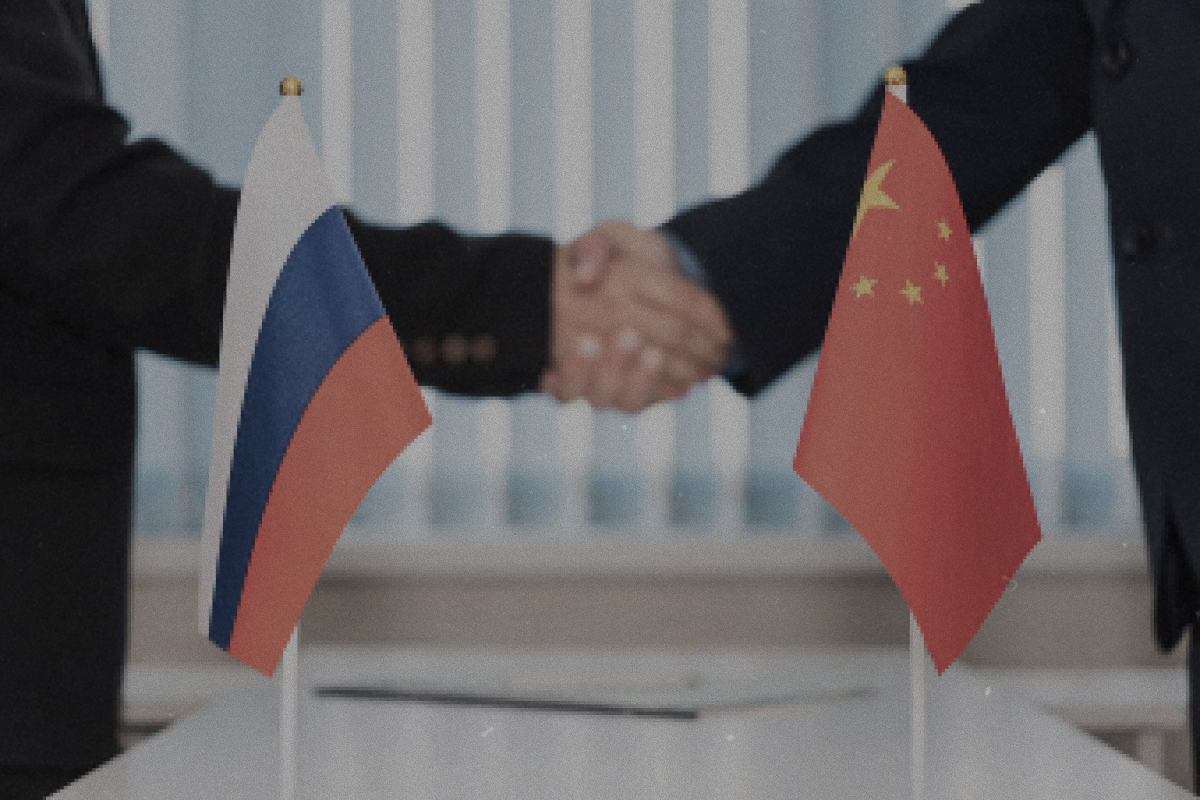

The U.S.-China Economic and Security Review Commission (USCC) describes China as the main external pillar supporting the Russian economy. Since 2022, Moscow’s dependence on Chinese markets, finance and technology has increased sharply. Beijing, however, has avoided taking on formal alliance commitments and is using this dependence to advance its own interests.
Trade between the two countries reached $244.8 billion in 2024. China has become the largest buyer of Russian oil and a key supplier of components for Russia’s military-industrial complex. According to the USCC, China accounted for around 90% of technologies supplied to Russia in 2026 that are subject to sanctions-related restrictions. Since 2022, Chinese companies have sold Russia $10.3 billion worth of goods from the Common High Priority List (CHPL), including semiconductors, electronics, machine tools and drone components.
Chinese components are widely used in Russian drones, while Chinese nitrocellulose is needed for the production of gunpowder and rocket propellants. Intermediaries, shell companies and transit through third countries are used to circumvent sanctions.
Russia’s financial dependence on China has also increased. The yuan’s share of trading on Moscow’s foreign exchange market rose from 3% in 2022 to 99.8% following US sanctions against the Moscow Exchange. The number of Russian participants in China’s CIPS payment system increased from 76 in February 2022 to 210 in June 2026. More than 90% of bilateral trade in 2024 was settled in rubles or yuan.
Military cooperation is also expanding. China supplies engines for Russian strike drones, satellite data and other technologies. In return, Beijing gains access to Russian combat experience and military developments.
The technological gap between the two countries is also widening. In 2023, China spent around 2.6% of GDP on research and development, compared with 0.94% in Russia. Moscow is becoming increasingly dependent on Chinese manufacturers and technologies.
The USCC describes the relationship as a pragmatic partnership rather than an alliance. Differences remain over intelligence, nuclear policy, relations with North Korea and competition for regional influence. Dissatisfaction is also reportedly growing in Moscow over Russia’s increasingly junior role in the relationship.
For Moscow, the central problem is that economic dependence can translate into political leverage. Beijing can expand or restrict Russia’s access to technology, financing and markets depending on its own relations with the United States and the European Union.