

On “pro-Russian parties” in the EU. The very framing of the issue is somewhat illogical, yet this discourse frequently appears in our information space.
In reality, Marine Le Pen, as the leader of the National Rally, and Alice Weidel, as the leader of the AfD, have never been pro-Russian politicians, just as Merz and Macron are not purely pro-Ukrainian politicians. They are all, first and foremost, pro-German or pro-French politicians. They do not work for the Ukrainian electorate, but for their own domestic voters.
Macron, Merz, Marine Le Pen and Alice Weidel are structural elements of Europe’s political elites, each playing their respective role within the functioning of the Pareto political pendulum of “elites and counter-elites”.
If we analyse the political agendas of the AfD or the National Rally, Ukraine or Russia accounts for perhaps one issue out of ten at most.
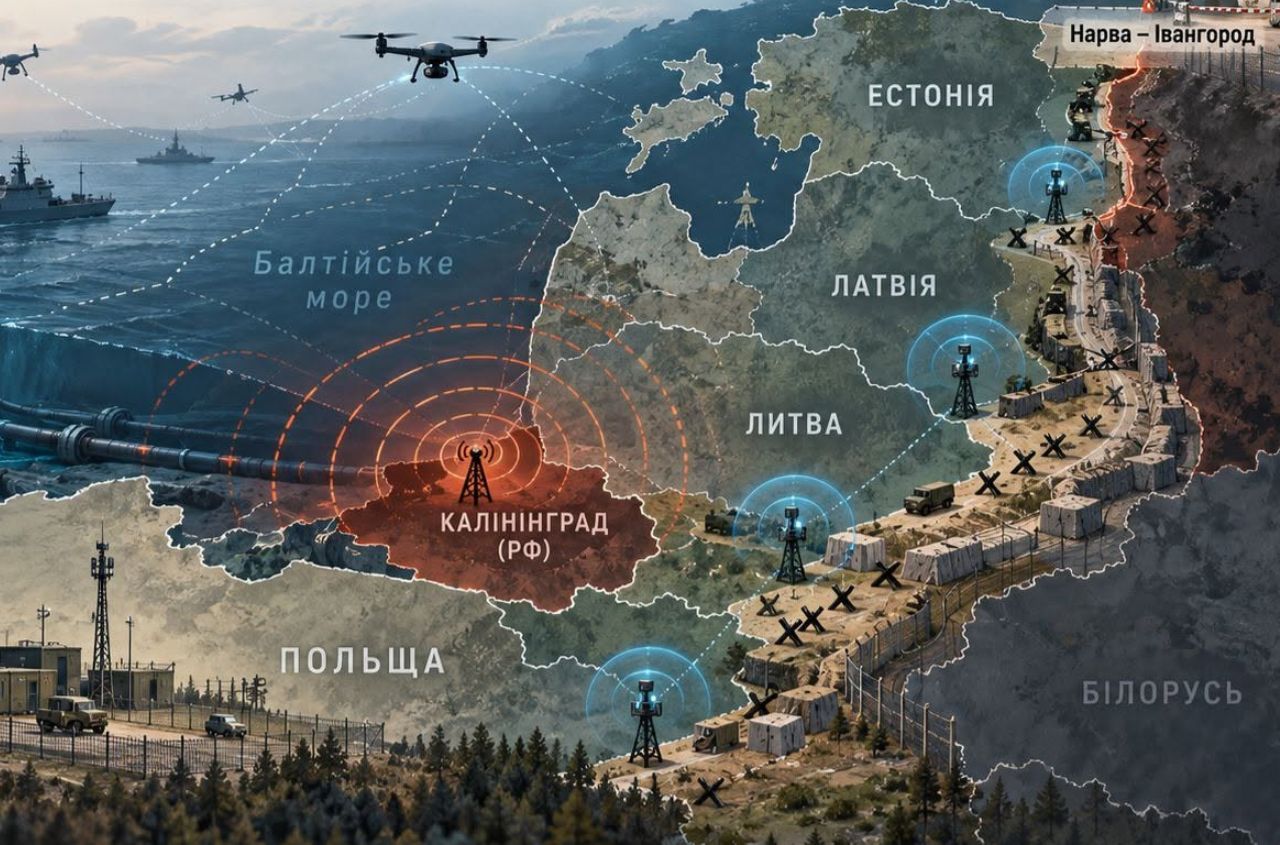
More broadly, the issue of the Russian-Ukrainian war and relations with Ukraine and Russia arises in the EU primarily in the context of the European security deficit that became apparent after 2022.
The EU’s centrist political forces — Macron, Merz and Ursula von der Leyen — see the solution to this security equation in prolonging the war as much as possible and supporting Ukraine’s military capabilities, in the hope of political change in Russia.
The EU’s right- and left-wing forces see the solution to the security equation in ending the war and establishing some form of new modus vivendi with Russia.
As a reminder, modus vivendi means a way of coexistence based on temporary arrangements between parties when a permanent agreement is considered impossible from the outset. In other words, there is obviously no question of a “new alliance” between Europe and Russia.
Thus, the fundamental difference between the centrists and the right and left on this issue lies in their approaches to solving the “security equation”: either through the continuation of the war or through bringing it to an end.
As for the financial trail, it is obvious that Russia spends money on European politicians and even on the weddings of the sons of American presidents.
But these investments are not as successful as many seem to believe. European and American politicians, as well as their children, are accustomed to taking money not only from Russians but also in Ukraine, including by integrating themselves into corporate governance structures such as supervisory boards.
They take money throughout the post-Soviet space, but ultimately pursue their own interests. At most, they may provide “personal” services to a particular oligarch or corrupt official, such as helping to lift sanctions or obtain asylum or citizenship.
For us, this means only one thing: diplomatically, we must know how to work with any European political forces that come to power.
Unlike grant-funded organisations and the activist segment of society, we as a country are not participants in a “woke international” and therefore must be prepared to engage with whatever choice European voters make, without taking one side or another.
Because this is not our choice. It is the choice of voters in Germany, France and elsewhere.
And perhaps, at some point, we should finally figure out our own elections as well...
The “Special Electoral Operation” in the form of Russia’s 2026 State Duma elections is over. The ruling party, United Russia, received 57% of the vote and is forming a single-party majority.
We are seeing a strengthening of Russia’s power structures, but the process has much more far-reaching consequences.
What is taking shape in Russia is a stratum of a “new nobility”, incorporating a significant proportion of those who have participated in the war. In essence, Russia has embarked not only on the “Iranisation” of its economy, but has also begun the “Iranisation” of its politics and ideology.
The integration of war veterans into the system of government is creating something resembling Iran’s Islamic Revolutionary Guard Corps — a Russian “Imperial Grandeur Guard Corps”.
The previous model of power in Russia was structured roughly as follows: at the micro level, national and regional elites in the autonomous republics, territories, districts and regions; at the macro level, a governing system based on a combination of the security establishment and big capital. The security services provided the link between the macro and micro levels.
Putin is now launching a project to create a new political system in Russia, one that will eventually inherit his historical “baggage”.
Local ruling groups — which, during systemic crises, often shift towards centrifugal forces or “reformist-transformational” movements — will gradually be replaced by militarised political power groups formed through a kind of dialectical diffusion of “war–power–war”.
These militarised political groups will not be allowed to rise above local government and the State Duma. The structure of the upper tier will remain unchanged. But at the lower and middle levels, the transformation will be profound.
The cohesion of the system will no longer be maintained solely by the security establishment, but by a combination of security officials and military figures. This is precisely why, for example, many Russian governors are now attempting to demonstrate their own involvement in the war.
This model is aimed less at countering possible future pro-Western tendencies within Russian society than at preventing a critical expansion of Chinese influence.
Here again, the closest analogue is Iran.
For Iran, China is arguably its principal strategic partner — as it is for Russia. Relations with China can be managed by a technocrat such as Masoud Pezeshkian, but the IRGC retains the ultimate say.
A similar model could emerge in Russia “after Putin”: a hypothetical technocrat such as Mishustin formally in power, with the “Imperial Grandeur Guard Corps” acting as a kind of rectifier of the alternating current of political decision-making.
The formation of such a system in the context of the war means only one thing: “after Putin”, Russia could change in much the same way as Iran after Khamenei.
In other words, its policies could become more radical — driven by the militarised political establishment — and more Sinocentric, with the technocratic wing represented by a figure such as Mishustin managing relations with China.
That is why the expectations of some of our politicians that the war will somehow stop by itself “after Putin” are rather naive.
In any case, we will have to find a model for ending the war rather than waiting for a deus ex machina in the form of a “miraculous solution”.