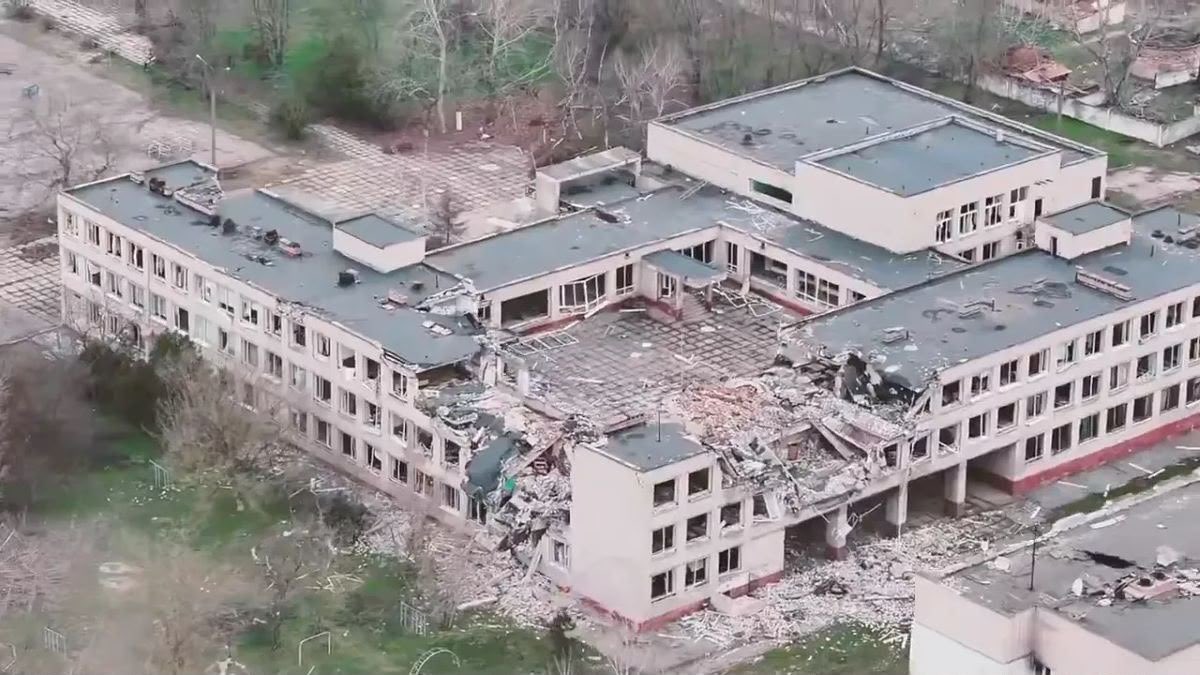


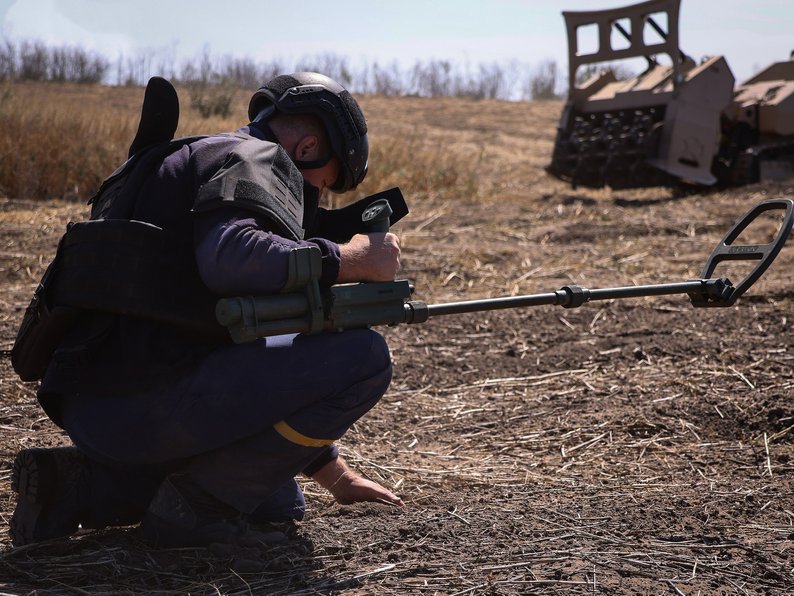

Due to continuous shelling, the territory of Zaporizhzhia region is heavily contaminated with explosive ordnance. However, the security situation does not allow the State Emergency Service (SES) specialists to carry out humanitarian demining.
This was stated by Oleksiy Bezverkhnoy, chief specialist of the Humanitarian Demining Department of the Emergency Response Division of the SES in Zaporizhzhia region.
“Unfortunately, due to the security situation, conducting humanitarian demining in the region is impossible. Carrying out humanitarian demining in the 20-kilometer zone is strictly prohibited under all international norms. We respond to all reports by neutralizing detected hazardous items, but we cannot conduct full-scale humanitarian demining. This requires a large number of personnel to remain in one area for an extended period. The Russian forces would notice this, creating a risk of attack,” the specialist explained.
The SES reports that pyrotechnic teams in Zaporizhzhia region operate daily. Residents, especially in frontline settlements, regularly find various explosive items—artillery shells, mines, hand grenades, drone-dropped ordnance, GAB (guided bombs), rockets, and drones. Many of these devices have self-destruct mechanisms. In particular, anti-tank mines (PTM-3), designed for remote deployment, can explode when vehicles approach.
“Significant portions of agricultural land, fields, and forests are contaminated with explosives. Since the start of the full-scale war, SES pyrotechnic units have handled 4,273 requests, destroying 18,175 explosive items. This year alone, 629 missions responding to civilian reports have resulted in the destruction of 787 explosive devices,” Bezverkhnoy said.
There have also been cases of anti-personnel “butterfly” mines being found. According to the specialist, the Russian forces used them as additional warheads on Molniya-type drones.
The SES notes that all territory within the 20-kilometer zone from the frontline can be dangerous. In Zaporizhzhia, after heavy shelling, remnants of drones, unexploded “Shahed” drones, and missile fragments are frequently discovered.