

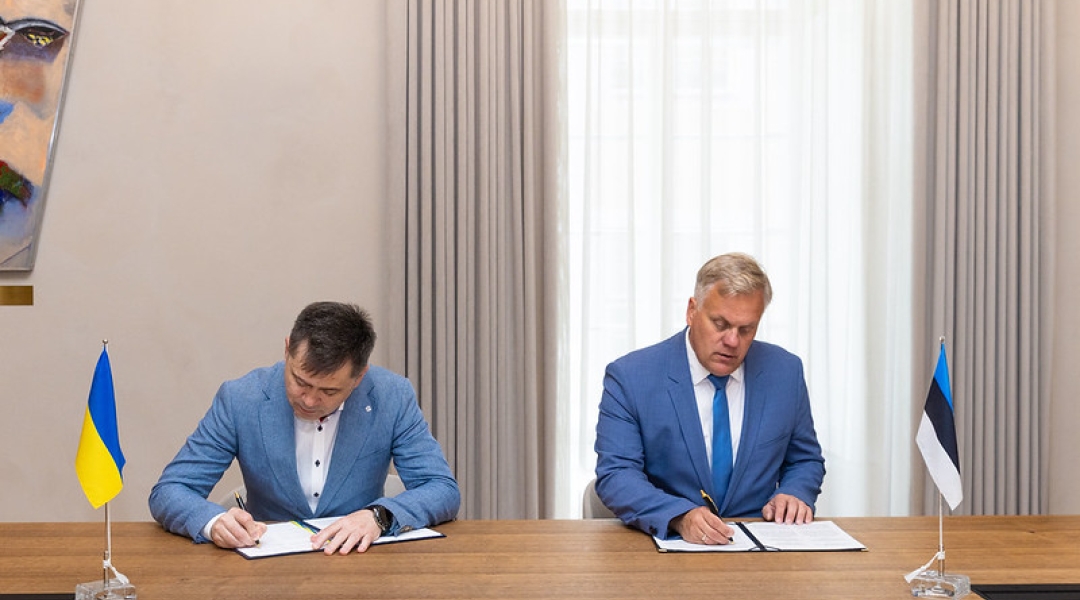

The Estonian State Chancellery and Ukraine's State Service of Special Communications and Information Protection have signed a memorandum of cooperation aimed at exchanging knowledge and practical experience in the field of critical infrastructure protection.
This was reported by the Estonian Government Press Service.
According to State Secretary Keit Kasemets, Ukraine possesses unique experience in protecting critical infrastructure that cannot be learned from theoretical manuals.
"Due to its wartime experience, Ukraine has the most comprehensive expertise in how to protect electricity, communications, and other vital systems. While we cannot transfer the practices of a country at war directly to Estonia, Ukraine is nevertheless the best country in the world to learn from. Through this memorandum of cooperation, we aim to help bring Ukrainian expertise closer to both Estonian public authorities and private companies," said Kasemets.
The Head of Ukraine's State Service of Special Communications and Information Protection, Oleksandr Potii, noted that Estonia has long been a partner of the State Special Communications Service:
"We engage in fruitful cooperation with the Estonian Information System Authority (RIA), conducting joint workshops and cyber defence training sessions. The signing of this Memorandum of Understanding on critical infrastructure protection is further evidence of our shared interest in achieving high-quality results from our partnership."
The memorandum provides for knowledge sharing with government institutions and companies that provide vital services, with a particular emphasis on the physical protection of communications and energy infrastructure.
Areas of cooperation include physical protection of facilities, countering drone threats, secure data storage, cybersecurity, and detection of potential insider threats.
Estonian institutions that advise critical infrastructure operators will also participate in the cooperation, including the Police and Border Guard Board and the Internal Security Service.
Under the memorandum, the parties will organize joint seminars, training sessions, and expert meetings. Further working formats will also be agreed upon to ensure long-term and practical cooperation.