

Over the past few weeks, there has been active discussion about the possibility of the Russian Federation attacking NATO member states — about the fact that such a threat exists.
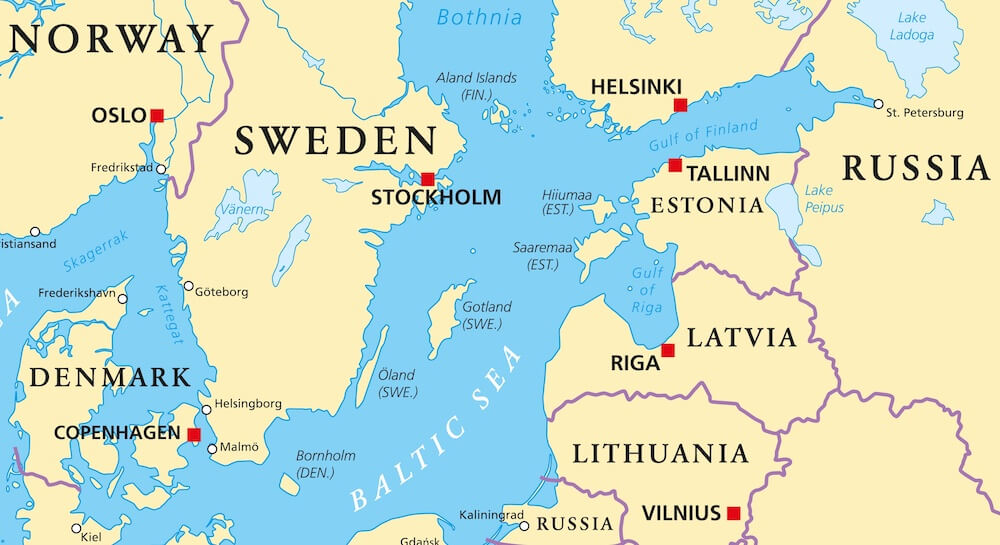
Indeed, throughout its history Russia has constantly tried to fight someone, to prove something to someone, supposedly while defending itself. And the question has often been raised: which NATO country might Russia attack? Among the possible targets mentioned have been the Baltic states or Poland — the Suwałki Gap, for example.
The Poles, yes, are building up their defenses, but recently they have been relatively calm. Why? Let us ask ourselves that question. And from there, let us ask the next one: if Putin attempts this kind of escalation, which country might he choose?
First of all: what is Russia prepared to do, and what is it capable of doing? In terms of forces and resources, Russia cannot start a war against the entire NATO alliance. But it can try to frighten NATO — which is de facto in a state of crisis today — by expanding the war.
In other words, this is the tactic of a “St. Petersburg street thug”: guys from the back alleys, from the old working-class districts of St. Petersburg. The logic is simple: try to intimidate, try to bluff and bully your opponent. As we say in Odesa — why not?
Incidentally, this logic can be traced throughout the actions of the Russian Federation. Whenever anything happens, Russia always says: “We’re not there.”
Let us recall Russia’s involvement in fueling the war in Nagorno-Karabakh — “we’re not there.” Let us recall Transnistria — “we’re not there.” Let us recall Crimea. Remember the “little green men”? They were not there — Putin’s word. And then came “we stood behind the civilians,” and later Crimea became the “native harbor.”
Let us recall the so-called LPR and DPR. Or simply look at who led these entities. It begins with the Girkin-Strelkov group — again, “we’re not there.”
It is the behavior of a coward who, whenever challenged, shouts: “Prove it.” Even the current stage of the war against Ukraine is called a “special military operation,” not a war. Georgia, incidentally, was described as “peace enforcement.”
Accordingly, Putin, as an old KGB man, is afraid to launch a major war. But trying to destabilize a situation so that everything supposedly develops from local circumstances, with Russia then intervening as an additional force — that is a classic intelligence-services operation.
So, with that in mind, let us consider the key potential targets.
Finland. At first glance, from the standpoint of the Russian Federation’s interests, this is a formerly neutral state that became a NATO member. From the political logic of Russia as an empire, one might put it this way: punish it.
The problem, however, is that Finland, even when it was a neutral state, was a country that had experienced war against Russia — against the Soviet Union. It understands what this kind of neighbor means. And the Finns have invested heavily and consistently in their own defense and their armed forces.
So there is the memory of 1939 and the Winter War, the condition of modern Finland itself, and the possibility that other Scandinavian states — Sweden and Norway — could become involved quickly. In other words, it would not be easy, and it would certainly be painful. Ukraine 2.0. Unpleasant.
Poland. And here we come to a key issue. The same analysts in NATO countries who discuss the Alliance’s ability to defend its eastern borders regard Poland as the key state on that eastern flank.
Accordingly, in the event of an attack on Poland, the likelihood of a fairly rapid response by the entire NATO alliance is high. Then there is the condition of the Polish army, which is, to put it mildly, no pushover. At the very least, its capabilities allow it to resist aggression quite effectively.
Yes, in terms of combat experience it may currently lag behind Ukraine, but in terms of available weapons and equipment, Poland is a tough nut to crack. German troops are there, and American troops are there. So there is a high probability that you immediately find yourself at war with the entire NATO alliance.
Thus, Poland and Finland can be ruled out. That leaves the Baltic states.
This has been discussed many times: the Baltic states are countries that could be subjected to Russian aggression. Especially, once again, according to the logic of the St. Petersburg street thug — attack an opponent you regard as obviously weaker.
There are three states here: Estonia, Latvia and the Republic of Lithuania.
Let us start with Estonia. At first glance, there have been problems there and there is a so-called Russian-speaking minority, so one could imagine an attempt to attack. But the Estonians, following the Finnish example, have invested substantially in their defense.
There is also Kaitseliit, the territorial defense organization that, to a certain extent, served as a model for the territorial defense system developed in Ukraine — a system that demonstrated its effectiveness during the Russian invasion.
Moreover, Estonia is primarily a matter of interest for the Scandinavian states. In other words, rapid Finnish involvement, even before the entire NATO alliance has time to respond, is more than likely. And, as I have already said, Finland is also a tough nut to crack.
Success would not be guaranteed; pain and disappointment certainly would be. And then there is the proximity to St. Petersburg. Dangerous, unpleasant, painful. Thus Estonia, so to speak, moves into the background.
The Republic of Lithuania. To attack Lithuania — as, incidentally, with Poland — it would be necessary to use the territory of Belarus. That is another factor.
There is also the question of Lukashenko, who is terrified of being dragged into such a conflict because he, rather than Russia, would be the one to take the beating. Incidentally, from Russia’s point of view, an attack on Lithuania could be advantageous for precisely this reason: Lukashenko, rather than Putin, would take the first blow.
Because there is no common border apart from the Kaliningrad region. And Kaliningrad is a huge military base. But again: an attack on Lithuania immediately raises the issue of Kaliningrad. And that is crucial, because Kaliningrad would immediately be hit hard, repeatedly and painfully.
Moreover, in Lithuania’s case, the probability of a rapid response is higher. A rapid Polish response — and, as I said earlier, Poland is also a tough nut to crack — means a German response and a U.S. response. That, in turn, would draw in the entire NATO alliance.
So who is left? The Republic of Latvia.
There is a so-called Russian-speaking minority there, the so-called “non-citizens,” and parties that supposedly defend the Russian-speaking minority. Latvia also lies between Lithuania and Estonia and is outside the immediate, direct sphere of concern of both Finland and Poland in terms of an instant response — before the whole NATO alliance reacts.
Especially if the objective is not to seize the entire country but to carry out what Russia likes to call a “limited operation.” All that would require is a couple of sabotage groups, the destabilization of the local situation supposedly under the slogan of protecting Russian speakers, and so on.
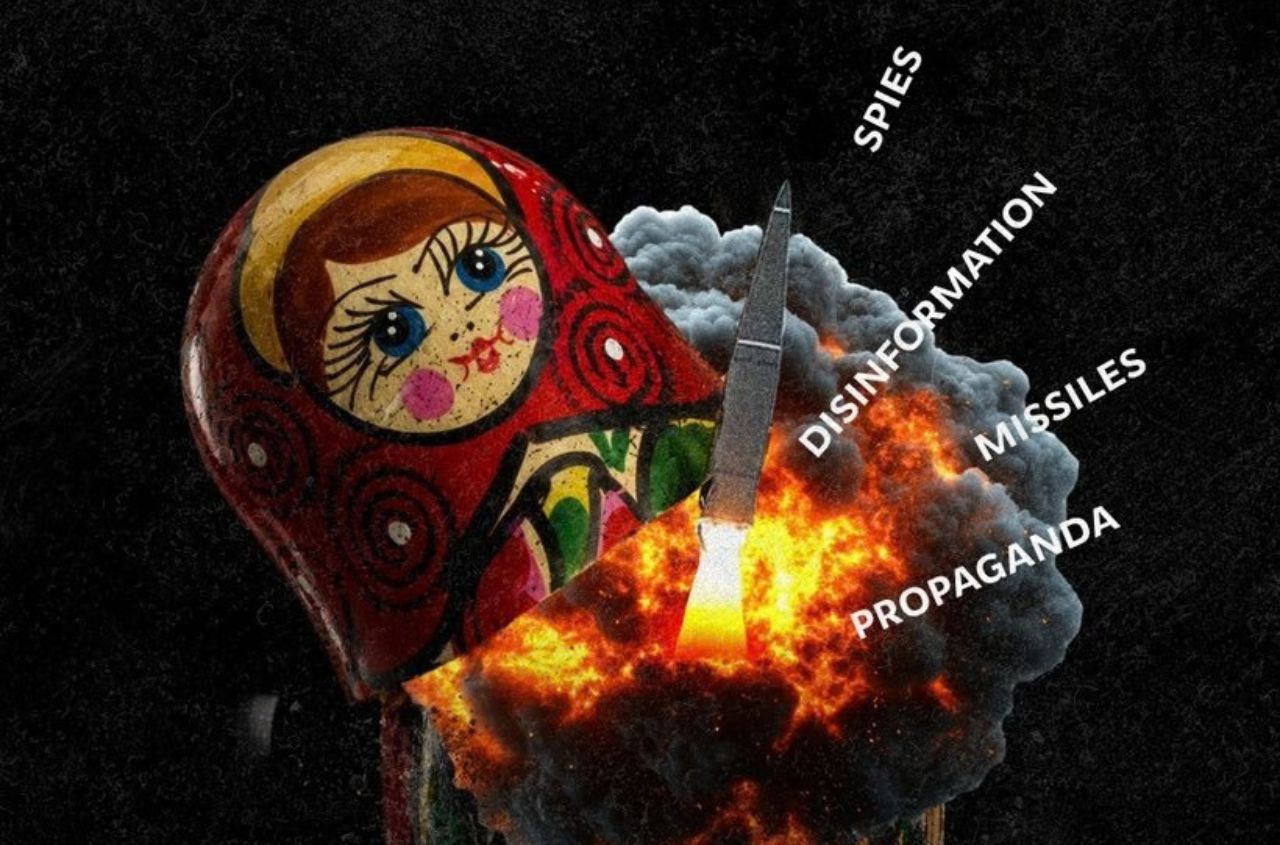
And, incidentally, the sharp shift in Russian propaganda also points toward Latvia — the kind of shift in which an image of the enemy is constructed. This applies both to Russian propaganda itself and, incidentally, to Belarusian figures who are fed from Moscow: Telegram channels, media outlets.
If you look at the volume of negative coverage directed at EU and NATO states and compare, say, Finland, the Baltic states and Poland, then over the past four weeks negativity toward Latvia has clearly surged ahead.
It is difficult to call this anything other than preparation of public opinion. This does not mean that war is about to begin. It means that, just in case, the Kremlin is preparing the groundwork so that, if necessary, it can say: “Look, we are protecting the Russian-speaking population,” and so on.
Some supposed “Latgale People’s Republic,” for example — and all the corresponding nonsense.
The Kremlin’s calculation in the event of such a limited operation, particularly if it takes place in a sparsely populated border area, is not really about scale. It is about the principle itself.
Destabilization begins; “little green men” appear while claiming they are not there. A threat emerges; everyone says they are now going to defend the territory. And against this background, paradoxically, NATO’s overall response could be extremely weak.
The logic could be: let us negotiate, because this is an isolated case involving a small territory, there are various nuances, and so on.
For Riga and for Latvia, this would be extremely painful. For the states bordering the Russian Federation and Belarus, it would be extremely painful and unpleasant. But unfortunately, this is a fact. And the Kremlin is counting on it.
Once there is a flashpoint on NATO territory, it could then be used to bargain for certain concessions over Ukraine. That is something Putin may, let us say, be counting on.
On the other hand, given the current situation and the fact that this threat is being treated as real, the question is how effectively Latvia can prepare. The Latvian leadership sees the threat. The other question is how neighboring states will respond.
This is precisely where a rapid response — or even the threat of a rapid response — could frighten our friend very seriously.
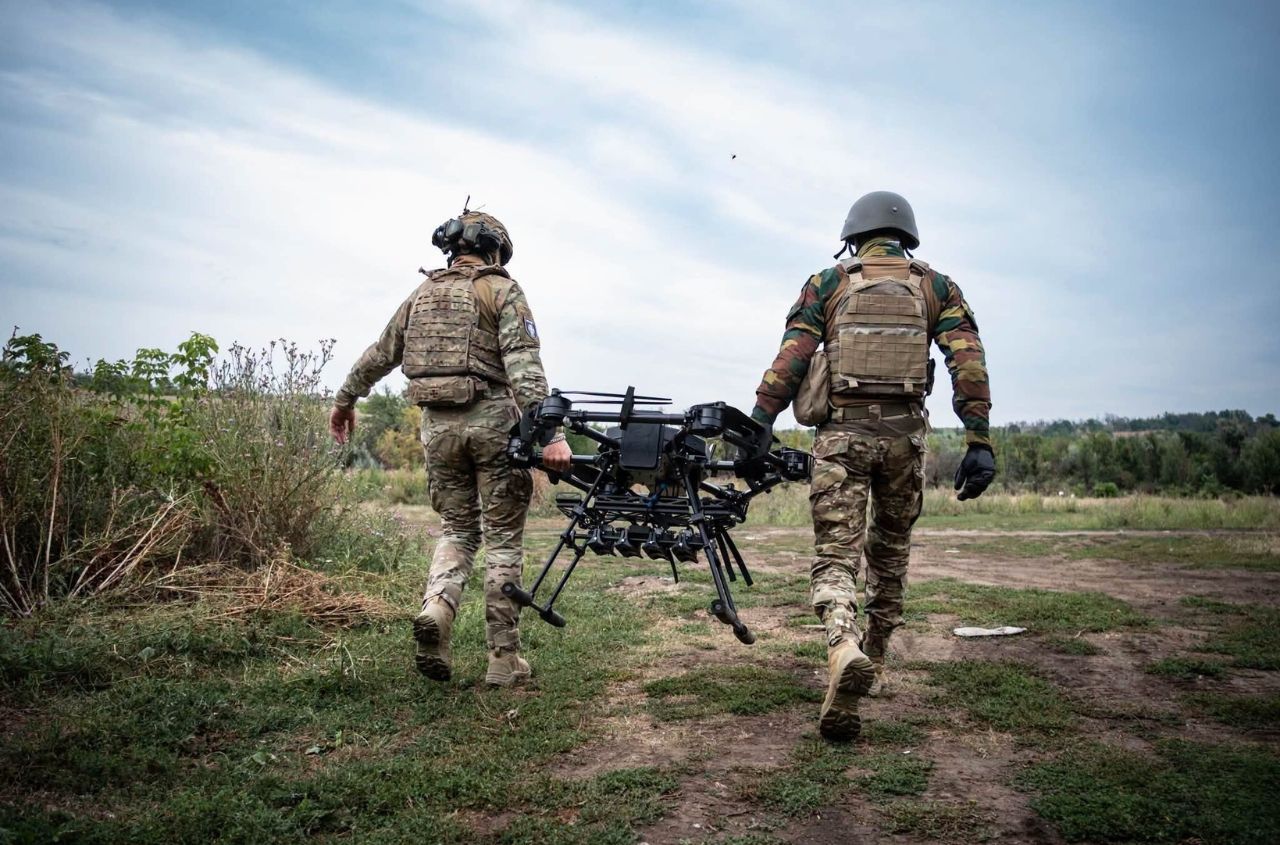
And then there is the question of the intensity of Ukrainian strikes. On the other hand, if we look at the total number of drones and missiles flying into Russian territory and Ukrainian territory, there is no longer parity — the advantage is already shifting toward Ukraine.
And as for the end of September, something tells me that Ukrainian ballistic missiles will be flying into Russia. Accordingly, if that proves effective, the Latvia scenario will either be considered as a crude “here and now” operation — the last cards on the table, so to speak — or it will be postponed for a long time.