

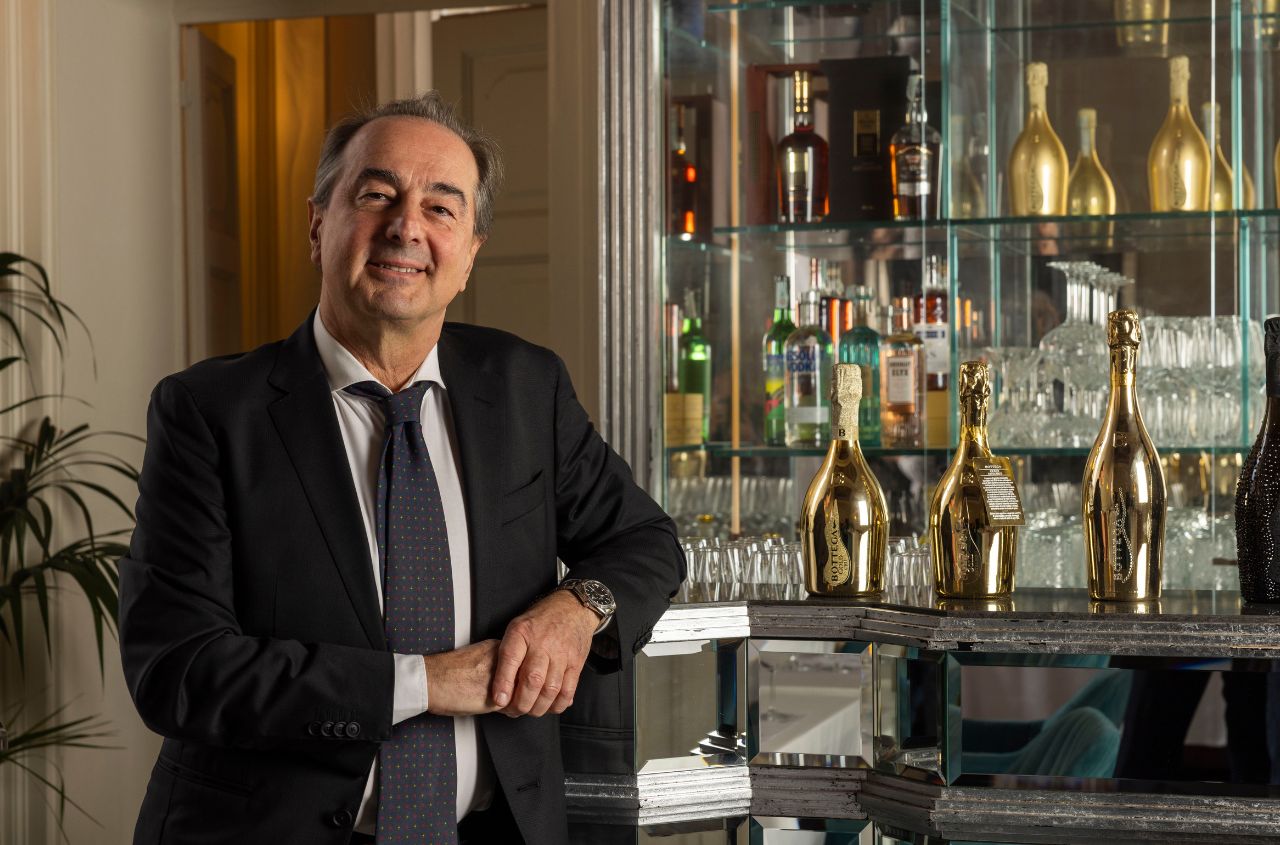

Main image: Sandro Bottega (Source Bottega SpA)
There are Italian entrepreneurs who, despite the war, have continued to operate in the Ukrainian market, supported by their Ukrainian partners who, thanks in part to these business relationships, have managed to preserve many jobs. One of them is Sandro Bottega, renowned winemaker and owner of Bottega SpA.
“I have been running this company for 43 years, since I was 19 years old,” begins Sandro Bottega. “All of this has made me a positive person, accustomed to overcoming any difficulty. Life confronts us with crises such as these. Of course, it is not easy, particularly because I am no longer 20 years old – I am 62 – and therefore I do not have the same energy.”
Talking about business development in a country at war might seem insensitive. Yet wine sales demonstrate that people want to live, want to celebrate, and want to raise a toast with a glass of Prosecco, even in a country such as Ukraine, which is experiencing a tragic situation.
Bottega SpA’s business in Ukraine has achieved very good results. Sales have almost tripled between 2023 and 2025. What factors have contributed to this growth in a market facing such difficult circumstances?
“Well, on the one hand, I ask myself the same question. On the other hand, there is the excellent distribution capability of the Fozzy chain and, above all, the strength of a recognised brand, thanks to the work carried out by the press, opinion leaders and sales representatives, all of whom help reinforce the image of our wine and its quality.
With Fozzy, we have enjoyed a collaboration spanning almost twenty years. We have been working together for many years – long before the war and before Covid-19. We therefore have a close and positive relationship. They not only operate attractive stores, but also employ sales staff capable of explaining the product.
It is always a combination of factors: the quality of the product, the quality of the partner, and the image we project. We will never stop saying that part of the credit also belongs to Italy – to its culture and its image.
Being Italian means a great deal around the world. It means being people of peace and people who appreciate beauty and design. It is a great privilege for us to have been born Italian, but also a responsibility, because we must act as ambassadors of all this. I care deeply about that aspect.”
Based on this long-standing relationship with the Fozzy Group, how do you assess their ability to operate under difficult conditions? In a country at war, one might expect a business partner either to cease operations or to face enormous difficulties. How have you managed this crisis situation?
“We provided all the support we could. We welcomed and hosted people who were in difficulty and, wherever possible, also offered modest financial assistance in order to preserve the relationship.
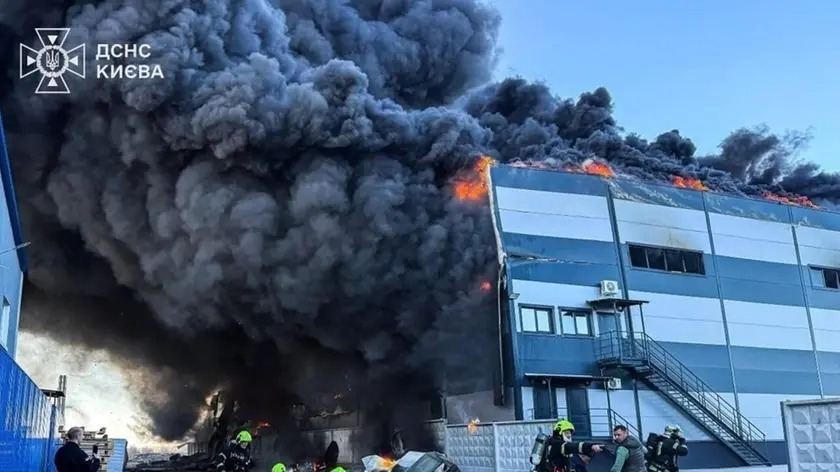
I believe Fozzy had around 20% of its stores closed. During some of the bombardments, our products were destroyed as well. Yet they demonstrated remarkable resilience. They showed that they were determined to keep going no matter what, and we were always there to support them.
Clearly, it is an unimaginable situation. The shame that falls upon those who started this war puts many aspects of human behaviour under severe strain. It forces people to question many beliefs they once took for granted.
The will to carry on – I believe that is the driving force. The attitude of saying: ‘I will do it anyway, even if there is a risk.’ And I believe that bringing even a small smile to people’s tables in Ukraine through a glass of wine is, on our part, a duty.”
Those of us who live here in Ukraine see extensive use of e-commerce. Is this also part of your distribution strategy? Are digital channels important for the commercial growth of your products?
“I believe e-commerce accounts for around 3–4% of sales globally, whereas in Ukraine it is approximately 8–9%, so somewhat above the world average.
E-commerce is a business segment that, first of all, attracts younger consumers. Secondly, it appeals to consumers who are already familiar with the product. Thirdly, it is particularly well suited to Ukraine, where people might like to go out more often but face greater risks and therefore feel somewhat safer staying at home. Having products delivered directly to their homes can therefore be very useful.”
At the 2 June celebration organised by the Italian Embassy in Kyiv, non-alcoholic wine was also served. This reflects a shift in consumer preferences towards these types of products. How are you responding to this demand?
“In our company, non-alcoholic wine is a topic of discussion almost every day. We have been producing four alcohol-free products for many years and have developed technologies that have enabled us to create products of good quality. We are constantly evolving in order to make them even better.
We have developed a white sparkling wine, a rosé sparkling wine, a zero-alcohol limoncino, a zero-alcohol amaro, and even a wine-based alcohol-free cocktail. With these products, we have built a market of between 450,000 and 500,000 bottles. In two months’ time, we will launch a new version of a non-alcoholic wine using cutting-edge technology that will allow us to offer an even higher-quality product.
However, we do not regard alcohol-free products as a substitute for wine. Wine consumption around the world is declining slightly, but what exactly is declining? Poor-quality wine. Good-quality wine, by contrast, is growing. So it is not that people no longer drink wine. They simply drink less poor-quality wine and, at a certain point, rather than drinking an inferior glass of wine, they prefer to choose a different product. That is the first aspect.
The second aspect concerns non-alcoholic wine itself. A wine drinker does not switch entirely to alcohol-free wine. Rather, there are certain occasions when they choose a non-alcoholic alternative – for example, when they have to drive.
I myself drink our alcohol-free wine, but I do not drink it with dinner in the evening, when I would rather enjoy a glass of Prosecco. I might drink it on a Sunday morning at breakfast instead. In other words, it creates a new consumption occasion. That is the key.
The most interesting thing is that non-alcoholic wine attracts a new type of consumer. It appeals to people who, until recently, might have chosen a soft drink and who now decide to drink a non-alcoholic wine because they find it more enjoyable. This can only happen, however, if alcohol-free wines are genuinely good.”
Even during this war, we have seen people getting married and celebrating birthdays, and on all of these occasions they have still raised a toast. This underlines the importance of being able to enjoy happy moments even in difficult times. May we say that this is what makes Italian wine – and Prosecco in particular – a symbol of normality and conviviality, something that people associate with the peace that will come when they can once again live without the fear of air-raid sirens and attacks?
“I think Prosecco embodies this more than any other wine, although I would extend the concept to many other wines as well. I am also a great enthusiast of Chianti – indeed, we own a Chianti winery.
We have even registered the trademark The Wine of Peace because we firmly believe that wine can remain a vehicle for social connection, a drink through which people with different tastes, opinions and outlooks can set aside many of the negative things around them and return to a more normal way of life.
I believe that a glass of wine enjoyed responsibly and intelligently, with an appreciation of its story and everything that lies behind it, can genuinely help people reflect. It helps people socialise and fosters the sensitivity needed to understand others. This is fundamental if we want to avoid not only wars, but also the political disputes and divisions that today affect Italy, France, Germany, the United States and many other countries, to the point where people simply switch channels rather than listen.
Many years ago, people could follow a political or sporting debate with the openness of those willing to hear opinions different from their own – opinions that might even persuade them to reconsider their views. Today, that is no longer possible because everything turns into conflict. And that conflict is clearly at the root of a growing social disharmony.
It is for this reason that we also created a wine dedicated to love. In 1997, we registered the trademark The Wine of Love.”