

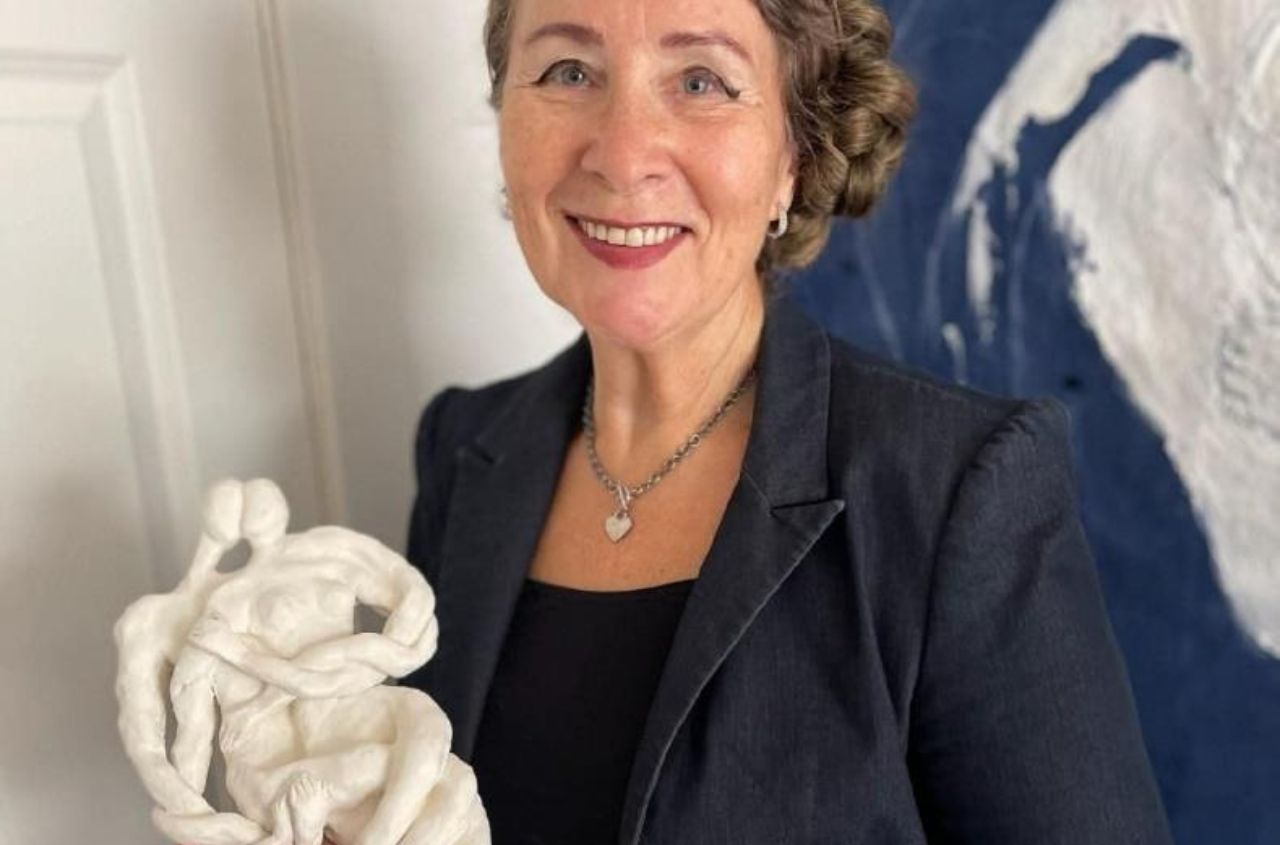
Main image: Iryna Vyshnevska
The forty-seventh interview through images by Andrew Sheptunov
Contemporary Ukrainian art speaks to the viewer in a multitude of languages, but the voice of Iryna Vyshnevska stands out for its uncompromising frankness. In her works, there is no attempt to flirt with the public or hide behind complex conceptual constructs. Instead, she offers a surgically precise cross-section of our reality, where every brushstroke and every detail lay bare the nerve of our time.
In her recent project "Lonely Eve," the artist dissects the theme of the modern world's illusory nature. She explores the total loneliness of a person in the era of glossy standards, where the desire to "be" has long been replaced by the desire to "appear." Her heroines are a reflection of ourselves, trapped between imposed roles and genuine, yet deeply hidden feelings.
Special attention should be paid to the materiality of her works, which organically resonates with the traditions of nonconformist aesthetics. Vyshnevska boldly works with textures: sequins, oilcloth, tulle, broadcloth, and old window frames become full-fledged participants in the narrative. This visual eclecticism transforms everyday objects into powerful symbols, destroying the boundaries between the mundane and the sacred.
Behind the external brightness and sometimes deliberate theatricality of her canvases lies a deep psychological tension. Iryna herself compares modern imposed values to shiny helium balloons—touch them, and there is emptiness inside. It is exactly this contrast between a flashy form and internal vulnerability that becomes one of the main leitmotifs of her work.
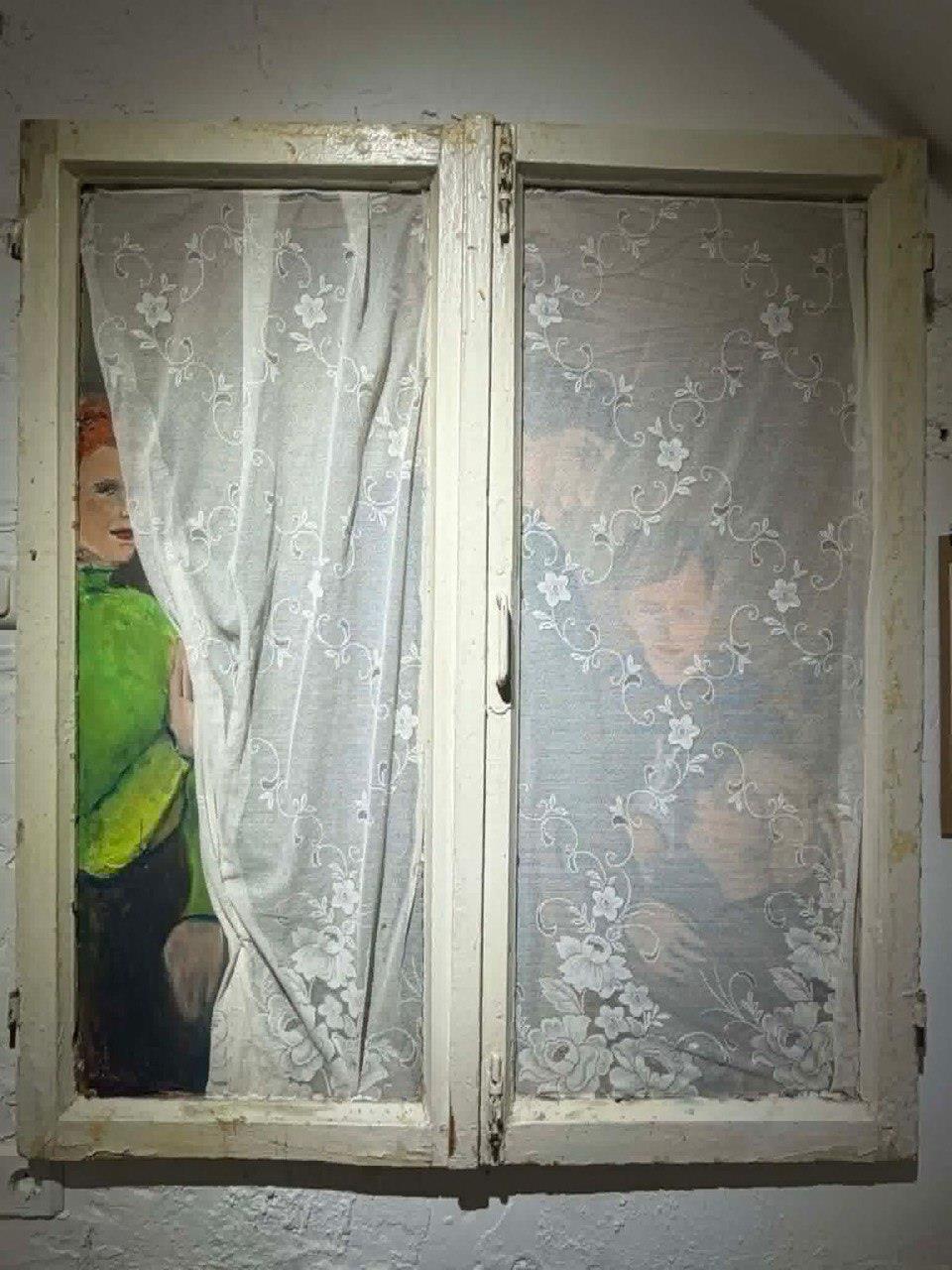
A separate line in her practice is the Odessa context, most dramatically embodied in the series "Windows of the Old City". For the artist, the city is not about postcard facades and architecture, but primarily about people, their hidden pain, and secrets. Through window openings, she peers into other people's lives, capturing fleeting human emotions in a space where joy and bitterness share the same square meter.
The invasion of a great tragedy into the life of the country inevitably transformed the artist's lens. The war is present in her works not as direct reportage illustrations, but permeates them on an existential level. Stories about saving wooden sculptures or love as the only anchor become a testament to the incredible resilience of the Ukrainian people, their ability to preserve light despite the destruction.
Iryna Vyshnevska is an author who does not know how to distance herself from her subjects. As she admits, some paintings are so emotionally taxing that they are painted literally with tears in her eyes. This is art created "without skin," where personal experiences, ambitions, and losses are inextricably intertwined with the shared breath of a wounded but living society.
Her painting does not offer viewers comfortable answers or comforting illusions. On the contrary, it forces one to stop and take an honest look at oneself from the outside. This is a dialogue that requires a certain courage, because not everyone is ready to drop their protective masks and come face to face with their own vulnerability.
In this piece, Iryna Vyshnevska answers complex and multifaceted questions about art, Ukraine, loneliness, and the inner search using the language she has mastered to perfection—her paintings. Each visual artwork acts as the main voice here, while the author's short, capacious comments merely place the final semantic accents in our conversation.
1. Which of your works best conveys that fictional reality you spoke about at the "Lonely Eve" exhibition?
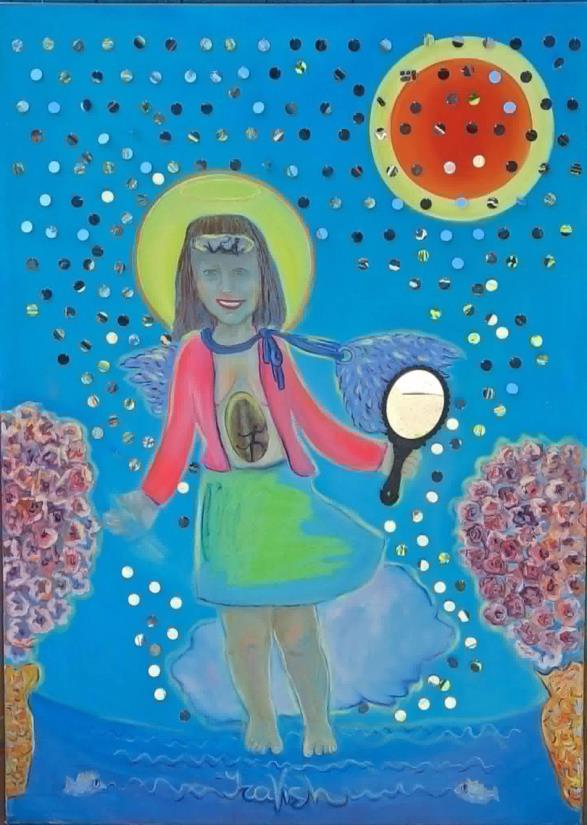
Iryna's comment: "It is about the illusory nature of the world, false values, and our desire to 'appear rather than be' for the sake of the media. Modern society is like a beautiful banner with emptiness behind it, and people are like shiny helium balloons: poke them, and nothing is left."
2. With which canvas would you describe your inner state in those moments when, while physically in the USA, you mentally wander the streets of Odessa?
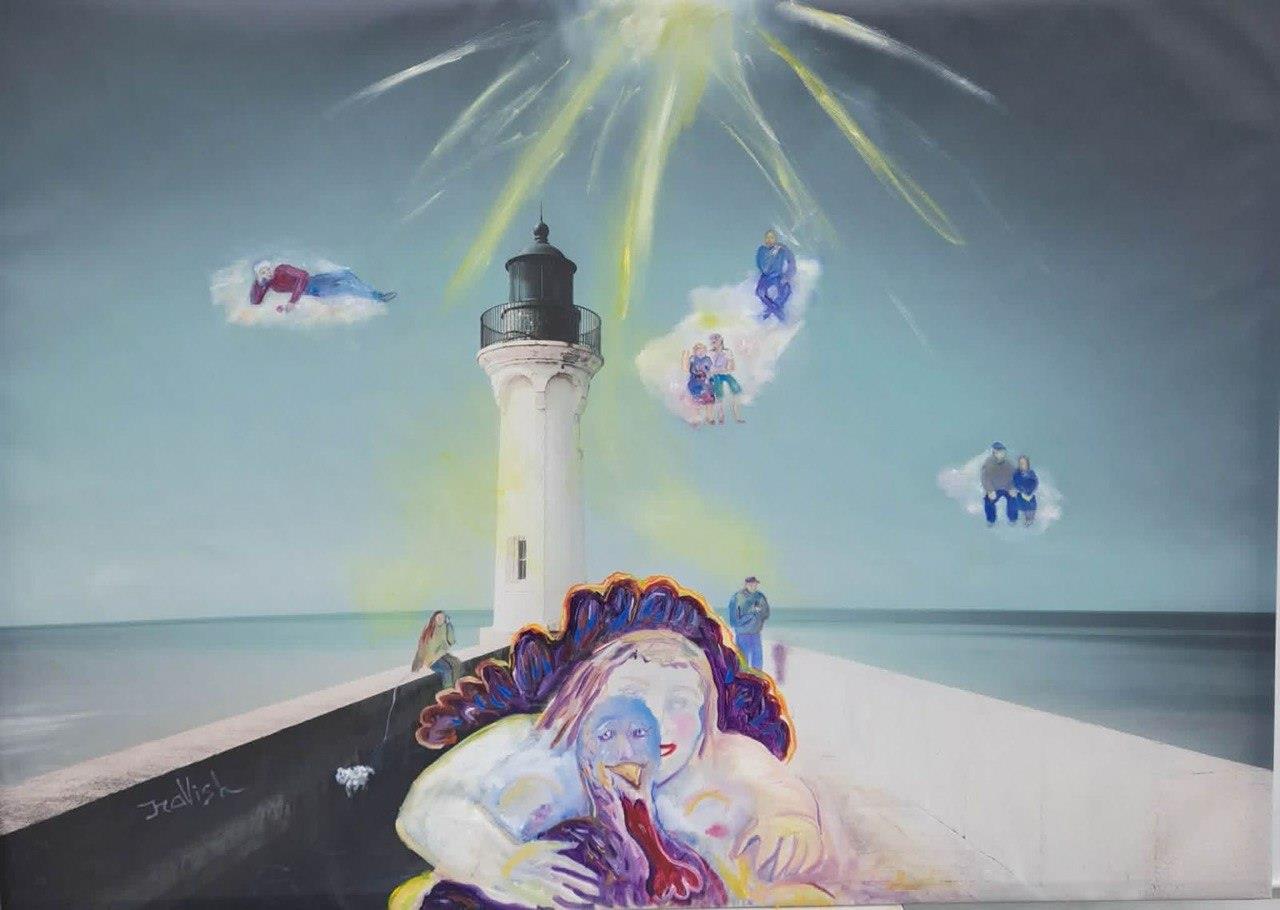
Iryna's comment: "Perhaps, I don't have such a work. But I have a work that, I think, best describes my life today. For this work, I used a photo print with a sea and a lighthouse on it (but this is not a direct reference to Odesa). I am rushing—out of breath, disheveled (as in life)—on a turkey towards my next goal, leaving behind my daughter with a dog and my husband—people who, on the one hand, are dear to me as constant values in my life, and on the other hand, by and large, I am only interested in my personal, ambitious goals. And from the sky, those whom I loved and who loved me are watching me."
3. Which painting from the "Windows of the Old City" series hides the most piercing stranger's secret, involuntarily glimpsed by you?
4. Share a work that has become an absolute symbol of continuing life for you, despite the destruction around.
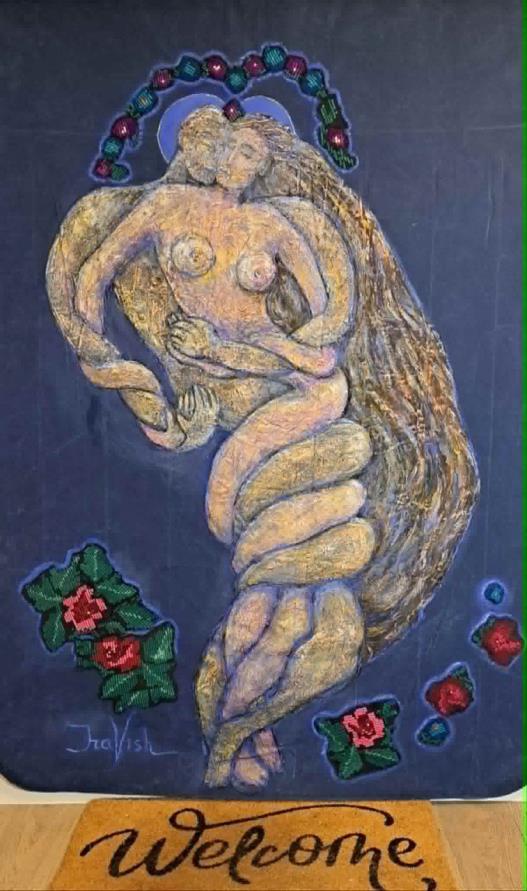
Iryna's comment: "Only love will keep us on earth even in the most terrible times and will become a symbol of continuing life. The only problem is that people vainly fear pain and close their hearts."
5. Which work could be your personal visual response to the poems recited during the poetry performance at the museum?
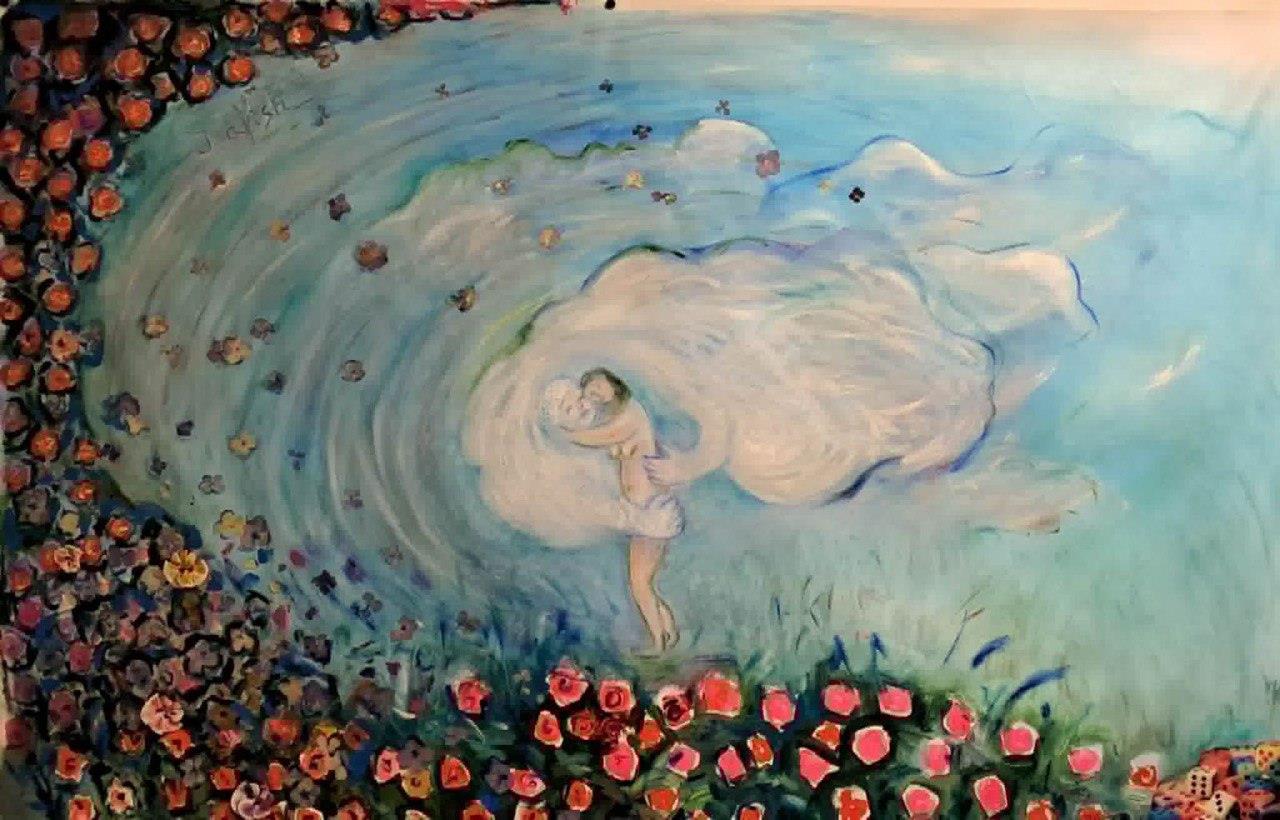
Iryna's comment: "At the opening, I was too tense to perceive the poems. But among them was my friend—Victoria Frolova, a wonderful poet, whose cycle of poems—'Diary of My Eternal Love'—I love very much. Here is a quote from this cycle:
You are in your sunny country, and it is raining here...
And now – how am I to live now,
If the thought of you – has returned, and I know,
That I have loved you – always, and will love you – forever...
And I know that you are – lonely in your sunny world
Among friends and girlfriends, and still
So far – from me. Although my soul has opened to you again,
And I can hear your voice... the voice of your heart.
And I can create my own world – a world in which there are two of us,
And we love each other – forever. I will not tire
Of repeating this thought, because it is – true,
Even if you know nothing about me.
But I – know absolutely for sure that all your life
You are looking only for me. And therefore
Your eyes are so sad in your sunny country,
And therefore here, now in my world
This light rain is falling..."
6. Which work is your most candid self-portrait, hidden behind what seems to be a completely unrelated subject?
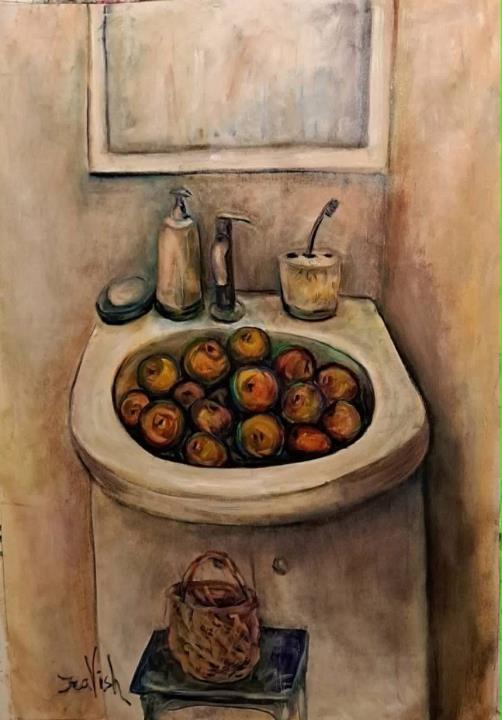
Iryna's comment: "I have many self-portraits in the classical sense of the word, but the work 'Apples' is the most revealing of them. Here I am not just without clothes. Here I am without skin."
7. Show a work that was emotionally the most difficult for you to create, but which now gives the audience hope.
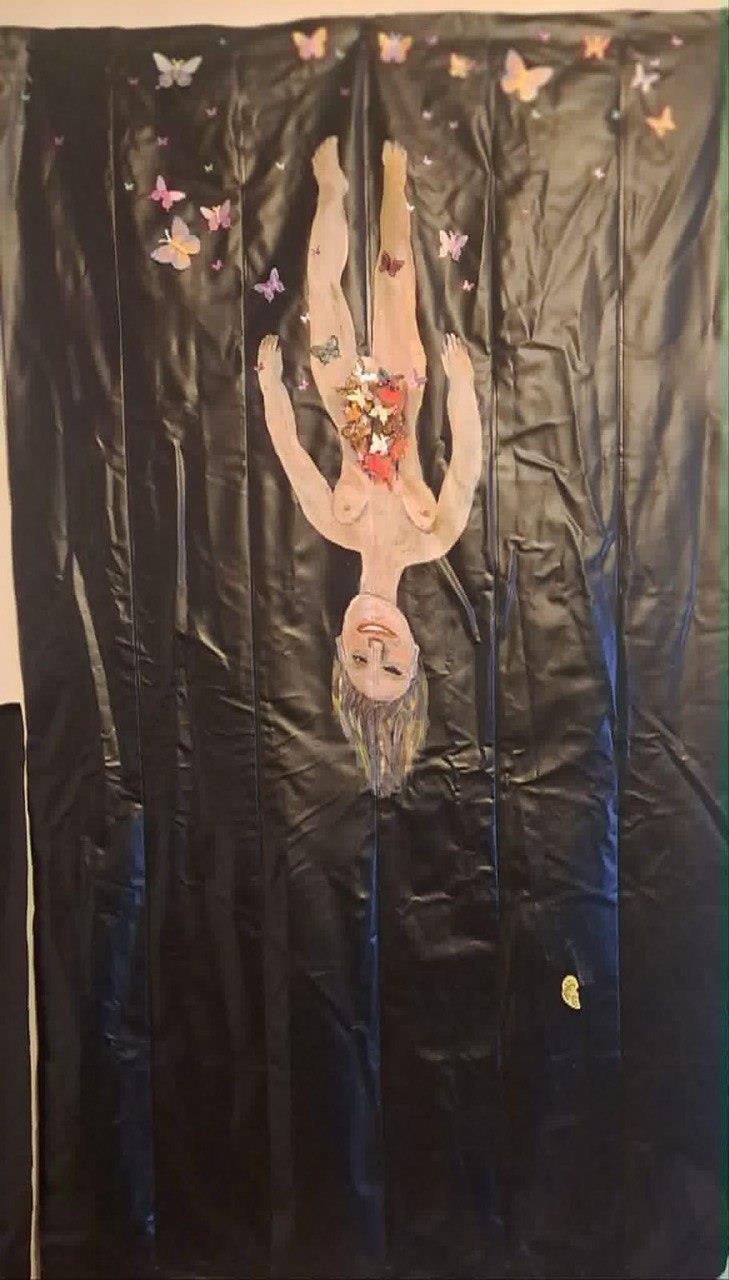
Iryna's comment: "I don't have such a work, I paint exclusively about the personal. Some subjects I experience so heavily that I cry while working, and these paintings ultimately certainly do not give the viewer hope."
8. Which of your paintings could explain to a foreign viewer the full depth of the tragedy and the strength of the Ukrainian people without unnecessary words?
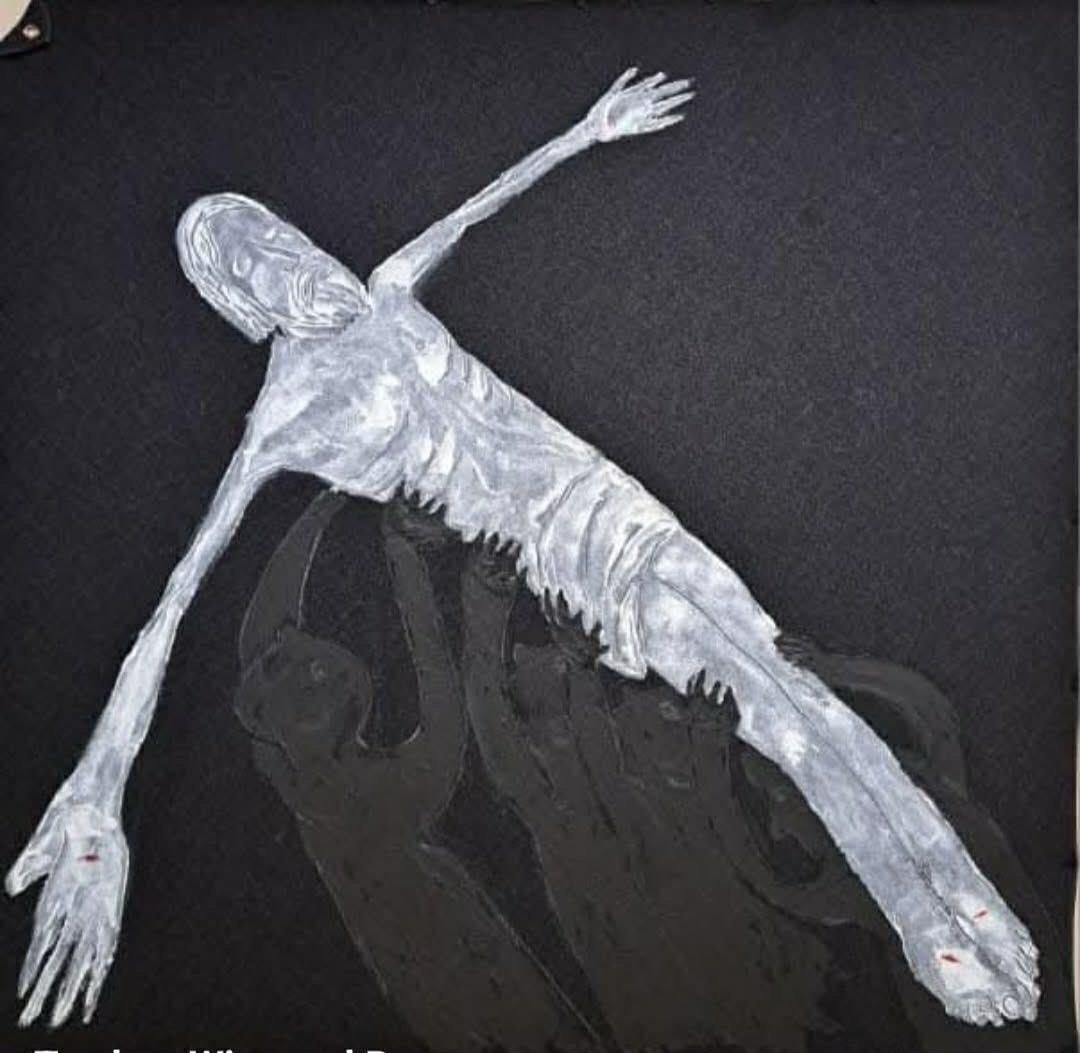
Iryna's comment: "The story that served as the reason for creating this work struck me: at the beginning of the war, a wooden sculpture of Christ dating back to the 17th century was taken out of one of the oldest churches in Lviv. The last time the sculpture was taken out before this was at the beginning of the Second World War. And what struck me was this: appealing to God for help, we ask: 'Save and preserve us!', but here—here little people, essentially ants, take God into their arms to save and preserve Him! What can be said about these people? They are great in spirit and body!"
9. Share a painting that personally symbolizes for you the moment when even the most "Lonely Eve" finds inner harmony.
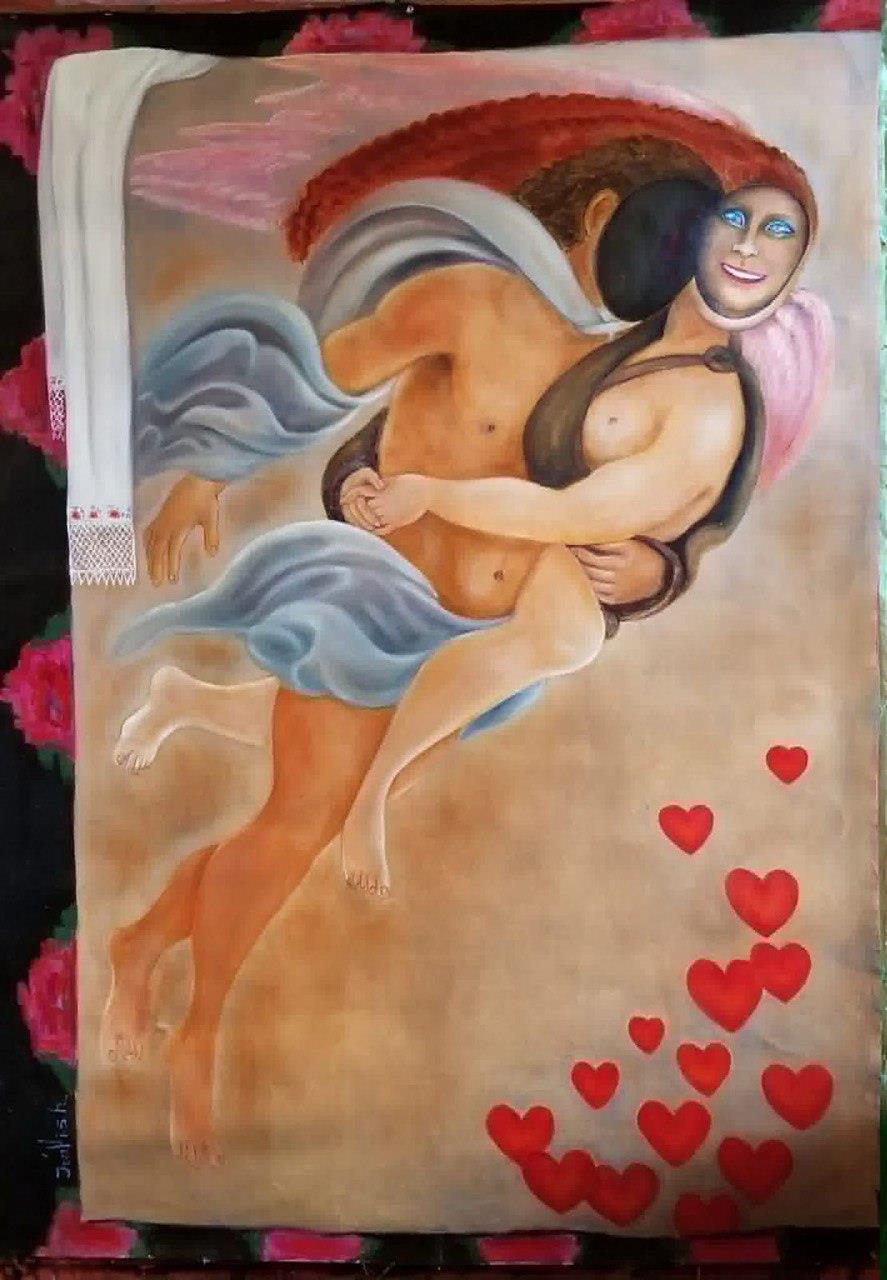
Iryna's comment: "Harmony comes when the 'lonely Eve' plunges into a new illusion—invents another ideal man with whom she intends to be forever and die on the same day."
Iryna Vyshnevska's art is not just an aesthetic experience, but an invitation to an uncompromising dialogue with oneself. Her paintings, like thrown-open windows, expose what we so often try to hide behind socially approved facades and glossy filters. In a world where it is too easy to get lost among illusions, this sincerity, sometimes reaching painful vulnerability, becomes a real foothold and reminds us of what it means to be truly alive.
The conversation started on the canvases does not end within the framework of a single exhibition or article. The artist continues to explore the surrounding reality, transforming pain, hope, and love into new visual forms.
To follow the development of her series, the process of creating paintings, and announcements of future exhibition projects, we invite you to subscribe to Iryna Vyshnevska's pages on social media:
- Instagram: @iravish
- Facebook: Follow her art