

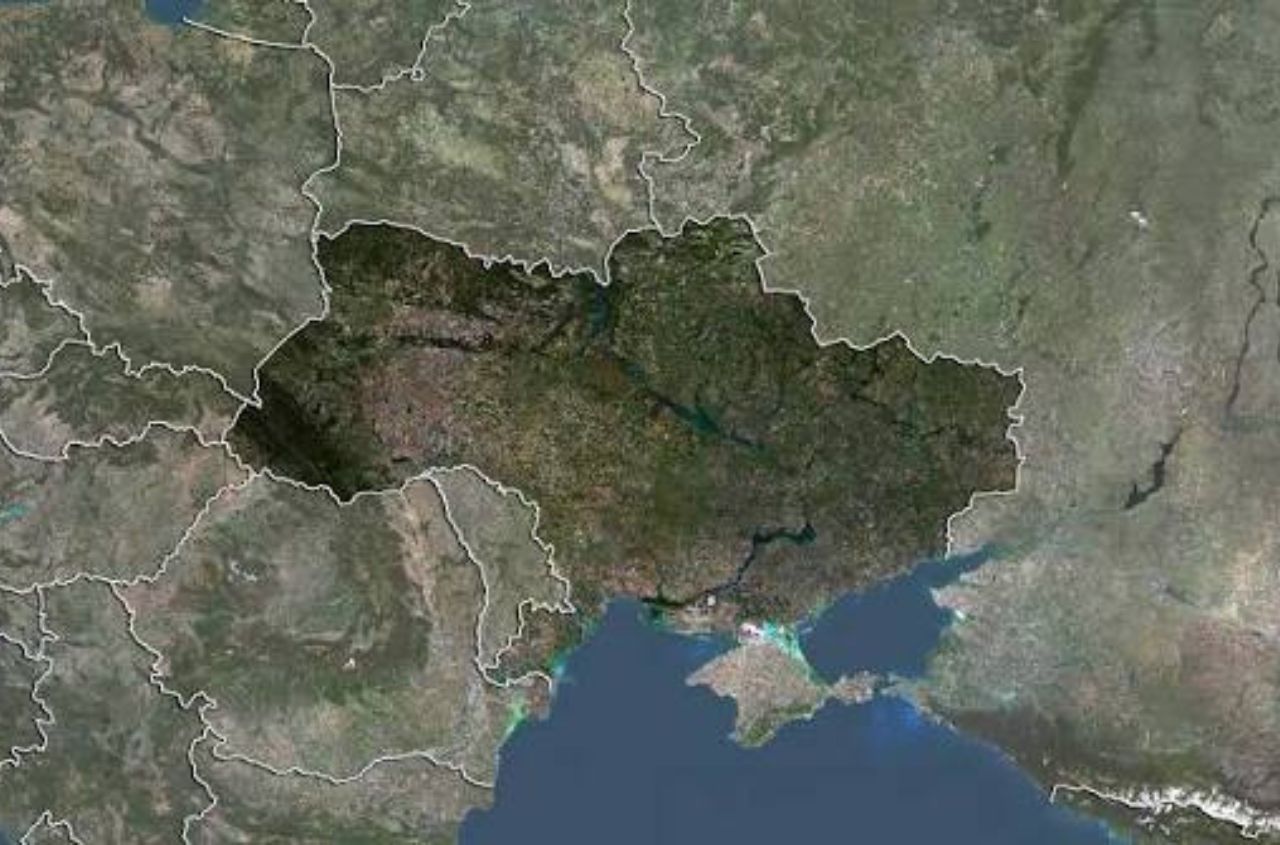
The first phase of testing a satellite-based field monitoring system developed by Ukrainian agricultural company Kernel and NASA Harvest has been completed in Ukraine.
The agricultural holding company's press service announced the results.
"Kernel's cooperation with the international scientific initiative NASA Harvest has moved from the data-sharing stage to its first measurable results. A research team involving the University of Strasbourg, the European Bank for Reconstruction and Development (EBRD), and the Food and Agriculture Organization of the United Nations (FAO) has completed testing satellite technology for monitoring crop rotation in Ukrainian fields," the company said.
The project aims to create a digital tool that can remotely verify compliance with sustainable agricultural practices over several years. This is particularly important for agricultural producers, as it simplifies access to financing from international partners and facilitates operations in the EU market.
To calibrate the technology, Kernel provided data from 87 fields participating in the pilot phase of the company's own carbon project, which is already undergoing independent international validation.
This allowed researchers to compare satellite analysis results with actual data on crops and field operations. In particular, scientists examined Kernel's fields in the Sumy and Chernihiv regions, reconstructed several years of crop rotation history and documented the use of sustainable agricultural practices.
For example, the proportion of cases in which the same crop was grown on a field for two consecutive years fell from 16.5% in 2017–2020 to just 0.8% in 2021–2025.
"Most of the fields studied demonstrated consistent rotation between different crops. Simply put, regularly changing crops helps preserve soil fertility and reduces the risk of soil degradation," the company explained.
For farmers and the financial sector, the technology addresses one of the main challenges of agricultural auditing: verifying the history of an individual field over several years will become easier and less expensive thanks to digital evidence based on satellite data.
This creates opportunities for accessing sustainable financing, working with international buyers, obtaining certification and complying with EU regulatory requirements.
In the future, such solutions could be used not only by agricultural producers but also by banks, government institutions and other market participants that need to verify the sustainability of agricultural production.
The next testing phase will cover more complex parameters, including identifying soil cultivation methods and measuring areas planted with green manure and cover crops.
Ultimately, the developers plan to expand the satellite monitoring system across the whole of Ukraine.