

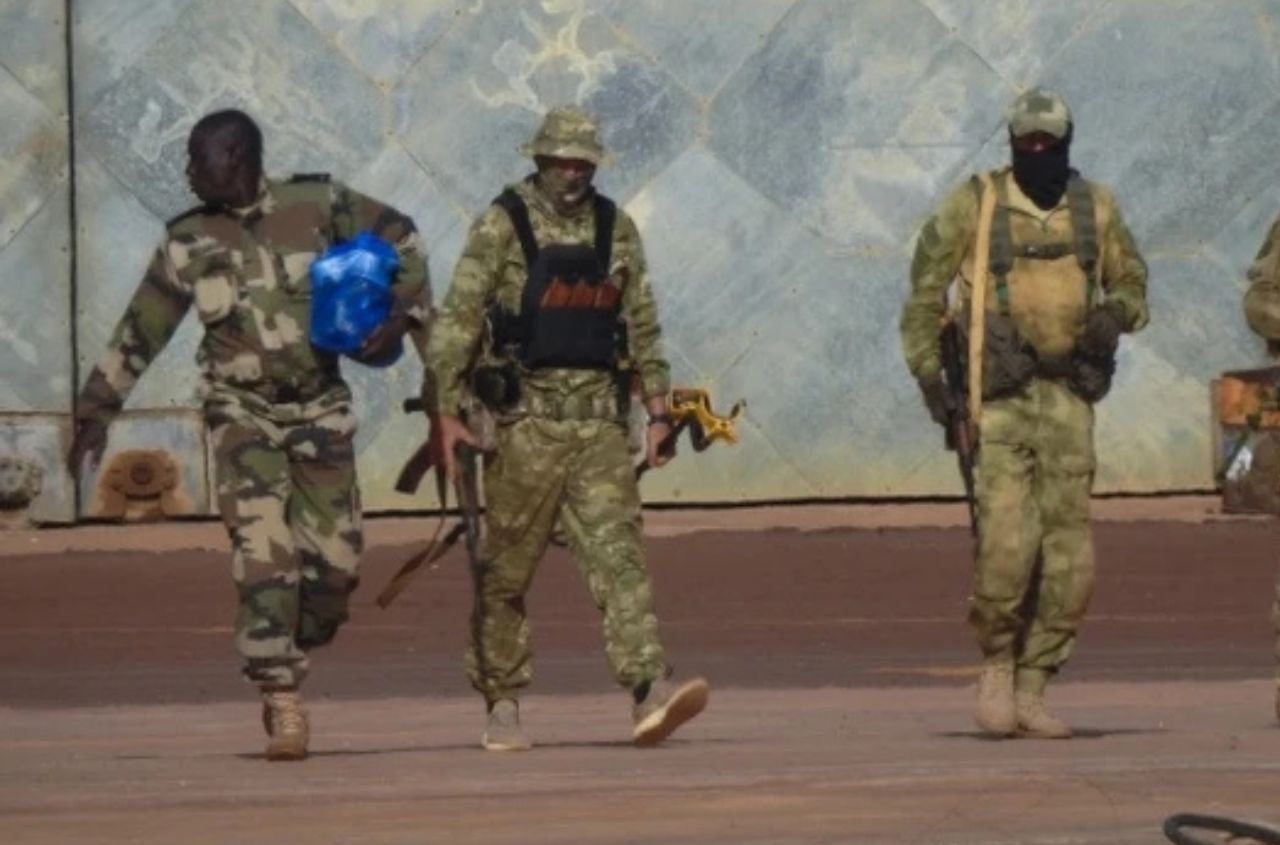
Russia has stepped up military deliveries to Mali's ruling junta after the Malian Armed Forces and the Russian Defense Ministry's Africa Corps suffered setbacks in the country's central and northern regions.
The need for reinforcements arose after a series of attacks by the Azawad Liberation Front (FLA) and Jama'at Nusrat al-Islam wal-Muslimin (JNIM), which struck Malian and Russian positions near Anefis, Gao, Aguelhok, and Sévaré in July 2026.
On July 18, FLA and JNIM fighters attacked a convoy of Malian troops and Africa Corps personnel traveling from Anefis to Gao. The convoy suffered significant losses in both personnel and equipment. The coordinated actions of Tuareg armed groups and al-Qaeda-linked militants increased pressure on the authorities in Bamako and demonstrated that the Russian contingent was unable to stabilize the security situation.
Just a week later, on July 25, a convoy carrying 60 to 70 pieces of military and transport equipment arrived in Bamako after being shipped from Russia by sea through the port of Lomé in Togo. The shipment included armored personnel carriers, infantry fighting vehicles, armored vehicles, and transport trucks. After unloading, the equipment was transported through Togo and Burkina Faso to Mali.
The cargo was carried by the Russian-flagged cargo vessel Mikhail Britnev (IMO 9081370), owned by the Russian company EKO Shipping. The vessel has been under U.S. sanctions since May 2024.
According to Western analysts, the use of the port of Lomé indicates that Russia is expanding its supply routes to support its forces in the Sahel. Previously, the main logistics hub was the port of Conakry in Guinea, through which large shipments of Russian armored vehicles were delivered to Mali during 2025 and 2026.
The new route became possible following the expansion of military cooperation between Russia and Togo. A defense agreement signed in 2025 provides for joint military exercises, personnel training, and intelligence sharing. The shift to the Lomé route suggests that Moscow is seeking to reduce its dependence on the port of Conakry and make its military supply network in the Sahel more resilient.