

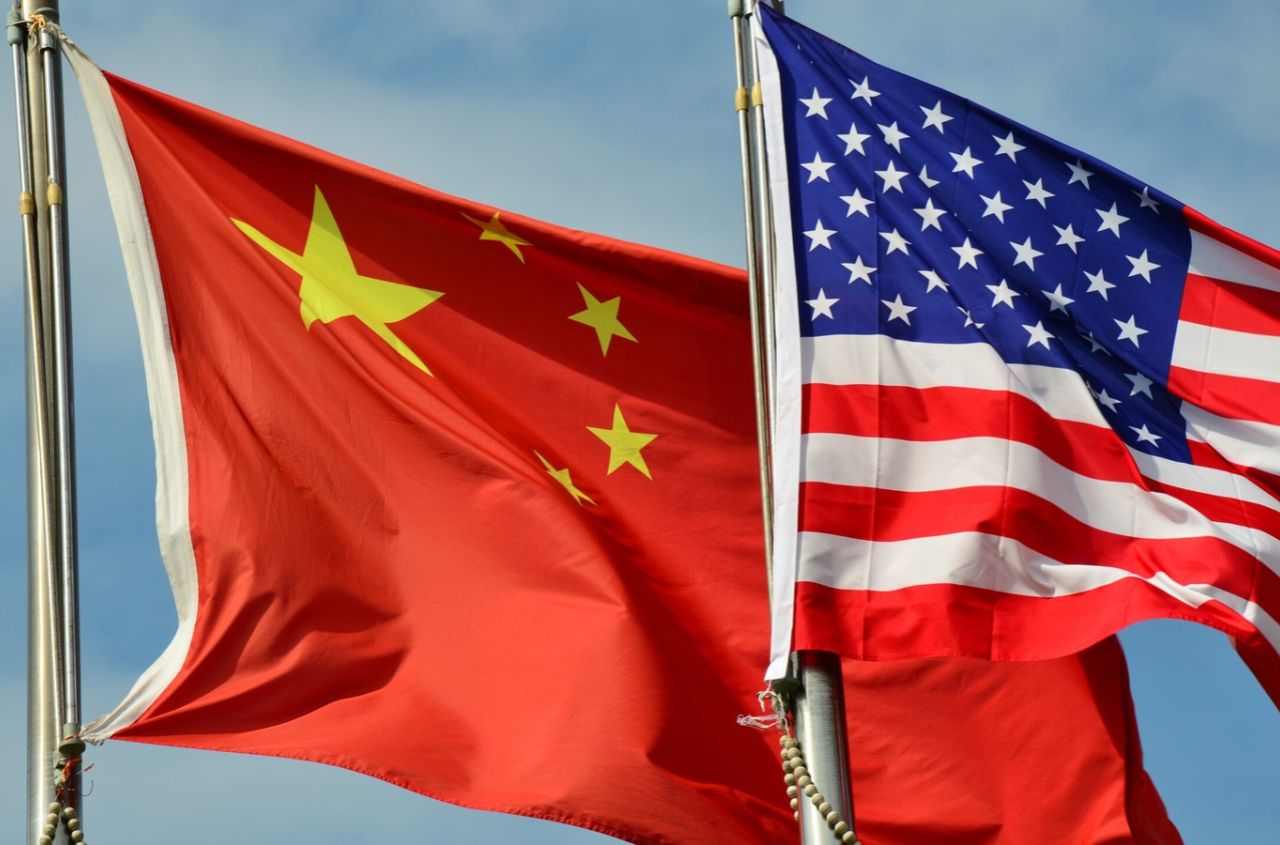

China will not allow the United States to free even one of its “paws” from the two geopolitical traps.
As I predicted, the United States and Israel did not launch an attack on Iran before the Israeli elections were over.
The US stock market is undergoing a rather painful correction, reversing the surge in American stock indices that began in spring 2026.
The correction is not yet critical, but it is a warning sign of a deeper decline.
Trump still has a chance of retaining control of the Senate, but he will lose the House of Representatives.
Until the United States frees one of its “paws” from the trap of the Baltic–Black Sea arc, a new active phase of the war in the Middle East is unlikely to begin.
Netanyahu and Zelenskyy have ended up on opposite sides of the scales when it comes to the White House’s list of priorities.
Why did I not say Israel and Ukraine?
Because we are talking about specific geopolitical strategies and political positions.
As for public opinion, societies in both Israel and Ukraine are divided over the question of war and peace, in roughly equal proportions — 50/50.
In reality, however, the division within society is based on how people perceive threats to their social existence — in other words, how they identify the source of an existential threat.
The “party of war” sees the existential threat in the source of the war, while the “party of peace” sees it in the continuation of the war. This is the crucial distinction.
In this context, Netanyahu and Zelenskyy are very similar.
That is why they are the main competitors for US geopolitical resources.
For the same reason, among the countries of the broader Western bloc, Ukraine currently has some of its coolest relations with Israel.
Hungary, despite its rhetoric, supported the EU’s main package of sanctions against Russia, whereas Israel, for example, purchases grain from Russia.
In other words, any significant geopolitical advance by the United States on either of these two fronts is now possible only if resources are freed up from either the Baltic–Black Sea region or the Middle East.
China will accommodate the United States on this issue only in exchange for a long-term trade and geopolitical agreement.
But the closer the US presidential election approaches, the smaller the chances of reaching such an agreement.
This pushes the prospect of peace for us further into the future, towards 2028–2029.