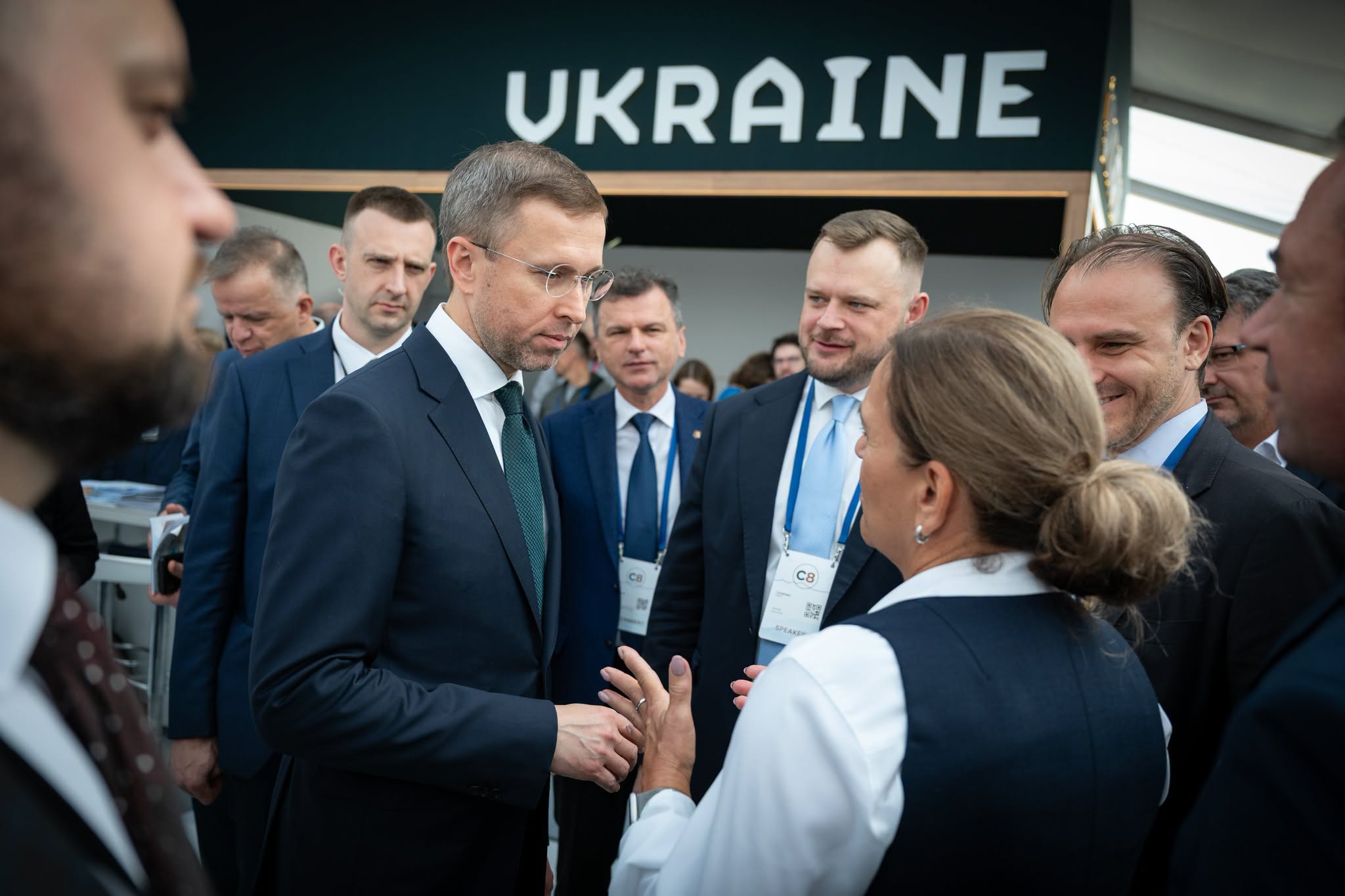


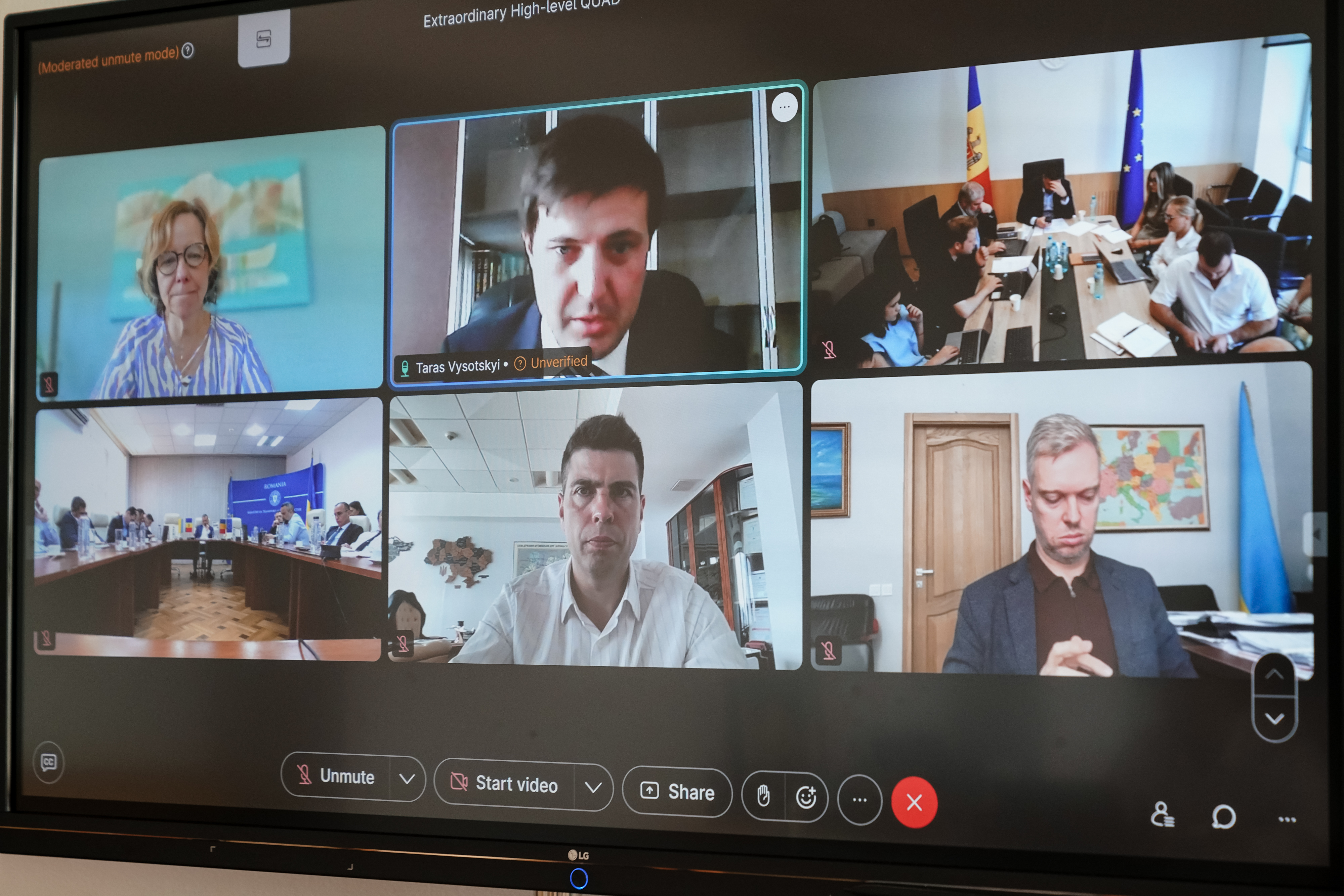
Representatives of Ukraine, the European Commission, Moldova and Romania held a quadrilateral meeting focused on strengthening the implementation of the Solidarity Lanes, developing the capacity of ports in the Danube region and ensuring the stable transit of Ukrainian products.
Ukraine was represented at the meeting by First Deputy Minister for Restoration, Infrastructure and Transport Serhii Derkach and Deputy Minister Andrii Kashuba, as well as teams from the Ukrainian Sea Ports Authority and Ukrzaliznytsia. Minister of Agrarian Policy and Food of Ukraine Taras Vysotskyi presented the situation regarding grain exports. The European Commission was represented by Magda Kopczyńska, Director-General of the Directorate-General for Mobility and Transport (DG MOVE). Romania was represented by State Secretary at the Ministry of Transport Ionel Scrioșteanu, and Moldova by State Secretary Mircea Păscăluță.
The meeting was held amid intensified Russian attacks on civilian port infrastructure, merchant vessels and crews. The latest large-scale strikes have effectively led to a temporary suspension of vessels entering Ukrainian ports.
Despite daily threats, Ukrainian ports continue to operate. At the same time, Russia’s systematic attacks pose direct risks to freedom of navigation, the stability of international trade and global food security.
Participants focused on developing practical solutions to increase the capacity of the Danube logistics route, develop ports in Ukraine, Romania and Moldova, and remove infrastructure and administrative constraints along key transport corridors.
The main areas of work include:
- increasing the capacity of ports in the Danube region;
- developing railway, road and border infrastructure;
- reducing customs and border clearance times;
- improving coordination between the parties’ transport, customs and border services;
- expanding transit opportunities for Ukrainian agricultural and other export products;
- attracting European funding for infrastructure modernization within the Solidarity Lanes and the TEN-T network.
“Together with international partners, we are looking for solutions that will allow us to maintain the continuity of exports and strengthen the resilience of logistics routes. At the same time, Ukraine is working every day to strengthen the protection of port infrastructure and the Ukrainian maritime corridor so that civilian shipping remains possible even amid constant Russian attacks. Only a combination of international cooperation and our own security measures makes it possible to keep maritime logistics operating,” Andrii Kashuba emphasized.
Since the launch of the Ukrainian maritime corridor in September 2023, 209.3 million tonnes of cargo, including 124.1 million tonnes of grain, have been transported through the ports of Odessa region, with 8,222 vessels passing through the corridor.
Since the beginning of 2026, Ukrainian seaports have handled 46 million tonnes of cargo. Of this, 42.2 million tonnes were handled by ports in the Odessa region and another 3.8 million tonnes by ports in the Danube region.
Ports in the Odessa region account for about 90% of Ukraine’s agricultural exports, which are shipped to more than 55 countries worldwide. Therefore, the stability of maritime and land logistics routes is important not only for Ukraine’s economy but also for global food markets.
Following the meeting, the parties agreed to continue coordination and work on joint solutions to develop the Danube logistics cluster, strengthen the Solidarity Lanes and further integrate Ukraine’s transport system into the European network.