


It is obvious that the current command of the Russian Dnipro Group of Forces is concentrating its main attention on the right flank of its operational zone, namely the Orikhiv–Zaporizhzhia direction, where it has to simultaneously solve two tasks that are opposite in nature. Specifically, it must repel fairly determined Ukrainian counterattacks in the Zaporizhzhia direction while also attempting to "break into" the Ukrainian defense area around Orikhiv. This is clearly demonstrated by the fact that it is precisely here that the strongest army of this group — the 58th Combined Arms Army — has been deployed almost in its entirety, with a substantial "tail" of reinforcement assets from Russian airborne forces units and formations, as well as from two other armies within the group.
It is clear that under these conditions the command of the Dnipro Group of Forces faces a certain "temptation" to continue reinforcing the 58th Combined Arms Army at the expense of forces and resources deployed on the Dnipro direction.
Moreover, it is obvious that this is encouraged by the fact that the Dnipro direction is relatively "quiet" at the moment, with what could be described as battles of merely "local significance" taking place there. Maintaining significant numbers of more or less "idle" combat-capable forces and equipment in that area appears clearly impractical — especially at a time when the offensive toward Zaporizhzhia and Orikhiv has clearly stalled, and the units and formations operating there have evidently become quite "worn down," at least in terms of personnel.
And judging by everything, such "temptations" affect not only the command of the Dnipro Group of Forces itself, but also its higher-level command. There is hardly any other way to explain the sudden redeployment this spring of almost the entire "main" division of the 18th Combined Arms Army (the 70th Motor Rifle Division) to the Chasiv Yar area.
But, as always, there is a nuance...
The command of the Dnipro Group of Forces — just like its senior commanders — simply cannot strip the Dnipro direction of forces and resources to the bare minimum in order to support various "active" operational directions. There are two main reasons for this:
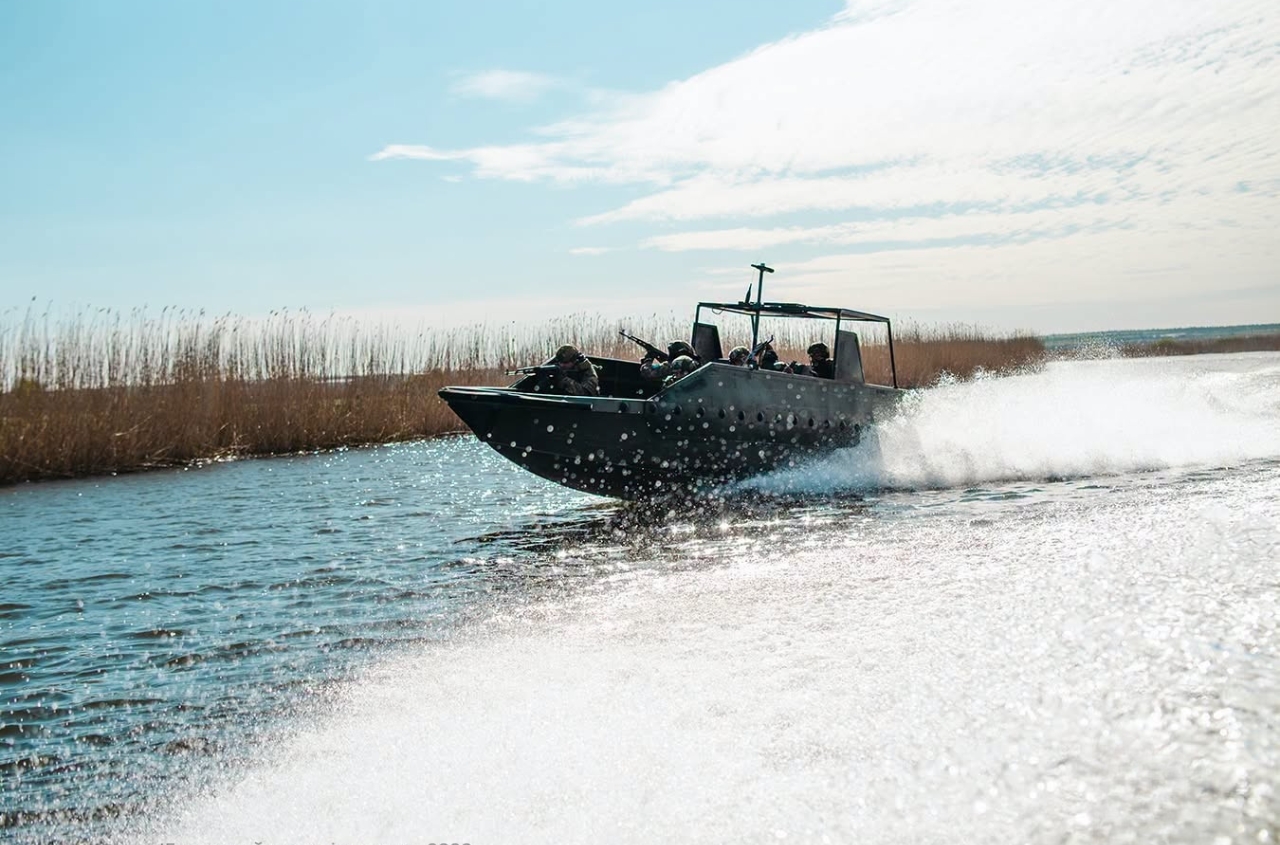
— The first reason. Today, battles on the Dnipro are "local engagements" over a couple of reed-covered islands. But what happens if "tomorrow" there is another "Krynky," only on a larger scale and simultaneously with Ukrainian counterattacking actions in the Tokmak direction?
For those who have forgotten, let me remind you: for the Russian Dnipro Group of Forces command to push out several infantry groups belonging to two Ukrainian Marine Corps brigades from the left bank in the Krynky area, it took at least nine months (from October 20, 2023, to July 17, 2024) and the efforts of at least two full-strength divisions (the 70th Motor Rifle Division and the 104th Air Assault Division) and two separate brigades (the 810th Marine Brigade and the 144th Separate Motor Rifle Brigade). The fighting was extremely intense and bloody, and the surrounding forest belts were practically littered with destroyed Russian equipment. It was there that the now widely known "Madyar" demonstrated for the first time in practice what "massive use of drones in a single sector of the tactical zone" looks like.
— The second reason is the growing campaign of "paralyzing strikes" by Ukrainian drones against Russian forces’ operational communications and logistics throughout their entire Southern strategic operational zone. Attempting any significant redeployment of forces and equipment under such conditions — especially if they have to be moved not to a neighboring sector but somewhere farther away — is, in my view, not the most successful idea. Especially when the amount of diesel fuel and gasoline available for such operations is "strictly according to the allowance."
No, it is certainly possible to try to do it covertly, at night, and "in dispersed groups." But this would be slow, complicated, and there is no guarantee it would happen "without losses." It may turn out that, in the end, these forces and resources will arrive at their new concentration area "too late" and in a condition that is far from optimal in terms of their combat readiness.
Therefore, in my view, the Russian command is unlikely to weaken its grouping on the Dnipro direction in favor of other directions to the maximum possible extent. At the very least, it will be cautious about doing so, because it could end up "costing more than it is worth."
However, it will certainly try to "scrape the bottom of the barrel" there and find some additional resources for the Zaporizhzhia direction (and possibly for other directions as well). It will probably make an attempt to do so.