

Between 25 and 28 August, more than 130 members of MEAN, the European Nonviolent Action Movement, travelled to Odessa—not simply to express solidarity with Ukraine, but to see and understand the country for themselves.
The visit may well have caused some concern at the Italian Embassy in Kyiv, which understandably discourages travel to Ukraine because of the security risks. Those dangers are very real. During two of the group’s three nights in Odessa, Russian forces launched kamikaze drones against the city, including areas close to where some of the Italian visitors were staying. For people unfamiliar with air-raid sirens, shelters and the sound of drones overhead, the war suddenly became a direct experience rather than a distant news story.
Yet travelling to Ukraine also revealed a reality that rarely appears in conventional media coverage. News reports naturally focus on the most dramatic and distressing images: destroyed buildings, casualties, fires and grieving families. These images document an essential part of the war, but they cannot tell the whole story of a country where millions of people continue to work, study, raise families, meet friends and organise cultural, civic and sporting events despite the constant threat of attack.
Meeting Ukrainians face to face allowed the Italian visitors to understand this complex everyday reality—one shaped by fear and loss, but also by resilience, dignity and a remarkable determination to continue living. Their presence was equally meaningful to local people, who welcomed foreigners willing to accept a degree of personal risk to demonstrate that Ukraine has not been forgotten.
The MEAN mission—the Italian acronym has a somewhat misleading meaning in English—was conceived as an act of nonviolent resistance and peaceful support. As during the movement’s previous visits to Kyiv and Kharkiv, the activists met residents and representatives of local institutions and visited places affected by Russian attacks.
Such first-hand encounters are particularly important in Italy, where Russian propaganda continues to influence parts of the public debate. Direct experience does not replace professional journalism, but it can challenge false or distorted narratives more effectively than arguments conducted from afar. Those who visit Ukraine return with something propaganda finds much harder to dismiss: personal knowledge of the people, the places and the everyday life behind the images seen on television screens.
Among the many activities organised in Odessa, two events held on 27 August, the final day of the mission, stood out in particular: lunch at an Odessa fire station and a five-a-side football tournament with Ukrainian servicemen.
Italian Cooking for Odessa’s Firefighters
At the first event, the Italian visitors were welcomed by Civil Protection Colonel Roman Siniuk, Deputy Head of the Odesa regional department of Ukraine’s State Emergency Service, which includes the country’s firefighters. The MEAN delegation was led by the movement’s president, Angelo Moretti.
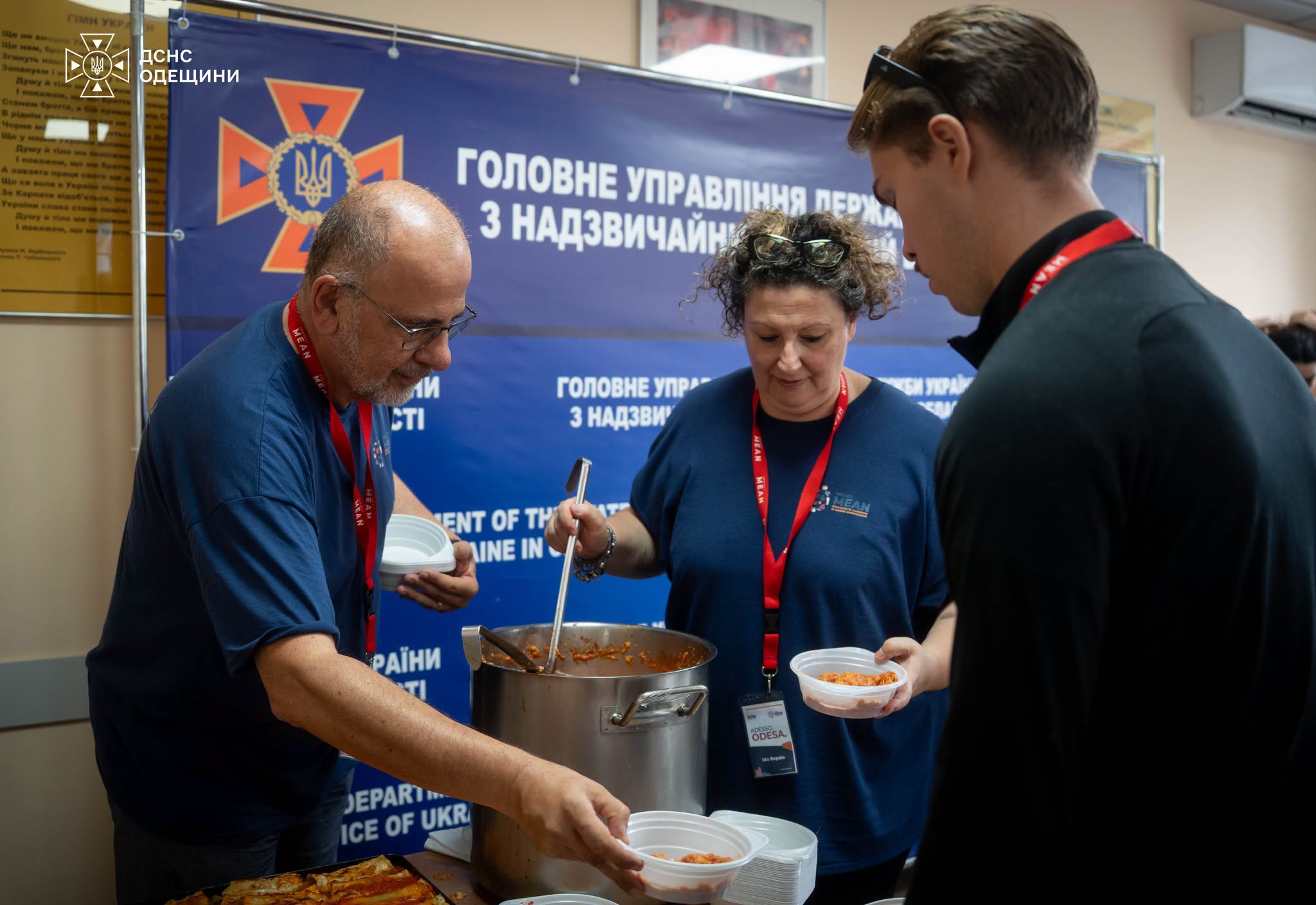
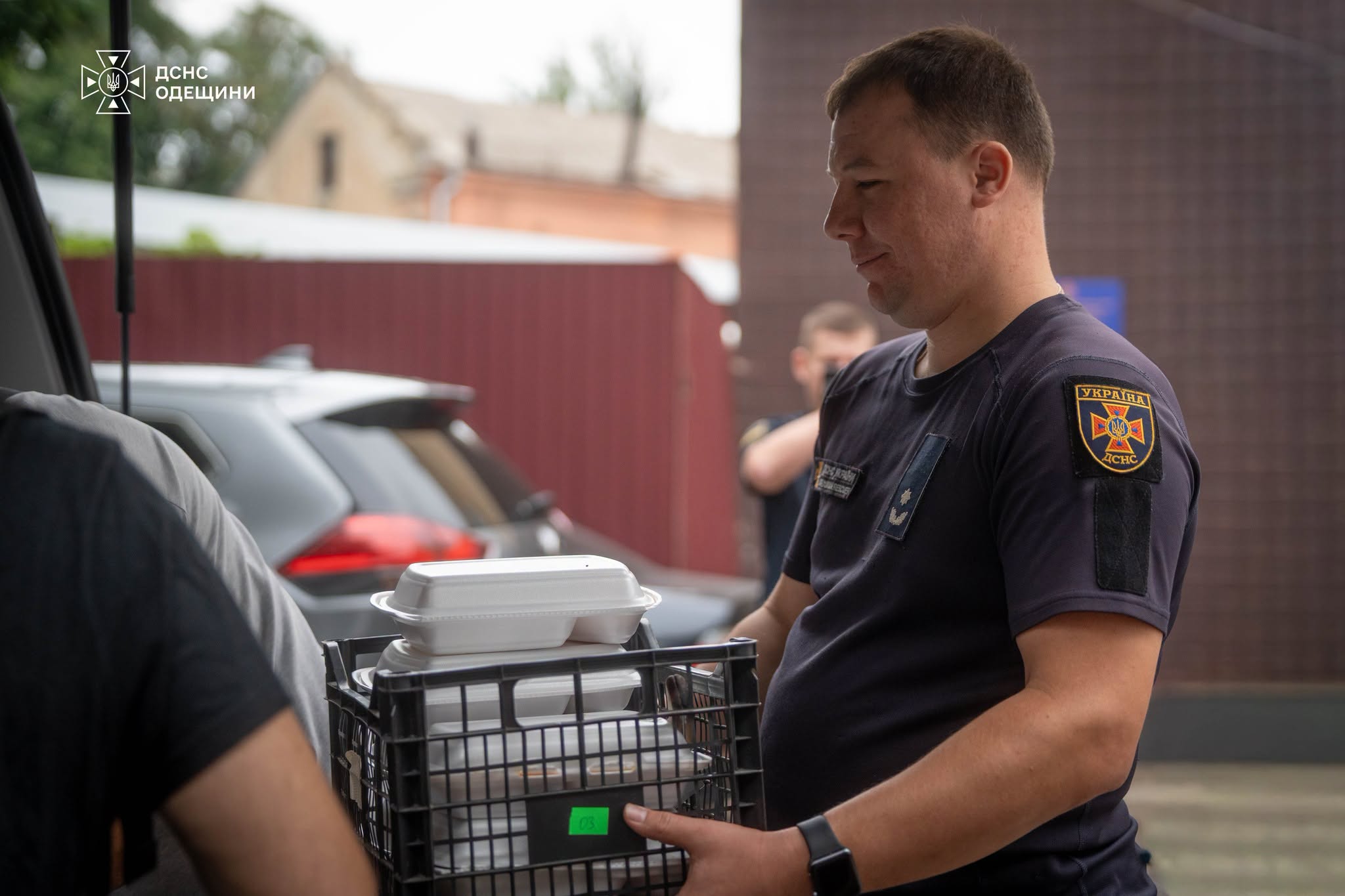
Marcello Raimondi, MEAN’s co-spokesperson, explained to the firefighters gathered in the station’s dining hall the purpose of this unusual culinary mission. It was intended as a tangible expression of admiration for Ukraine’s firefighters—the everyday heroes who work day and night to search for victims beneath the rubble and extinguish fires caused by Russian attacks.
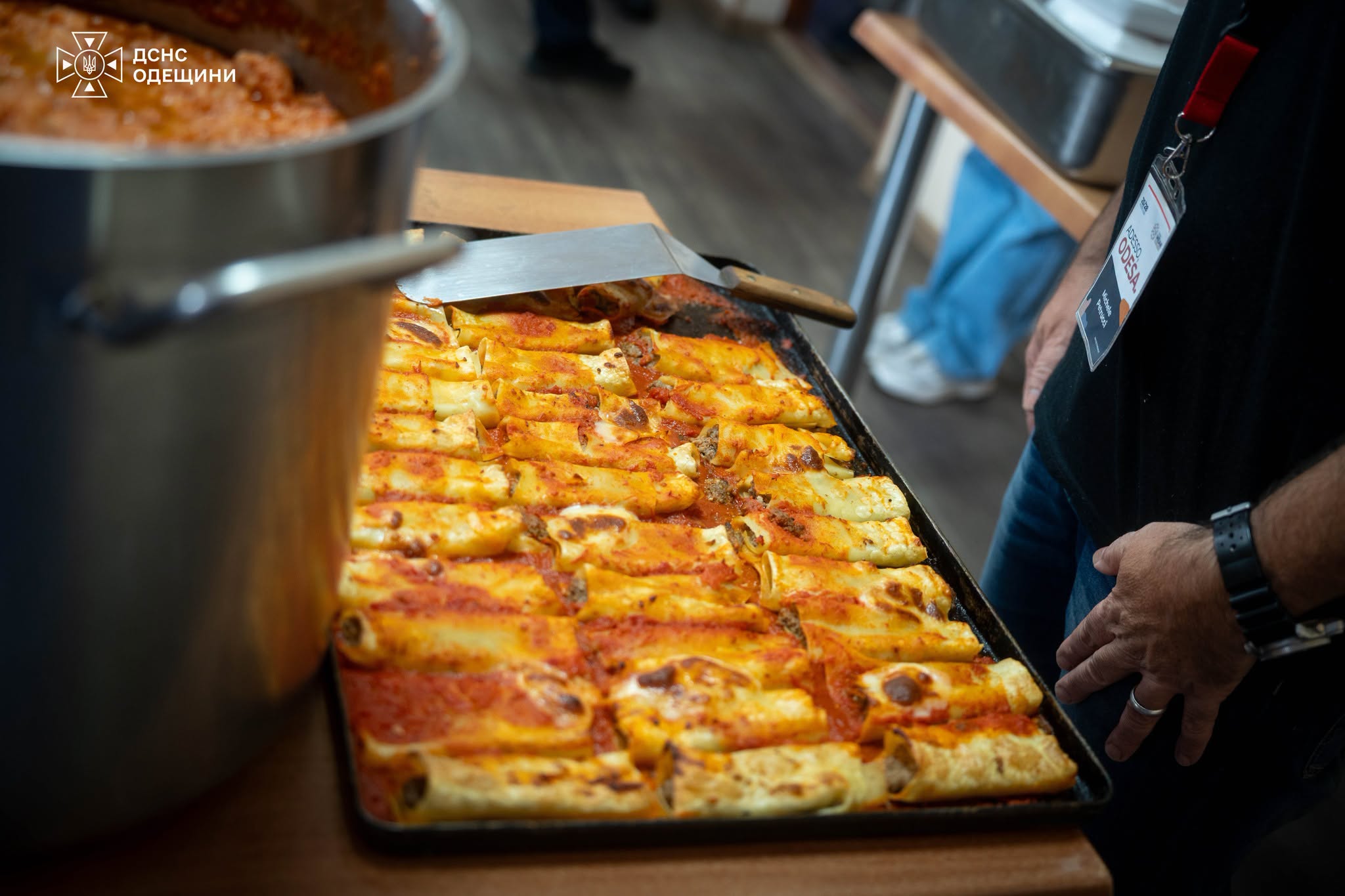
For the occasion, MEAN assembled a team of cooks led by Michele Petrucci. Working in the kitchen of the local restaurant Prichal N°1, they prepared 100 portions of cannelloni with meat ragù, the celebrated Tuscan bread-and-tomato soup known as pappa al pomodoro, and a yoghurt-based dessert.
Petrucci explained the symbolism behind the dishes:
“The cannelloni have an armour of pasta protecting the meat, which represents life—just like those who defend Ukraine in order to protect the lives of its citizens. Pappa al pomodoro, meanwhile, was invented by poor families as a way of making use of stale bread. It shows that even what remains after destruction, in the broadest sense, can become the foundation for creating something good.”
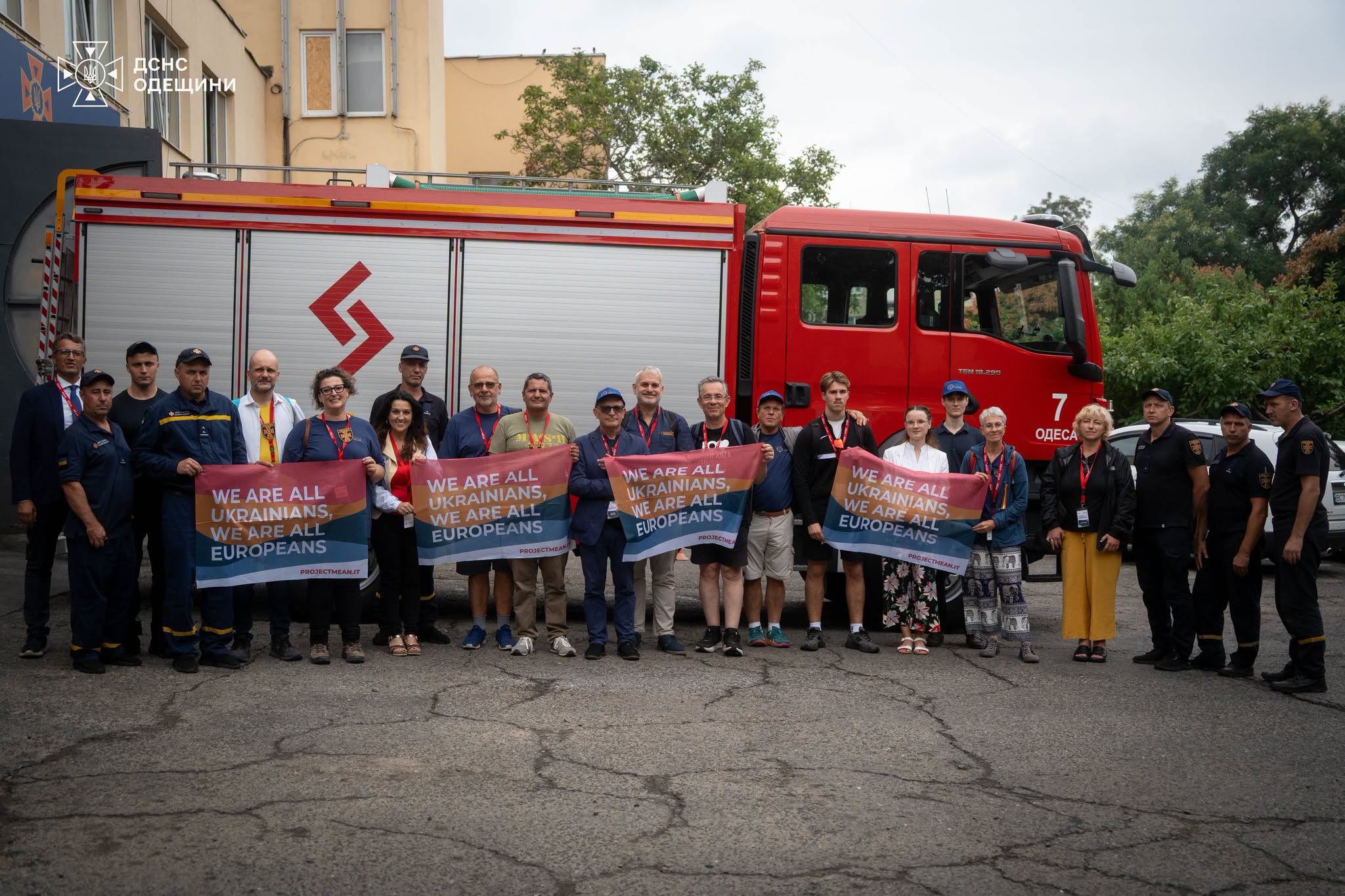
Colonel Siniuk thanked the delegation by presenting the Italian guests with Civil Protection insignia of the kind worn by firefighters on their uniforms. He then invited them to pose for a group photograph beside a traditional fire engine.
Football with the Defenders of Ukraine
Only a few hours later, the day took a more athletic turn at Odesa’s Academy Sports stadium.
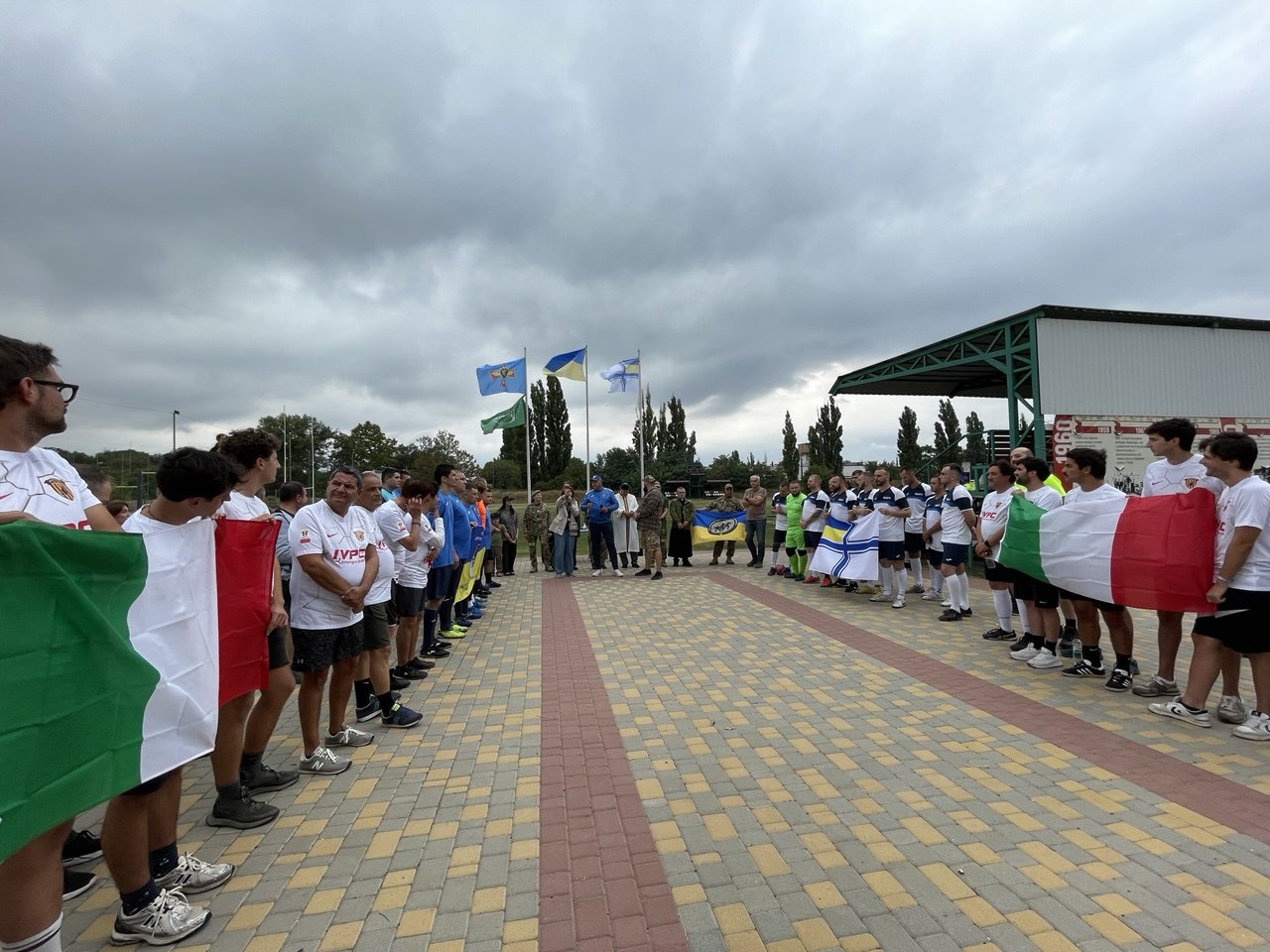
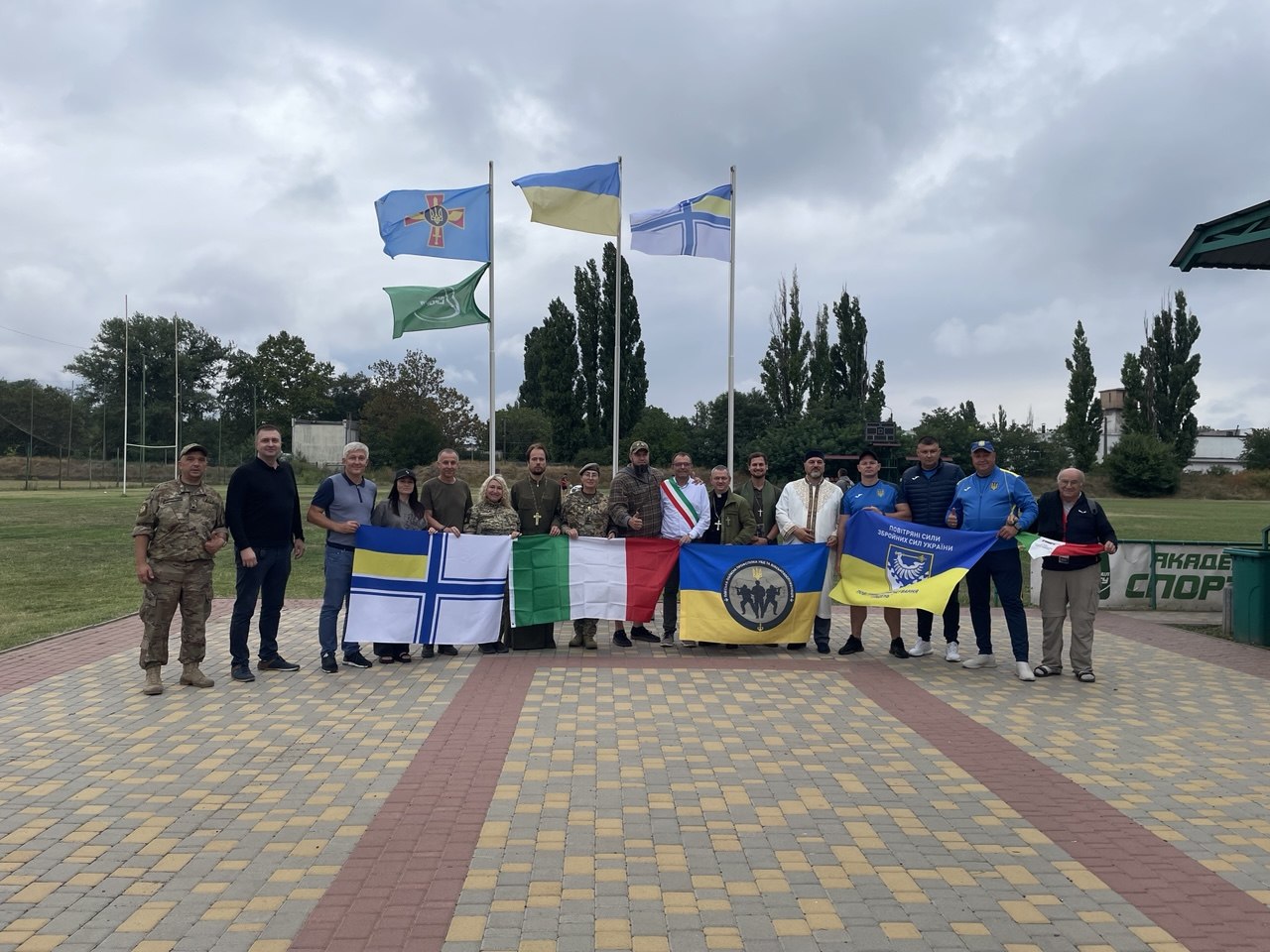
The Italians arrived with two newly formed teams, “Civilian Corps” and “Nonviolent Action”. Facing them were two Ukrainian sides representing the Navy and the Air Defence Forces.
The Ukrainian Navy band welcomed the visitors by performing the two national anthems: Il Canto degli Italiani, widely known as Fratelli d’Italia, and Ukraine’s Shche ne vmerla Ukrainy (“Ukraine Has Not Yet Perished”).
Before the football began, those present observed the customary minute of silence in memory of those killed in the war. Senior military representatives of the host association then delivered brief addresses, while six military chaplains representing different faiths each offered a prayer.
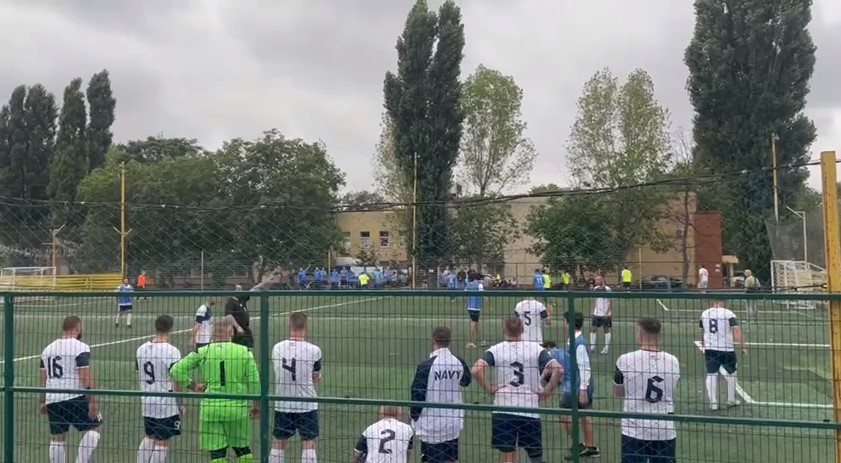
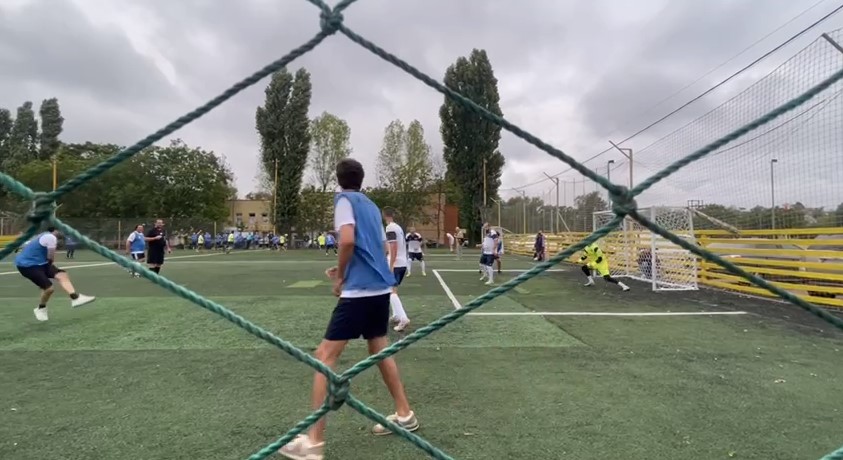
Four matches were played, including the semi-finals and final, in a competitive but consistently sporting atmosphere. The young Ukrainian servicemen ultimately had physical fitness and regular practice on their side, while the Italian teams had been assembled only shortly before the tournament. Nevertheless, the visitors defended Italy’s footballing honour by scoring several goals of their own.
At the awards ceremony, the winners received trophies specially made in Italy, while the Italian visitors were presented with numerous gifts. National flags were also exchanged as mementoes of the occasion.
Perhaps the most striking gifts went to the captains of the Italian pacifist teams: two large bronze cylinders decorated with the Ukrainian trident and commemorative inscriptions. They were, in fact, empty artillery shell casings—a powerful example of how an instrument of war can be transformed into a work of art and a symbol of friendship.
Colonel Andrii Maydachenko, the highest-ranking Ukrainian officer present, presented a bottle of Ukrainian craft wine to the mayor of Casalbuono, in the province of Salerno, Attilio Romano. The mayor attended both as a representative of Italian local authorities supporting Ukraine and as a footballer who had taken part in the tournament.
MEAN president Angelo Moretti also received a bottle of Ukrainian wine from the colonel, along with the recommendation that he open it on the day the war with Russia ends. The football-playing mayor and the movement’s president returned the gesture with two bottles of Italian wine.
The event concluded with a convivial dinner featuring traditional Uzbek plov.
Through these two occasions for meeting and sharing—one around a dining table, the other on a football pitch—Odessa, a city repeatedly struck by Russian drones and missiles, welcomed some of Ukraine’s supporters with friendship and hospitality. In doing so, it offered another reminder that even after years of war, Ukrainians continue to preserve the everyday human connections that war seeks to destroy.