

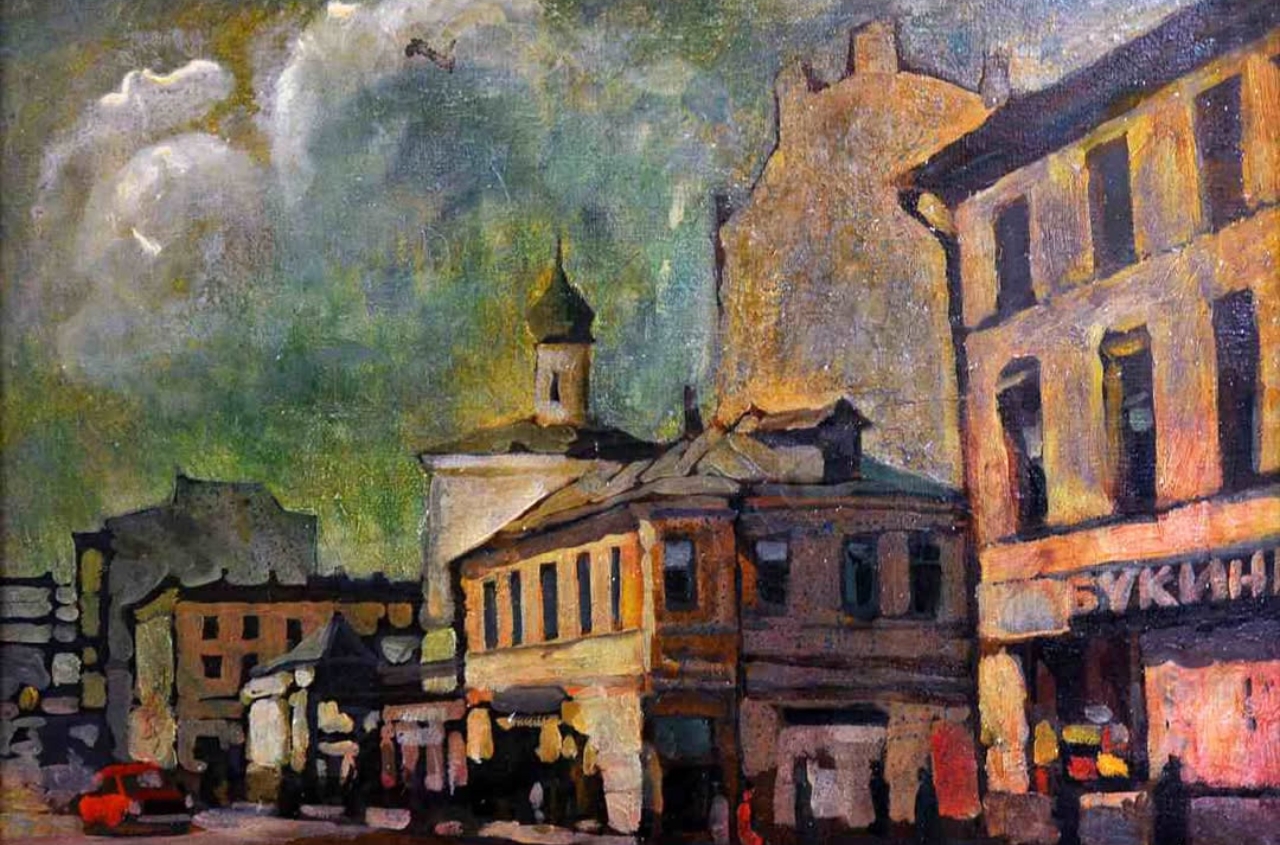

In Crimea, another painting stolen from the Kherson Museum has been identified
Specialists continue to identify works of art that the Russian occupiers removed from the Kherson Regional Art Museum named after Oleksiy Shovkunenko. This is reported on the museum’s page.
This time, in photographs taken in May 2026 during a visit by representatives of the so-called “Ministry of Culture” to the Central Museum of Tavrida, another work from the museum’s collection was identified.
It is the painting “Sretenka” (1977) by Oleksandr Rubinin. The canvas is painted in oil and belongs to a series of urban landscapes created by the artist in the 1970s. The painter is known for works in which he rejected official Soviet aesthetics and focused on intimate city scenes — old streets, alleys, and distinctive architecture. Oleksandr Rubinin is a well-known Moscow painter, graphic artist, and teacher, a classic representative of late Soviet and post-Soviet urban landscape painting. He is the son of a Soviet diplomat who was repressed in the 1950s and lives and works in Moscow.
Rubinin’s work is often associated with the so-called “quiet art” movement. He avoided official Soviet grandiosity, focusing on intimate subjects, often depicting old streets, alleys, and buildings with distinctive architecture.
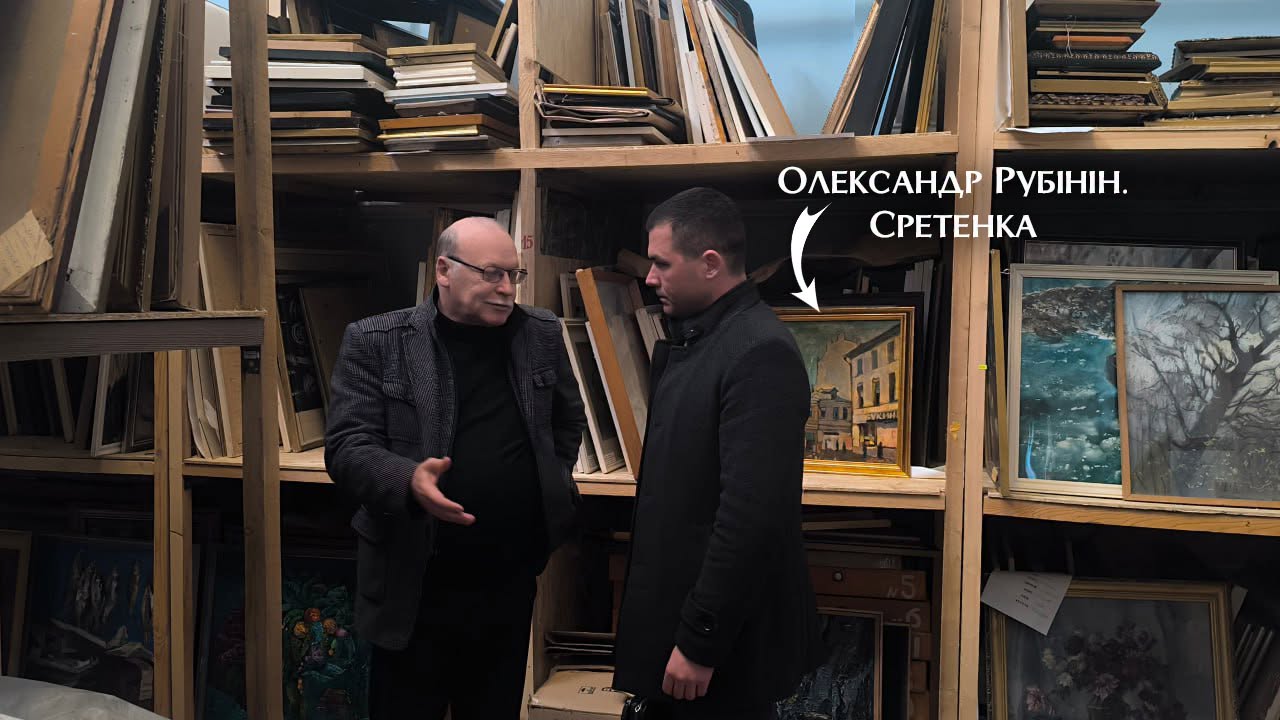
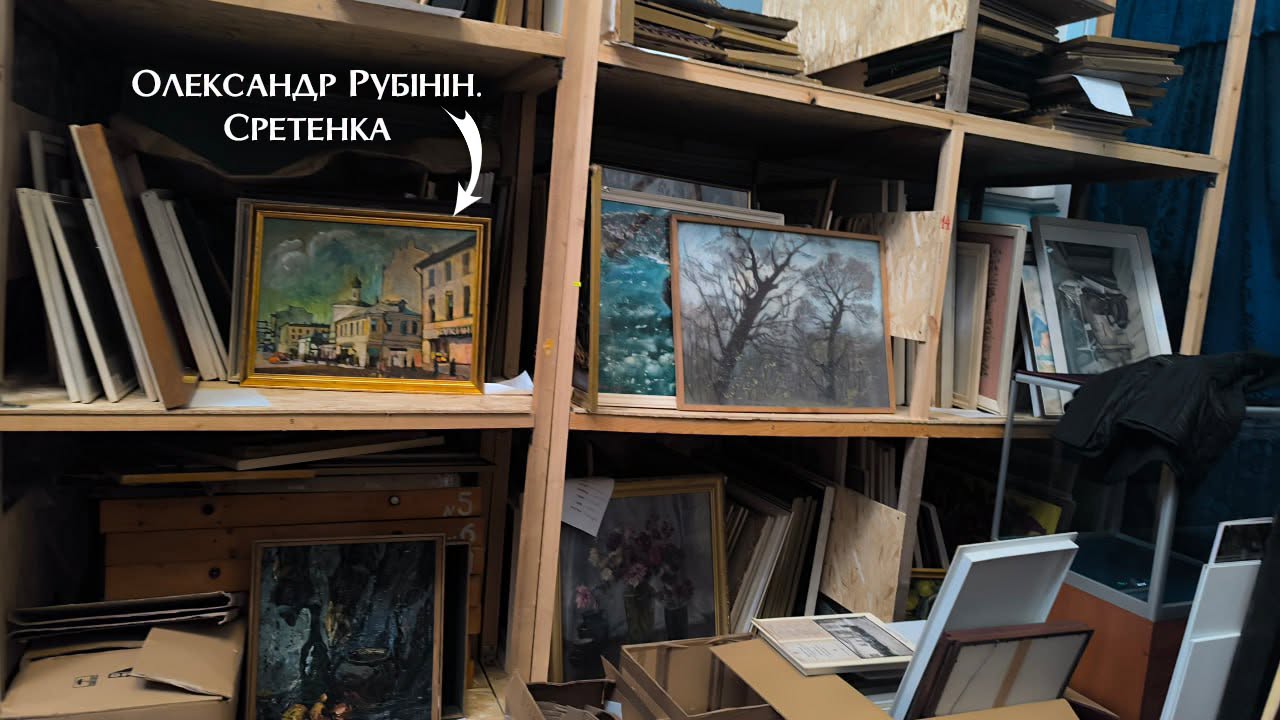
The painting “Sretenka” belongs to Rubinin’s 1970s series of urban landscapes. Its dynamic brushwork and attention to light, air, and color contrasts make the piece highly atmospheric and lyrical. Rubinin’s works are seen as a kind of emotional and documentary archive of old Moscow, which no longer exists in its original form.
The statement emphasizes that the Russian origin of the artist and the Moscow scene depicted in the painting do not change the status of the work. It remains part of the Ukrainian museum’s collection, and its illegal removal is considered a war crime.