

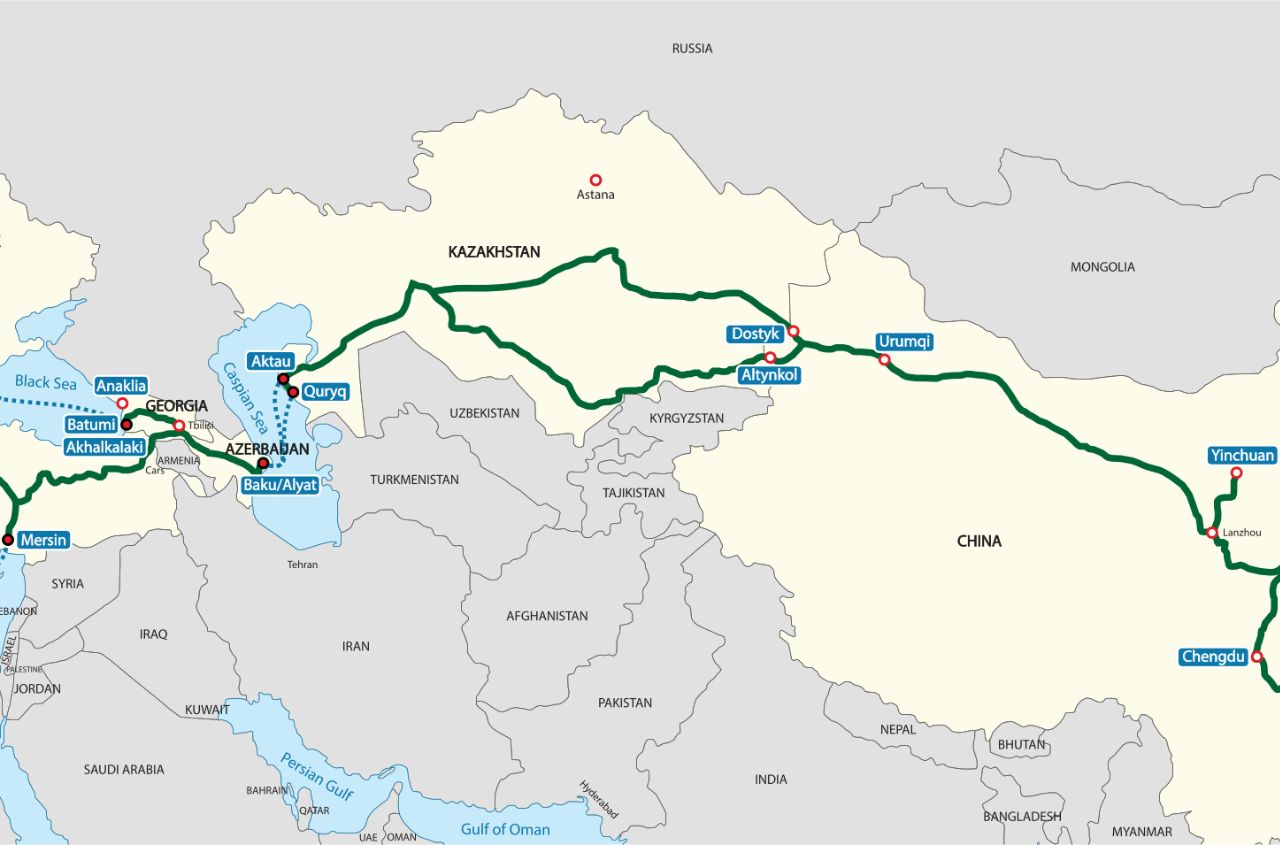

Georgia and Uzbekistan have announced plans to expand their participation in the Trans-Caspian International Transport Route, also known as the Middle Corridor. National experts believe this could provide the two countries with sustainable economic growth. At the same time, investment in the new route significantly reduces their dependence on major regional powers, particularly Russia.
Over the past year, Georgia has made a significant geopolitical shift towards Central Asia. Tbilisi has established strategic partnerships with Kazakhstan and Uzbekistan and views these ties through the prism of long-term planning in several areas, including trade and transport logistics. In an era of global challenges, such alliances could become an important component of long-term stability for “small states,” while also contributing to their resilience and defence capabilities.
Uzbekistan is also developing the western dimension of its foreign policy, seeking to minimise its dependence on Russia and strengthen its position as an independent regional actor. The project therefore benefits both sides. Through the modernised infrastructure of Georgia’s Black Sea ports of Poti and Batumi, Tashkent gains access to its third-largest trading partner, the European Union. Tbilisi, meanwhile, gains access through Uzbekistan and other Trans-Caspian countries to the rapidly growing markets of East and North Asia.
Additional potential lies in the development of new logistics chains: China–Kyrgyzstan–Uzbekistan–Turkmenistan–Azerbaijan–Georgia–Turkey–EU and India–Pakistan–Afghanistan–Uzbekistan–Kazakhstan–Azerbaijan–Georgia–EU. These routes incorporate the China–Kyrgyzstan–Uzbekistan railway and the Trans-Afghan railway corridor.
What is particularly notable is that Russia is no longer part of these calculations, although until relatively recently such projects could hardly have progressed beyond discussion without Moscow’s approval.
According to World Bank estimates, freight volumes along the Trans-Caspian International Transport Route could reach 11 million tonnes by 2030, of which 4.4 million tonnes would be transit cargo, including 1.3 million tonnes of Uzbek goods destined for Europe.