

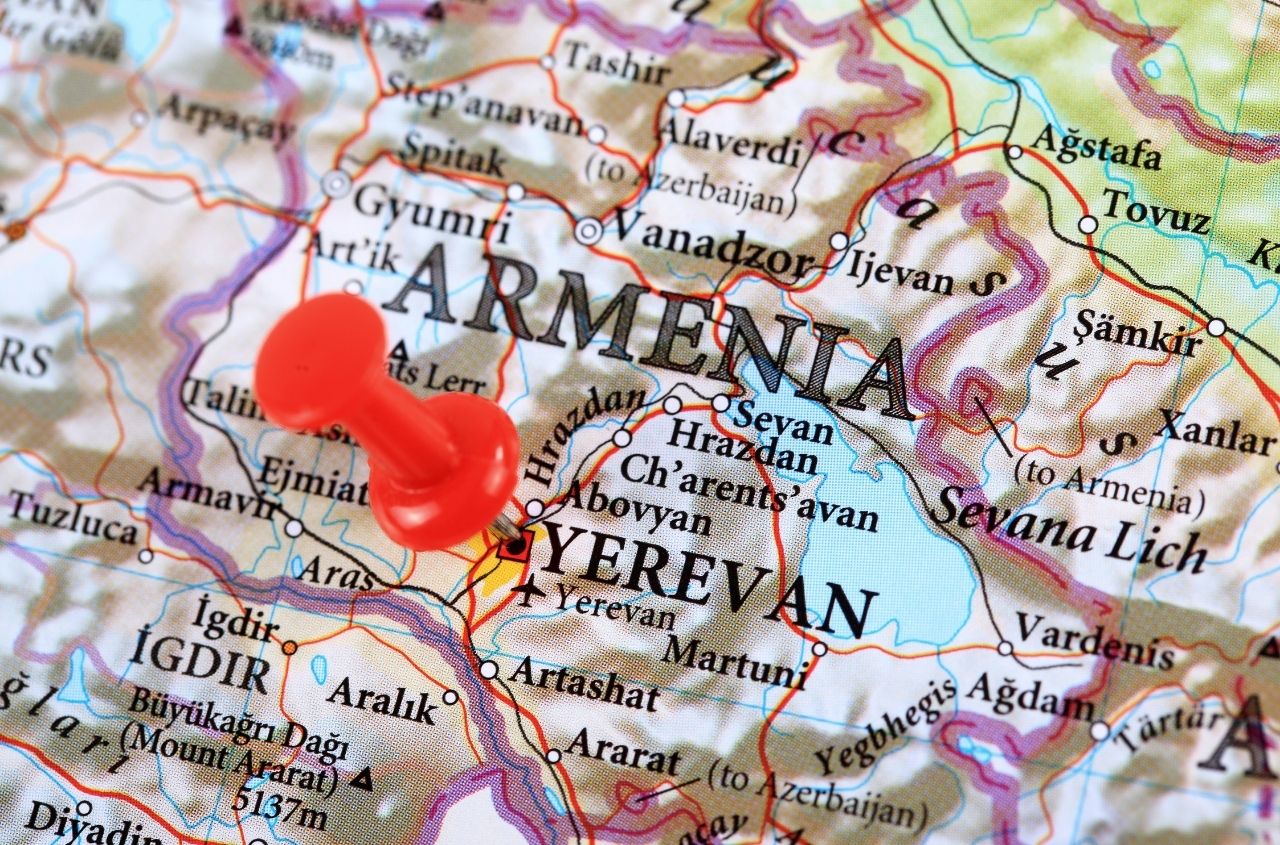

The Kremlin playbook of “punishing a disobedient neighbour with a ban on cognac” no longer works. For years, Russia regarded Armenia as its unquestioning outpost and pocket ally in the South Caucasus. But after yet another failed operation — this time an attempt to interfere in Armenia’s elections — Russia is finally losing its influence in the region. Pro-Russian forces suffered a crushing defeat in the parliamentary elections, while instead of the submissive apology Moscow expected, the Kremlin received firm distancing from Nikol Pashinyan and a turn towards the West.
In response to the choice made by Armenian voters, Rospotrebnadzor predictably “suddenly” discovered threats in apricots, cherries, fish, Jermuk mineral water and Armenian cognac. Sweeping trade restrictions, designed to undermine Armenia ahead of the harvest season, were supposed to back Yerevan into a corner. But the Kremlin seems to have forgotten that this is no longer the 1990s. Instead of economic collapse and repentance, Moscow was met with open trolling: Pashinyan sarcastically “thanked” his fellow members of the Eurasian Economic Union (EAEU) for recognising Armenia’s right to seek alternative trading partners and stated directly that if the union is paralysed by Russia’s actions, this is “the beginning of the end of the EAEU.”
Moscow’s main trump card in the region was already lost in the autumn of 2023. For years, the Kremlin kept both Yerevan and Baku “on the hook” through the Nagorno-Karabakh conflict. But when Azerbaijan regained control of Karabakh in two days, Russian “peacekeepers” were reduced to mere bystanders and ignominiously withdrew from the region ahead of schedule. The fiasco was compounded by Russia’s failure to honour its military commitments: when Azerbaijan advanced into Armenia itself in September 2022, the CSTO, instead of providing assistance, suggested that the parties should first “clarify the borders.” After such “protection,” trust in Russia among Armenians collapsed to record lows.
Having realised that its nominal “ally” was capable of little more than manipulation, Yerevan changed course by 180 degrees. While Russia was restricting imports of Armenian apricots, Brussels was opening its markets and allocating tens of millions of dollars under its “Growth Plan for Armenia.” Moscow’s monopoly over the South Caucasus has effectively been reduced to zero.
The Kremlin’s remaining instruments of blackmail, such as threats to raise gas prices or exert pressure through infrastructure in Armenia, could also be neutralised. Pashinyan has hinted that if Moscow decides to introduce new prices, Armenia could turn its attention to Russia’s 102nd Military Base and the country’s railway network, potentially presenting Russia with a $2 billion bill for the presence and operation of these assets. Any attempt at financial pressure could therefore end up costing Russia even more.
Against the backdrop of a peace agreement with Azerbaijan and the opening of borders with Turkey, Yerevan is steadily depriving Moscow of its remaining levers of influence. The final note in the Kremlin’s geopolitical defeat is Armenia’s announced decision to begin the process of submitting a formal application for membership in the European Union.