

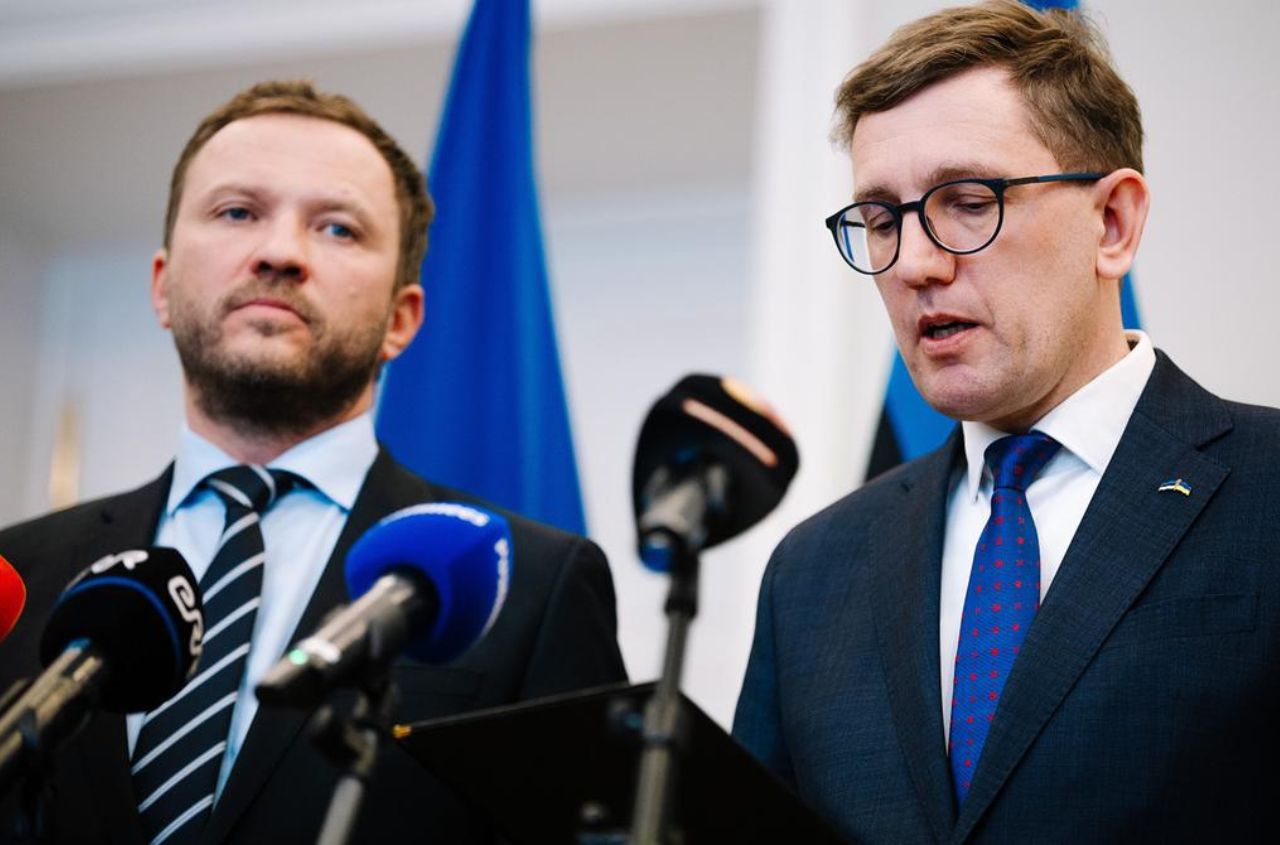
Main image: Margus Tsahkna and Kristen Michal by Ken Mürk/ERR
Estonian Prime Minister Kristen Michal said on Thursday that the country is preparing for possible threats if Russia announces a general mobilisation and did not rule out immediately closing the border depending on the threat assessment, according to ERR.
Michal said the situation in Russia is difficult and that, according to him, between 30,000 and 40,000 Russian soldiers are killed or wounded in the war every month.
“Sooner or later, they will have to take measures to continue the war, and NATO and European Union countries must be prepared for these steps,” Michal said.
The Prime Minister confirmed that Estonia could immediately close its border if Russia announces a general mobilisation.
“Depending on the threat assessment, various measures will be taken. The border can also be closed immediately, as we have already done in individual cases when troublemakers appeared at border crossing points,” he said.
Estonian Foreign Minister Margus Tsahkna, meanwhile, said that a general mobilisation would significantly increase internal tensions in Russia and that European countries should monitor the situation and be prepared for possible consequences.
“If, for example, a general compulsory mobilisation is announced for a certain age group, this will significantly increase internal tensions in Russia,” Tsahkna said.
The Foreign Minister stressed that the potential threat associated with mobilisation concerns not only Estonia.
“I believe Estonia is much better prepared for potential threats or tensions than the rest of Europe. We have discussed — and this is also something Estonia is doing within the framework of Nordic-Baltic cooperation — the fact that last year the Schengen Area issued 650,000 visas to Russian citizens,” Tsahkna said.
According to him, if a general mobilisation is announced, this migration pressure could increase. He noted that Estonia does not face problems with the entry of such Russian citizens because it does not allow them into the country, but European partners must be aware of the potential security threat.