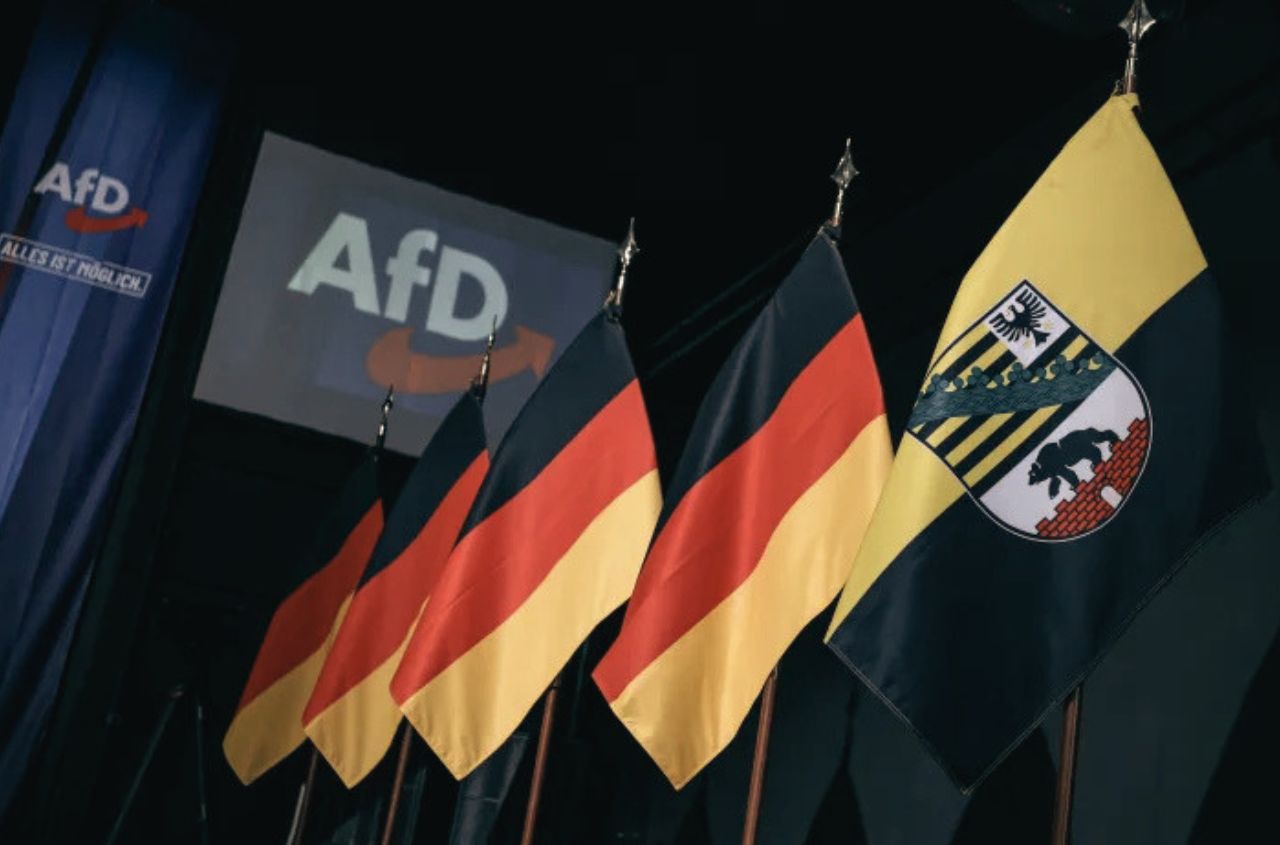




One of the most widely discussed stories on Sunday was the result of the election in Germany’s Saxony-Anhalt, where the AfD won by a huge margin over its opponents. It appears to have fallen one or two seats short of an absolute majority, but the result is impressive nonetheless.
What should be said about what happened?
First, I see no reason whatsoever to present this as a catastrophe — quite the opposite. It is very good that such a signal has been sent in a country with a long tradition of coalition government, and that it came at the regional level. It is a reminder to politicians that society has the right to change at whatever pace it considers appropriate — or not to change at all — and is under no obligation to adapt itself to fashionable theories of multiculturalism while constantly feeling guilty before everyone else. Berlin has almost three years to draw conclusions before the 2029 elections.
Second, I have no particular sympathy for the party that won, nor do I have much interest in German domestic politics in general. But I have never been comfortable with political labelling. The AfD does not strike me as resembling Nazi parties in any meaningful way, despite the frequent comparisons. I find it difficult to understand what supposedly links it to the NSDAP when its leader is openly lesbian, its programme includes the principle of regular changes of government and term limits for all elected offices, and the party, by increasingly broad acknowledgement, expresses firm support for Israel and opposes manifestations of antisemitism.
Third, I do not think support for the AfD is driven to any significant extent by its position on Russia and Putin — a position I personally find far from appealing, although recently it has not appeared entirely unambiguous either. The party’s programme contains many demands that, in Putin’s Russia, would make anyone advocating them an obvious enemy of the regime. Its opponents would do well to keep that in mind if they genuinely want to break the perceived link between AfD voters and the Kremlin.
The main basis of the party’s popularity, however, is its fairly radical anti-Islam stance, which resonates strongly with voters for well-known — and, I would argue, quite rational — reasons.
To conclude, I will repeat the point once again: no one should be surprised when societies whose law-abiding members suddenly discover that they are becoming strangers in their own cities turn towards right-wing and far-right politicians.
Elections are still to come in France and the United Kingdom, and similar results may emerge there at the national level. Spain is being shaken by protests against its left-wing government, while in Italy Giorgia Meloni — herself once widely described as a right-wing extremist — has just broken the record for the longest uninterrupted tenure as prime minister.
The ability of voters to change their preferences in response to changing circumstances and to the policies pursued by a particular government is one of the most important rights of citizens in the modern world and one of the defining features of a democratic society.
Democracies are countries where the most popular party wins, not countries where “democrats” rule. As Russian readers know all too well, this proposition has been tested and demonstrated perhaps most clearly by the history of modern Russia itself.
So there is no need to wring one’s hands. There is a need to use one’s head.