

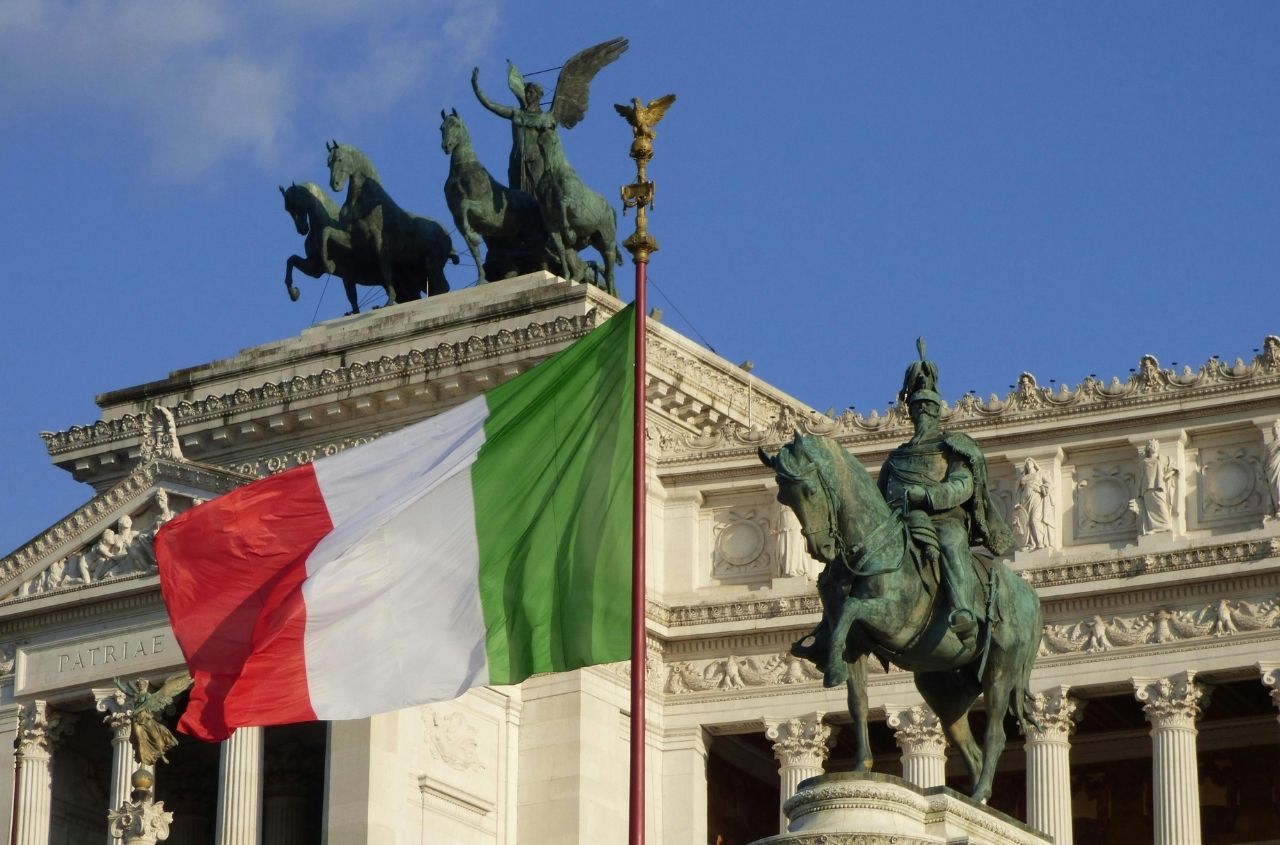
Russian diplomatic and information structures have launched a large-scale hybrid influence operation in Italy aimed at undermining social cohesion and dividing the country’s political system ahead of the 2027 parliamentary elections. This is indicated by a series of developments that may appear to be isolated events but in fact form part of a broader system of cognitive warfare, according to Decode39.
Among these episodes are the unveiling by Russian Ambassador Alexey Paramonov and Consul General Kirill Ignatov of a memorial plaque to Darya Dugina in the Tuscan town of Vagli Sotto, which already has a street named “Russian Heart”; the organisation of a conference near Rome in Formello attended by diplomats from Iran, Cuba and Venezuela under the banner of the 800th anniversary of Saint Francis; harsh attacks by the Russian Embassy on the EU naval mission Irini over the inspection of a tanker linked to Russia’s shadow fleet; and attempts to spread false claims of sabotage following an explosion at a military plant in Colleferro, despite official denials by Italy’s Defence Ministry.
According to the publication, the strategy draws on the old KGB “active measures” methods of the Cold War era. A key element of these tactics was the use of the term “peace” not as a universal human value but as an instrument of psychological pressure designed to weaken the West’s defence capabilities and political resolve.
The Kremlin’s main objective today is to transform the concept of “peace” into a synonym for Ukraine’s capitulation and acceptance of autocratic spheres of influence, while simultaneously portraying military assistance to Kyiv as a source of Europe’s social and economic exhaustion. The contrast between Russia’s external rhetoric and its domestic reality is particularly striking: human rights activists from Memorial point out that inside Russia, the word “peace” has effectively been outlawed in anti-war contexts, with citizens facing severe prison sentences for publicly expressing such views.
At the international level, meanwhile, Russia uses religious themes to promote its narrative of a “peaceful order,” even as Patriarch Kirill publicly blesses the war and the Kremlin adopts a record rearmament programme for 2027–2036.
Analysts stress that the presence of public officials at pro-Russian events, including Italian Justice Minister Carlo Nordio and Senator Maurizio Gasparri, makes it more difficult for the public to recognise covert information operations.
Ahead of the 2027 elections, the Kremlin is seeking to maximise polarisation within Italy’s political discourse and obstruct collective decisions on Western security.