

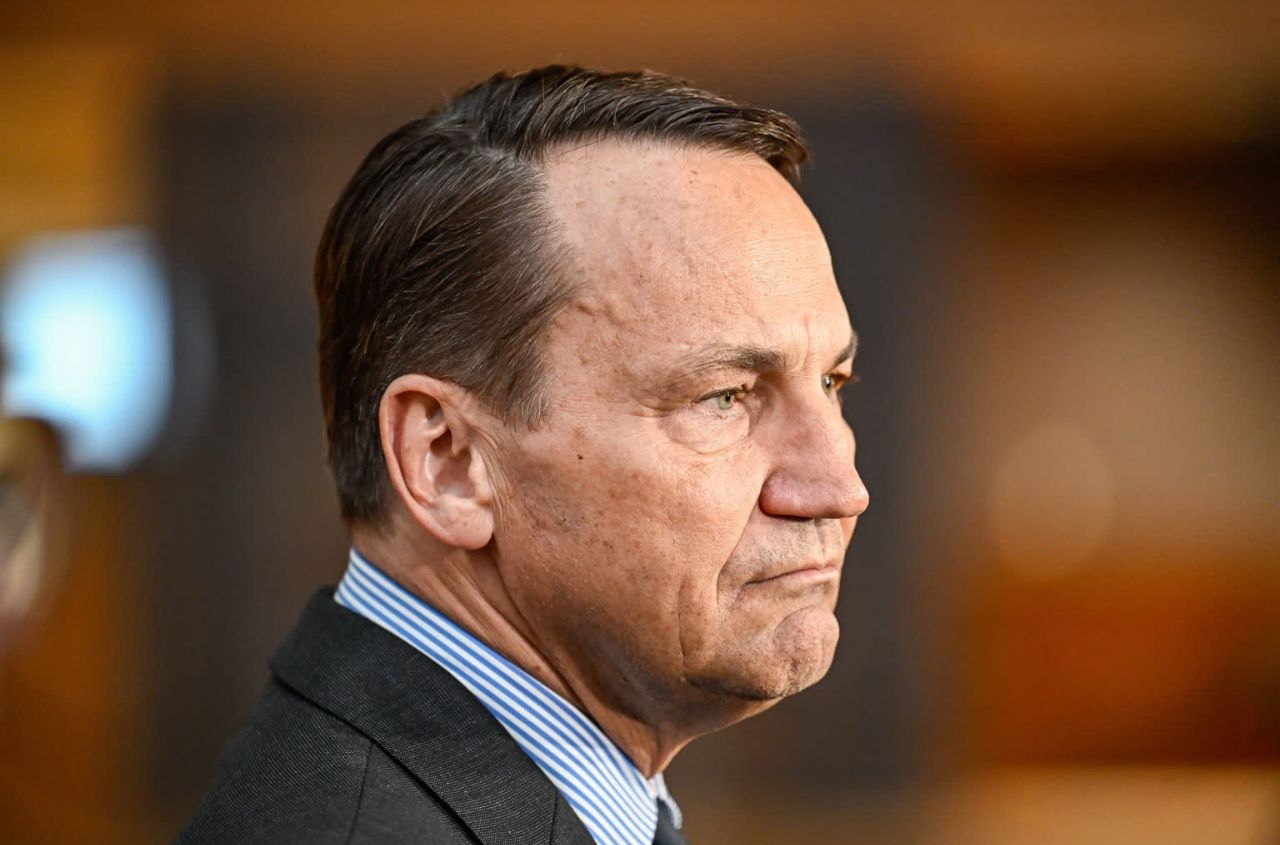
Polish Foreign Minister Radosław Sikorski said the consequences of Russia’s war against Ukraine extend far beyond Europe, while the security situations in the Euro-Atlantic and Indo-Pacific regions are becoming increasingly interconnected.
Poland’s top diplomat made the remarks in Bratislava during a meeting of foreign ministers from the Visegrád Group (V4 — Poland, Czechia, Slovakia and Hungary), attended by Japan’s foreign minister.
“We discussed global security challenges. Our discussion confirmed that the Euro-Atlantic and Indo-Pacific theatres are becoming increasingly interconnected,” Sikorski said.
According to him, this is particularly evident in the context of military cooperation between Russia, China, North Korea and Iran.
“Russia’s war against Ukraine remains the most serious challenge to European security and, more broadly, to the rules-based international order. Its consequences extend far beyond Europe. Continued support for Ukraine is an investment in the credibility of the international order,” the Polish foreign minister stressed.
The participants also discussed opportunities to deepen cooperation between Central European countries and Japan. Sikorski identified the automotive industry, infrastructure, energy, science and advanced technologies among the priority areas.
The Polish foreign minister also welcomed the resumption of active cooperation within the Visegrád Group, saying that “Poland is pleased to see the V4 return.” He later explained that the group’s activities had been partly frozen because of Hungary’s policies, adding that following the authoritarian governing methods of former prime minister Viktor Orbán, the country had returned to the path of European cooperation.
Sikorski thanked Slovakia for organising the meeting and wished it success in implementing the programme of its Visegrád Group presidency.
The Visegrád Group was established in 1991 to develop regional cooperation and coordinate European integration.
The previous meeting of V4 foreign ministers took place in March 2024. Since then, cooperation at ministerial level had been significantly complicated by differences between the governments of the member states, particularly over Russia’s aggression against Ukraine and EU policy.