

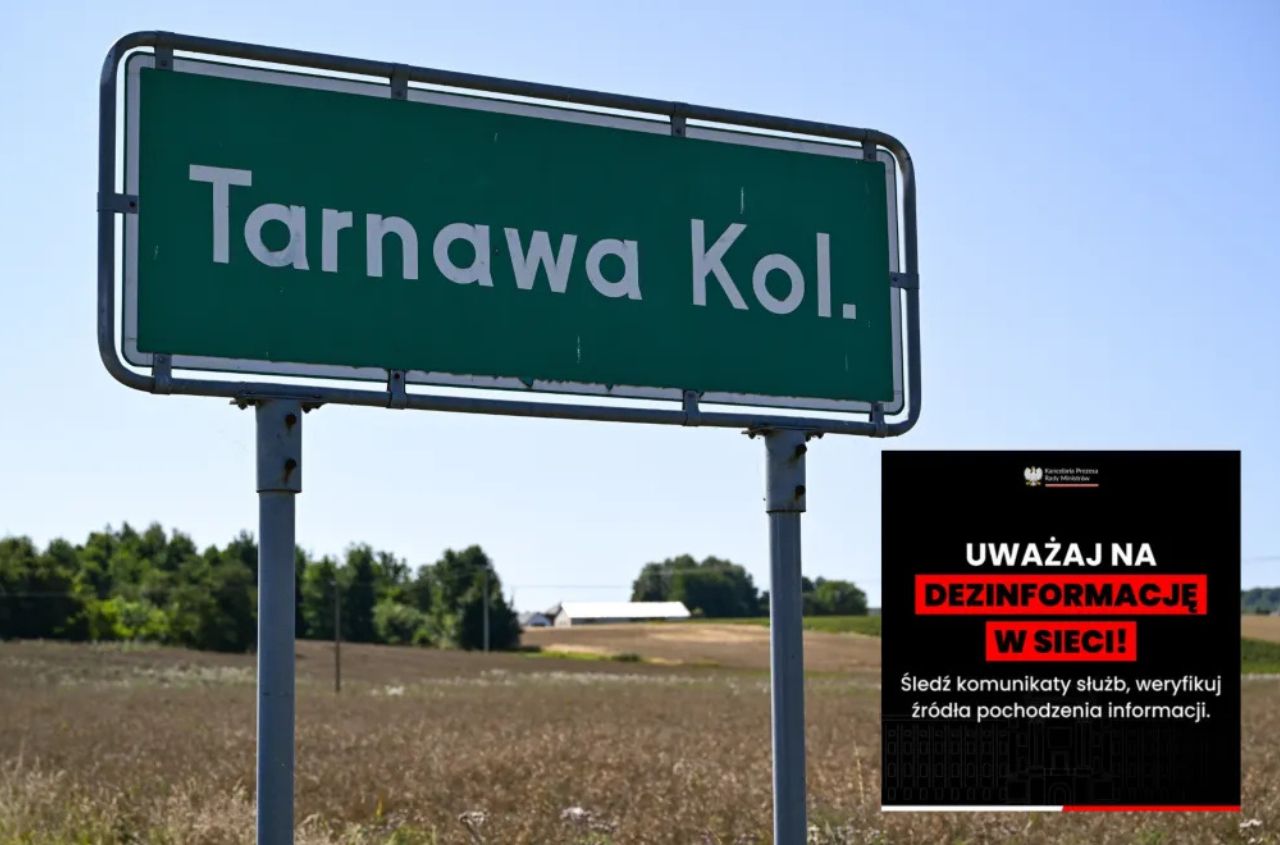
Main image: The site where the unidentified object crashed near the village of Tarnawa-Kolonia. Photo: PAP/Wojtek Jargiło. Source: Statement by the Chancellery of the Prime Minister of Poland, via X.
A surge in disinformation has been detected across the Polish internet following the violation of the country's airspace and the crash of what is believed to have been a Russian Kh-101 cruise missile, according to Małgorzata Szumna, head of the Narrative Analysis and Fact-Checking Team at Poland’s NASK research institute. The information was reported by PAP.
The incident occurred at around 3:40 a.m., when an unidentified object was detected in Polish airspace near Tarnawa-Kolonia. F-16 fighter jets were scrambled to intercept it, while the public alert system was briefly activated in Lublin and neighboring areas. Polish Prime Minister Donald Tusk later said that all available evidence indicated the object was a Russian missile launched during a large-scale attack on Ukraine.
According to NASK experts, the wave of false information online has followed two main narratives. The first attempts to shift responsibility onto Ukraine. Conspiracy theories link the missile incident to Ukrainian President Volodymyr Zelensky’s visit to Lublin just hours before the event, while completely ignoring Russia’s overnight missile attack on Ukraine. False claims have also circulated alleging that Kyiv staged a “provocation” in an attempt to draw Poland directly into the war.
The second disinformation campaign is aimed at the Polish government. Posts seek to frighten the public, spread panic, and undermine trust in the country’s security institutions.
NASK stressed that highly emotional social media posts are being deliberately created to deepen social polarization and warned that these false narratives are at high risk of being amplified by Russian propaganda. The Office of the Prime Minister of Poland and analysts have urged the public to rely only on official statements from the authorities and verified sources of information.