


In the spring of this year, I wrote about the Kremlin's "last throw" during the "hot" phase of the war against Ukraine. In my view, the Kremlin needed to achieve a "decisive turning point in the war" on the battlefield in 2026 (through a successful operational-strategic offensive) in order to conclude its most costly and exhausting phase on its own terms.
This assessment was based on several factors.
At the beginning of this year, it became evident that prolonging the war of attrition was losing—or had already lost—its purpose, or rather, its chances of succeeding. Broadly speaking, the implementation of this strategy had gradually and almost irreversibly begun exhausting the Kremlin itself much faster than Ukraine was losing its ability to resist Russian military aggression.
The escalation of extremely negative processes within Russia—triggered directly by the war—in the military, financial and economic, and consequently socio-political spheres, began to accelerate. Moreover, it became clear that any further delay in changing this strategy, for entirely objective reasons, could ultimately lead the Kremlin to defeat in the war.
This happened because of two MAIN strategic factors, along with a number of less significant ones, which I will not discuss in detail but will simply outline:
- First, the Kremlin failed to completely "cut off Ukraine's oxygen" on the international stage. Above all, it failed in terms of financial assistance, and secondly in military-technical support. In essence, this meant that Ukraine managed to preserve—and in some areas even increase—to a certain extent, its ability to resist the aggressor. At the very least, it remained capable of preventing Russia from achieving its objectives in the war quickly.
- Second, it became obvious that the "Chinese comrades"—the Kremlin's principal strategic allies—were unwilling to deepen their involvement in the war. At least not to a level that would require Beijing to incur substantial costs and effort. In other words, the Chinese Communist leadership proved willing to assist the Kremlin comprehensively, but only to the extent that such support remained inexpensive and brought China tangible benefits. All attempts by the Kremlin to persuade "Comrade Xi" to become involved in the war against Ukraine "more substantially and at a higher level of intensity" proved unsuccessful.
These two reasons, along with a number of other factors—especially the accelerating deterioration of the situation inside Russia itself—led the Russian military and political leadership to the inescapable conclusion that it had to find a way out of the war this year.
In other words, by late 2025 and early 2026, the Kremlin objectively found itself needing to shift from a strategy of a "war of attrition" to a strategy of "one decisive strategic blow"—one that could rapidly, and above all quickly, reverse the strategic situation by forcing Ukraine's military and political leadership, following a strategic military defeat, to accept all of the Kremlin's demands and conditions.
To achieve this, the Kremlin needed not only to preserve its capability to conduct strategic (long-range) strikes across Ukraine, but also—preferably—to increase both their scale and intensity, so that this pressure on Ukraine's military and political leadership would reach a critical level by severely degrading the country's ability to maintain centralized command and control of its defense.
For this reason, I believed that during the summer and autumn of 2026 the Kremlin would attempt precisely such an operation, combined with an escalation of long-range (strategic) strikes against infrastructure throughout Ukraine.
And it has indeed made such an attempt—or, more accurately, it is carrying it out now—in the form of the Sloviansk-Kramatorsk operational-strategic offensive and the intensification of long-range strikes.
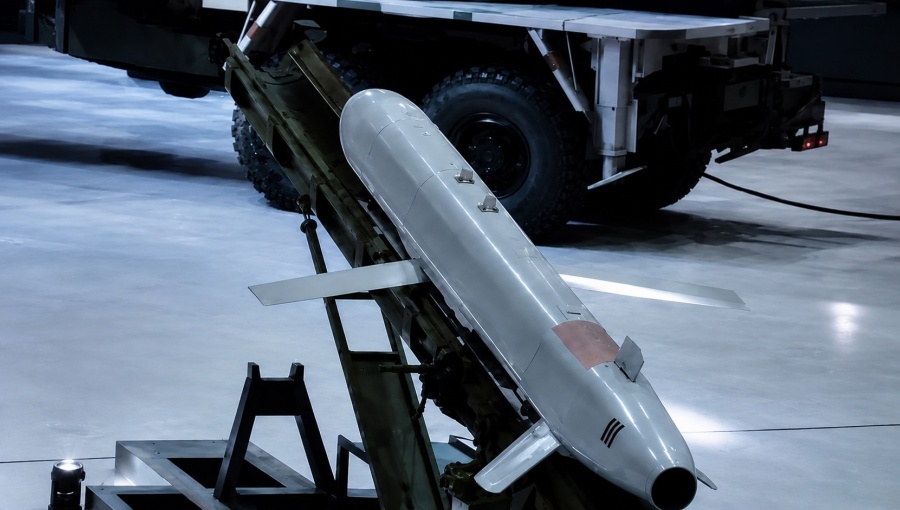
At present, the operation involves at least five combined-arms armies from three separate Russian force groupings, an independent army corps, elements of a separate tank division, as well as several marine and airborne formations. To understand its scale and the importance the Russian military and political leadership attaches to it, it is worth noting that the forces and assets committed to this operation substantially exceed the total strength of the strategic grouping that invaded the entirety of Ukraine in February 2022. At the same time, the Kremlin implemented a broad range of organizational and technological measures aimed at rapidly expanding its capacity to conduct long-range strikes against Ukraine and its population. These measures range from maximizing the production of relevant strike systems to securing additional capabilities with the assistance of its allies.
At first glance, it appeared that the simultaneous and dramatic application of these two elements of Russia's strategy—a major offensive on the battlefield combined with efforts to undermine Ukraine's defense industry, critical infrastructure, and public morale—would quickly produce the desired outcome for the Kremlin.
However, things did not unfold as expected.
The offensive gradually began to fall behind schedule, and the longer it continued, the greater the gap became. Although it is still underway, its actual pace and results strongly suggest that the Kremlin is highly unlikely to achieve a quick end to the war this year.
What was conceived as the Sloviansk-Kramatorsk operational-strategic offensive—a coordinated combination of interconnected operational and tactical campaigns—has effectively fragmented into a series of loosely connected operations. These have become very slow and, in some sectors, only marginally successful tactical actions.
There are many reasons for this fragmentation, and each deserves separate analysis. I will not examine them here, but simply point out the obvious conclusion: Russia's supposedly decisive strategic offensive has once again devolved into a slow, costly, and resource-intensive advance at the tactical level.
Likewise, although the Kremlin has significantly expanded its long-range strike capabilities against Ukraine—reaching what is effectively a historic peak in both scale and sophistication—this capability is still insufficient, at least for now, to force Ukraine out of the war quickly.
Moreover, by incorporating a significant asymmetric element based on new technologies into its strategy, Ukraine has gained additional opportunities to strike Russia at both the operational and strategic levels. Ukraine continues to expand these capabilities, or at least openly declares its intention to do so. If the current strategic balance is maintained, these developments could ultimately shift the overall strategic situation in Ukraine's favor.
All of these recent developments and trends in the strategic situation of the Russia-Ukraine war—most importantly, the realization that the Kremlin is unlikely to force Ukraine out of the war quickly this year—appear to have been recognized by the military and political leadership of both sides, as well as by other interested actors, roughly one to one and a half months ago.
This is precisely why the Russian leadership found itself facing an objective need to make another strategic choice.
It had two options.
The first was to gradually shift toward a "naturally winding down war," effectively accepting that it had failed to achieve its principal objectives—both its declared goals and its actual ones—and settling for the gains already made. In practice, this would have meant taking another pause in its long-term confrontation with Ukraine by informally ending active conventional military operations while remaining in a state of "neither peace nor war."
The second option was to move to another phase of "intensified efforts" and once again attempt to force Ukraine out of the war quickly on Moscow's own terms.
Whatever the choice, the Kremlin could no longer afford to postpone making it. Compared with the situation in late 2025 and early 2026, the overall strategic environment had become increasingly unfavorable for Russia. Delaying a decision had become, quite literally, a matter of survival.
Judging by the Kremlin's recent actions—and, to some extent, its public statements—it appears that it has made its choice, opting for the second course of action.
In strategic terms, this is likely to include the following:
- Another stage of mobilization, followed by the operational deployment of Russia's strategic joint-force grouping in Ukraine. This would involve further increasing troop numbers, significantly expanding operational and strategic reserves, and carrying out a series of operational-level redeployments within the force grouping itself.
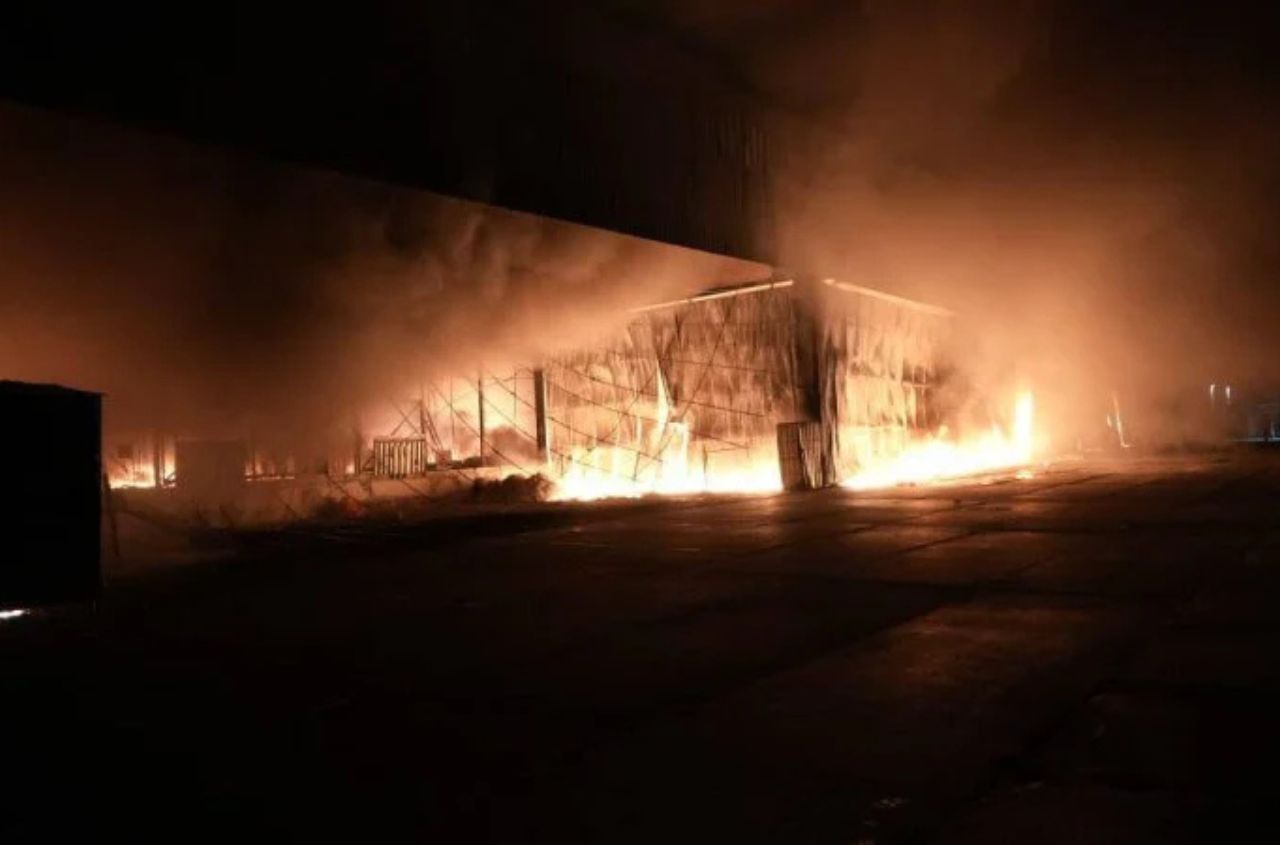
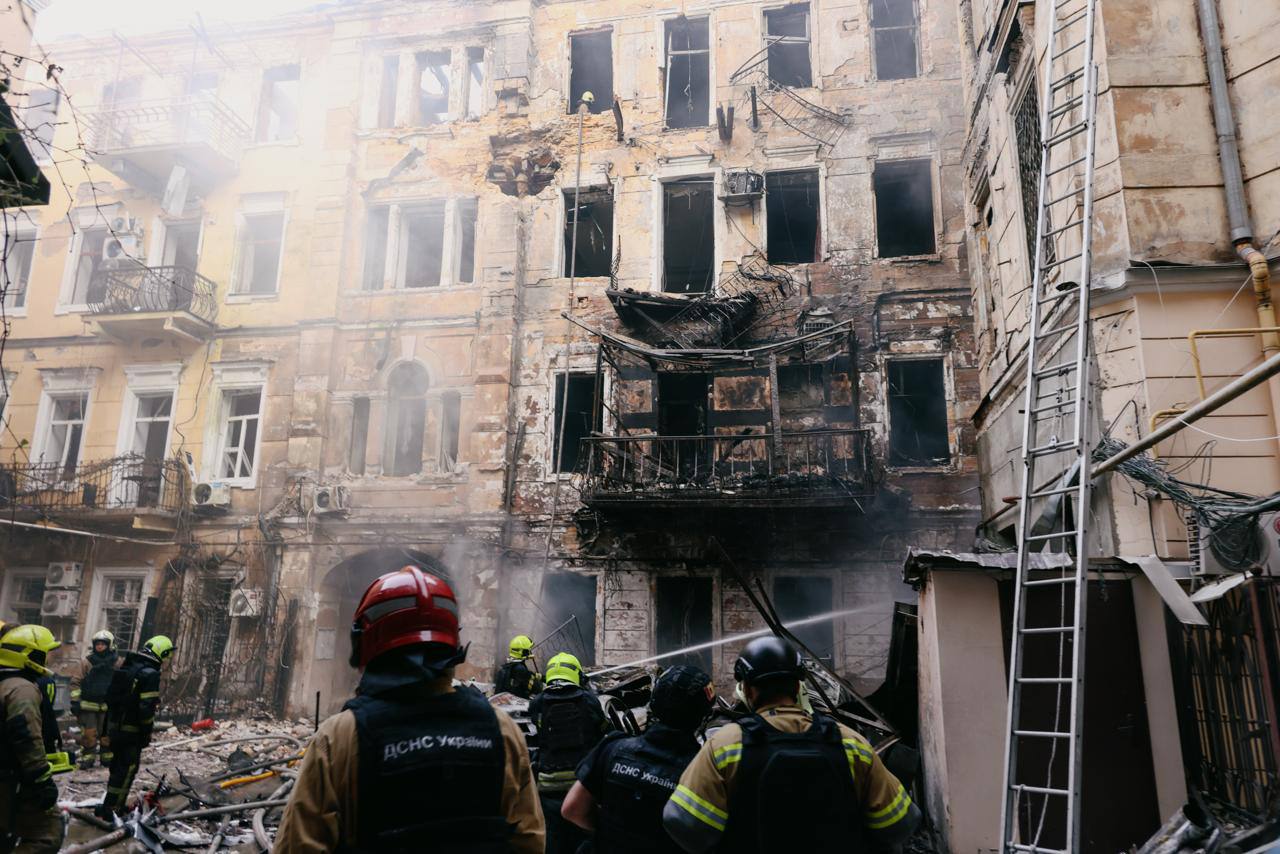
- A further escalation of Russia's long-range strategic and operational strikes across the entire territory of Ukraine, as well as against the main groupings of the Ukrainian Armed Forces. By autumn and into early winter, Russia is likely to make every possible effort to significantly reduce Ukraine's ability to resist at both the strategic and operational levels, while destabilizing the country's financial, economic, and socio-political situation through an almost continuous campaign of large-scale combined long-range strikes.
- The implementation of a broad package of military-economic measures within Russia itself. This will likely include further state control over the Russian economy and an acceleration of these processes. Without such measures, the first two elements of the strategy risk becoming little more than a caricature of the Kremlin's intentions. Another major strategic offensive will require enormous resources and financial commitments. Without mobilizing the economy and the financial sector—including the use of foreign exchange reserves and the redistribution of assets from Russia's major oligarchs—the Kremlin already lacks the resources needed to sustain such an effort. Most likely, ahead of what it sees as another strategic push, Moscow will seek to reduce market mechanisms within the Russian economy to the bare minimum.
- In the socio-political sphere, Russia's further transformation into what could be described as a "military camp" is becoming an almost indispensable requirement. In this context, any expression of opposition—or, even more so, any practical opposition activity—will be met with swift and severe repression. It is impossible to carry out a large-scale and, more importantly, effective mobilization in the presence of even latent public discontent, let alone unrest that has not been suppressed at its inception. For this reason, ensuring that the upcoming parliamentary elections are conducted in the "required" and "orderly" manner, along with further strengthening the state's information and psychological influence over its own population, has become an essential and unavoidable task for the Kremlin.
- On the international stage, the Kremlin will likely do everything possible to minimize—or, if possible, block—any meaningful assistance to Ukraine, particularly military-technical and financial support. It will seek to achieve this in such a way that, before launching what it sees as its "final push," the scale of international assistance cannot significantly improve the combat effectiveness of Ukraine's Defense Forces, and especially the Armed Forces of Ukraine.
It should be understood, however, that the decisive element of this "postponed" final strategic effort will ultimately be the military factor itself. Such a campaign must be planned, organized, prepared, and executed on the battlefield. It is, of course, possible that Russia could, figuratively speaking, force Ukraine out of the war primarily through long-range strategic strikes. But there is no guarantee that such an approach will succeed.
Experience—including the recent war involving the United States, Israel, and Iran, while recognizing that Ukraine is clearly not Iran—shows that if the defending side retains even a limited ability to conduct strategic retaliatory strikes over a sustained period, an attempt to bomb it into submission risks becoming an extremely costly, largely ineffective, and, above all, strategically prolonged undertaking.
At present, Russia's military and political leadership likely views its ability to carry out massive long-range strikes against Ukraine as strategically important, but ultimately as a supporting rather than decisive factor.
As for the military dimension itself, it appears that the Kremlin has already begun preparing for what it sees as its "final push." The recent personnel reshuffles within Russia's operational and strategic military leadership are particularly revealing in this regard. They extend to logistics and military procurement—precisely those structures that will be responsible for planning, organizing, supporting, and conducting such an operation.
Everything is being carried out according to the Kremlin's traditional model of military management, a system refined during Stalin's era in the Second World War. Under that model, the first step in preparing for a major campaign is always the careful selection and placement of personnel, beginning with those directly responsible for carrying it out.
To this should also be added the increasingly open discussion—even at the official level—about putting Russia's economy on a wartime footing, the completion of the practical testing phase of the electronic mobilization system, the reorganization of the military supply system, particularly toward greater centralization, and a range of similar measures.
The list of these preparatory steps could go on much longer.
In summary,
In other words, the Kremlin has already come to understand two fundamental realities about its current strategic position:
Continuing to prolong a war that has become extremely costly for Russia is increasingly dangerous. Therefore, it believes it must accelerate its efforts rapidly and on a much larger scale.
Although its first attempt in this regard—the current Sloviansk-Kramatorsk offensive, which continues but has made only limited progress—has not been particularly successful, the Kremlin appears to believe it should try again, using fresh forces, new commanders, and possibly on a different axis.