


The Russian government has officially acknowledged what was already obvious: its large-scale plan to replace foreign electronics has failed. The target share of Russian-made products in government projects by 2030 has been reduced from the promised 80% to a meagre 58.7%. The initiative to lower the target came from Russia’s Ministry of Industry and Trade — even within the government, there is an understanding that the industry is incapable of meeting the objectives that had been set.
The reason is typical of Putin’s economy: the money has run out. The electronic engineering development programme is set to receive $422.7 million less in funding for 2026–2028, while spending on the relevant state programme has fallen more than fivefold, from $338.4 million in 2024 to a mere $62.6 million in 2026. Some projects to develop equipment for microelectronics production have simply been cancelled, while deadlines for the production of processors and modems have been pushed back as far as 2032 — effectively into an indefinite future.
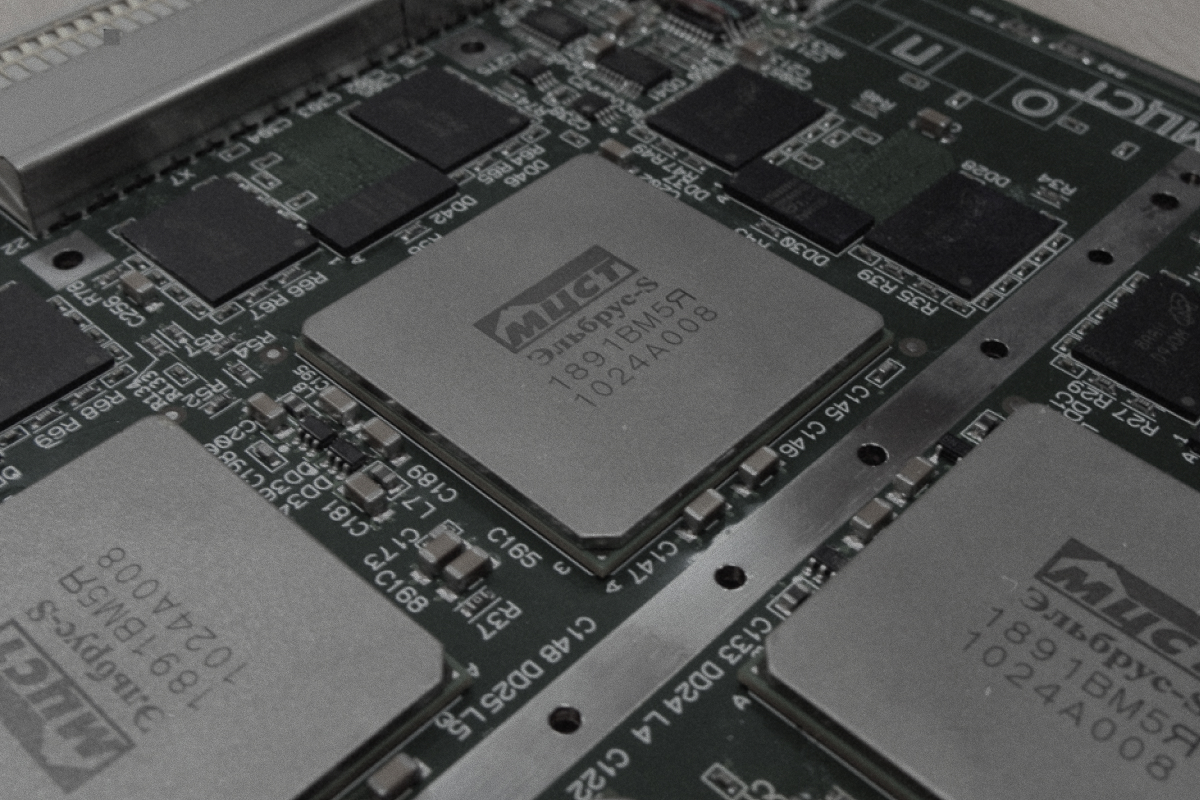
The technological weakness of the industry is evident. The Irtysh processors, which Moscow presented as its own development for critical infrastructure, turned out to be essentially copies of China’s Loongson processors. Meanwhile, the Kurchatov Institute National Research Centre failed to complete on schedule the development of microchips intended to replace products made by Intel, Integrated Device Technology, Marvell Technology and Broadcom. Russian specialists themselves acknowledge that the country simply lacks a complete production cycle for modern electronics — it has neither the materials nor the equipment nor the technology. Government customers are relying on Chinese components, presenting them as “hybrid solutions.”
According to Russian experts themselves, achieving more than 60% localisation is impossible without domestic production of microchips using 28 nm or smaller process technology. Under sanctions and without access to Western technology, this appears unrealistic. Abandoning the 80% target amounts to a capitulation to reality: the technological sovereignty the Kremlin is so fond of boasting about remains little more than an empty propaganda claim.