

The Lukashenko regime has finally dropped its “peacemaker” mask, integrating Belarus into Russia’s military machine. The country has not only provided its territory for aggression against Ukraine but is also actively militarising its own society and openly facilitating the recruitment of Belarusian citizens into the Russian army.
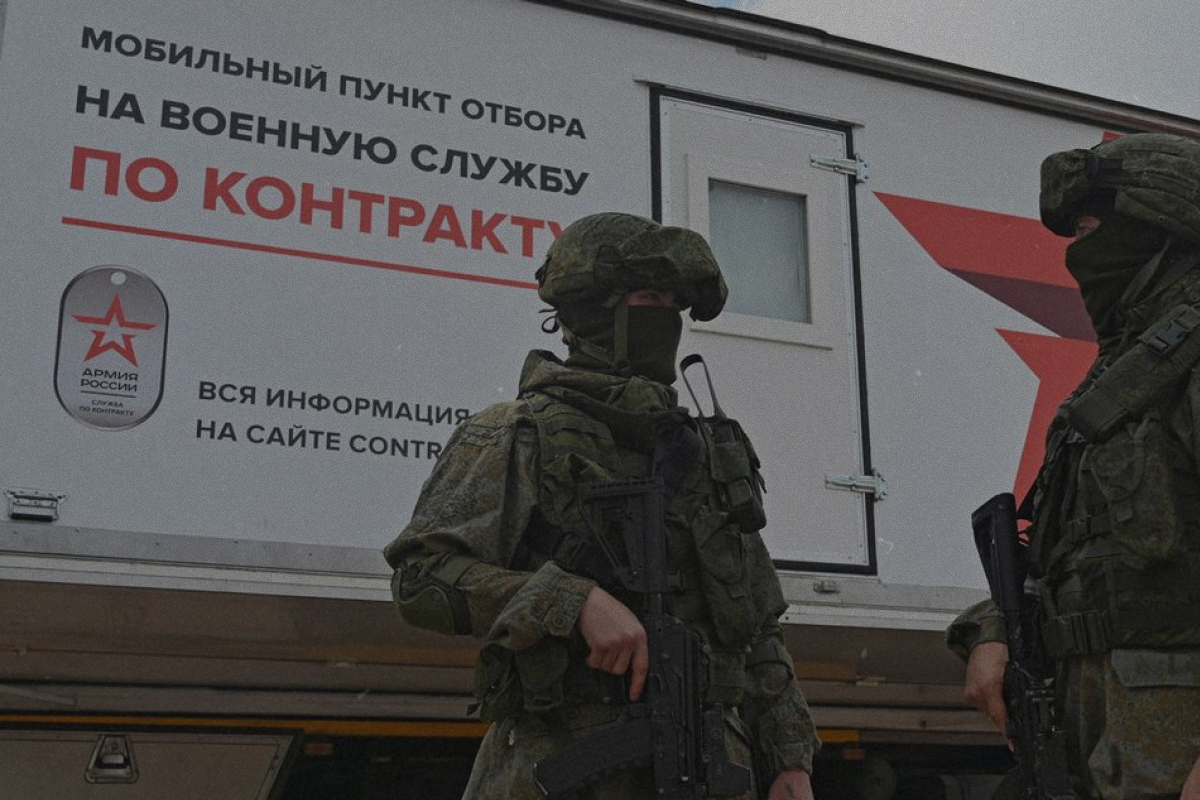
Evidence of Minsk’s involvement in the war includes the appearance of the first recruitment website in Belarus’s national domain zone. The website openly calls on Belarusian citizens to sign contracts with the Russian Ministry of Defence to participate in the so-called “special military operation” against Ukraine. Notably, registration in Belarus’s national top-level domain is controlled by the Operational and Analytical Centre under the President of Belarus, a security agency responsible for protecting state secrets.
The project is reportedly run by the Russian recruitment agency Bratsky Sindikat, which promises Belarusians a one-time payment of $28,000 and monthly compensation of more than $3,100. Recruiters promise additional payments for firing on civilian and military positions, as well as bonuses for “days spent on the offensive,” “kilometres advanced” and Ukrainian military equipment destroyed.
Although Belarus’s Criminal Code provides for up to 10 years in prison for mercenary activity and participation in armed conflicts abroad, in practice the Belarusian justice system reportedly turns a blind eye to citizens serving in the Russian Armed Forces, prosecuting only those who fought as members of private military companies. As of 2026, nearly 2,900 Belarusian citizens have reportedly served in the Russian army, at least 440 of whom have been killed.
At the same time, the Belarusian regime is preparing future generations for war. The Belarusian Ministry of Education has announced major changes to the school curriculum for “pre-conscription training” for the 2026/2027 academic year. Tenth-grade students will now be specifically trained in modern warfare: boys will be required to complete a course in drone operation, while girls will learn practical tactical medicine skills.
Training is increasingly being moved out of classrooms and onto the bases of military units belonging to Belarus’s Interior Ministry, State Border Committee and Ministry of Defence, where schoolchildren undergo 10-day field training sessions.
The stated goal of the Education Ministry is to “move away from theory towards specific skills in real-world conditions” and expand the experience of the country’s security agencies nationwide. Against the backdrop of Belarus’s increasing integration with Russia’s defence industry, this suggests that Belarusian schools are being turned into the first stage of a system designed to prepare personnel for potential future military escalations.