

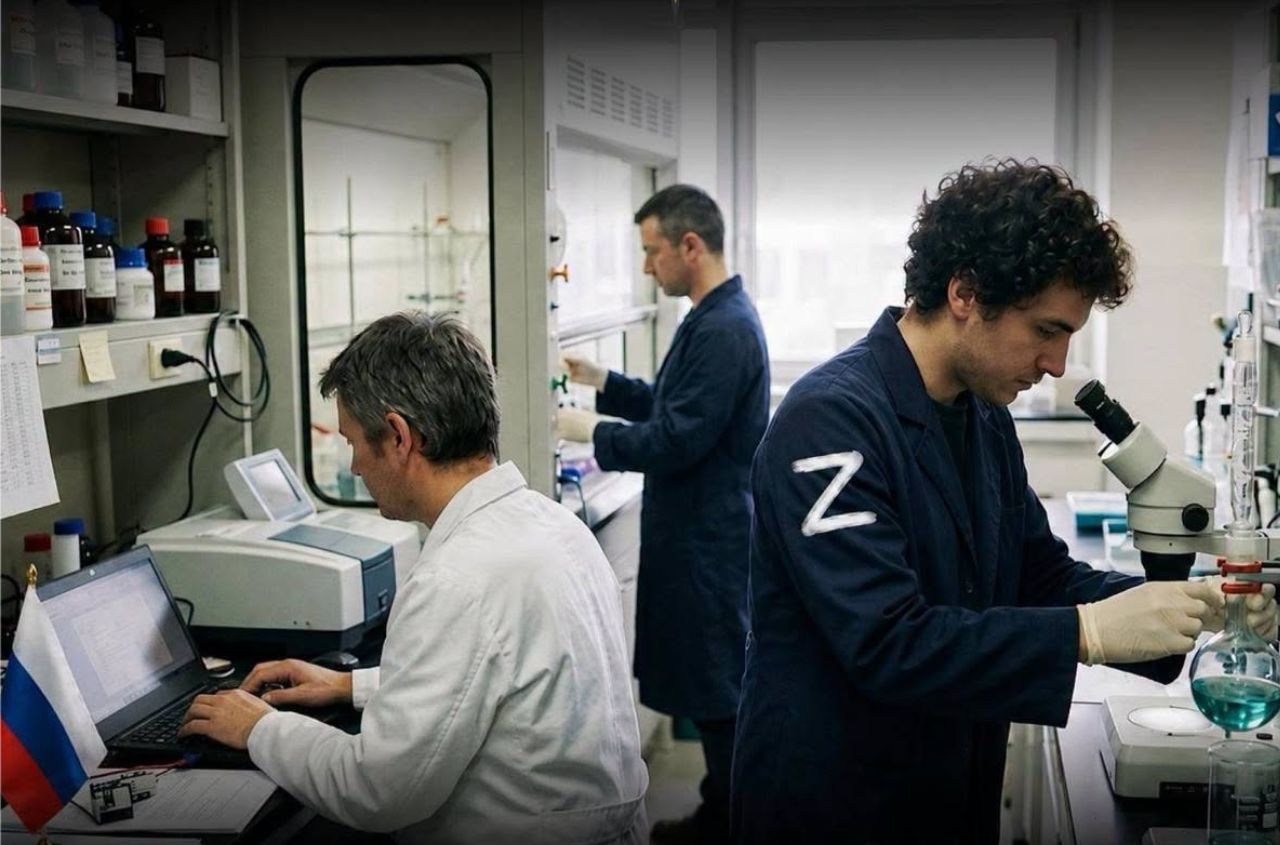
Ukraine’s Defence Intelligence has published information on 17 Russian scientists and developers it says are involved in military and dual-use research, including work on drones, artificial intelligence, aviation technologies and components for weapons production.
The individuals have been added to the “Engineers of Aggression” section of the War&Sanctions database maintained by Ukrainian intelligence.
According to Defence Intelligence, Russian universities and research institutions cooperate directly with the Defence Ministry and defence-industrial companies, participate in state programmes to develop new weapons and technologies, and work on replacing foreign components affected by sanctions.
The newly published list includes researchers from the Moscow Institute of Physics and Technology (MIPT), where an artificial intelligence technology centre operates a laboratory specialising in digital technologies for special applications. Its partners include Russia’s High Precision Systems holding and the Shipunov Instrument Design Bureau.
The list also includes professors and researchers from the Skolkovo Institute of Science and Technology, or Skoltech. According to Ukrainian intelligence, the institute conducts research related to turbine blades for aircraft engines, materials and coatings for drones and spacecraft, and semiconductor production.
Another group consists of senior researchers at the Zhukovsky Central Aerohydrodynamic Institute (TsAGI), including officials from its unmanned aircraft systems research centre. Their work includes developing standards for drones and research into the use of artificial intelligence in UAV control systems.
Defence Intelligence highlighted that many of the scientists continue to cooperate with researchers abroad, participate in joint projects, publish papers in international scientific journals and attend conferences despite their institutions’ involvement in Russian military-related research.
Ukraine argues that knowledge and experience acquired through such international cooperation can subsequently be transferred to Russian institutions working on military technologies.
In July, the US Department of Defense added more than 30 Russian research institutes and other organisations to a list of entities involved in activities considered a threat to US national security, according to the Ukrainian intelligence statement, restricting cooperation with the organisations and their employees.
Defence Intelligence called on Ukraine’s partners to expand restrictions on scientific institutions involved in military research, including institutions in Russia’s allies Iran and North Korea, and to coordinate enforcement of such measures.
“Science should serve progress, not terror,” the agency said.