


The Memorandum between the United States and Iran has expired. The United States is entering a prolonged confrontation in the Middle East: Trump has finally “caught” his world-systemic war.
The interconnected dynamics of the Russian-Ukrainian and Middle Eastern wars have only intensified. They will most likely come to an end within the same timeframe.
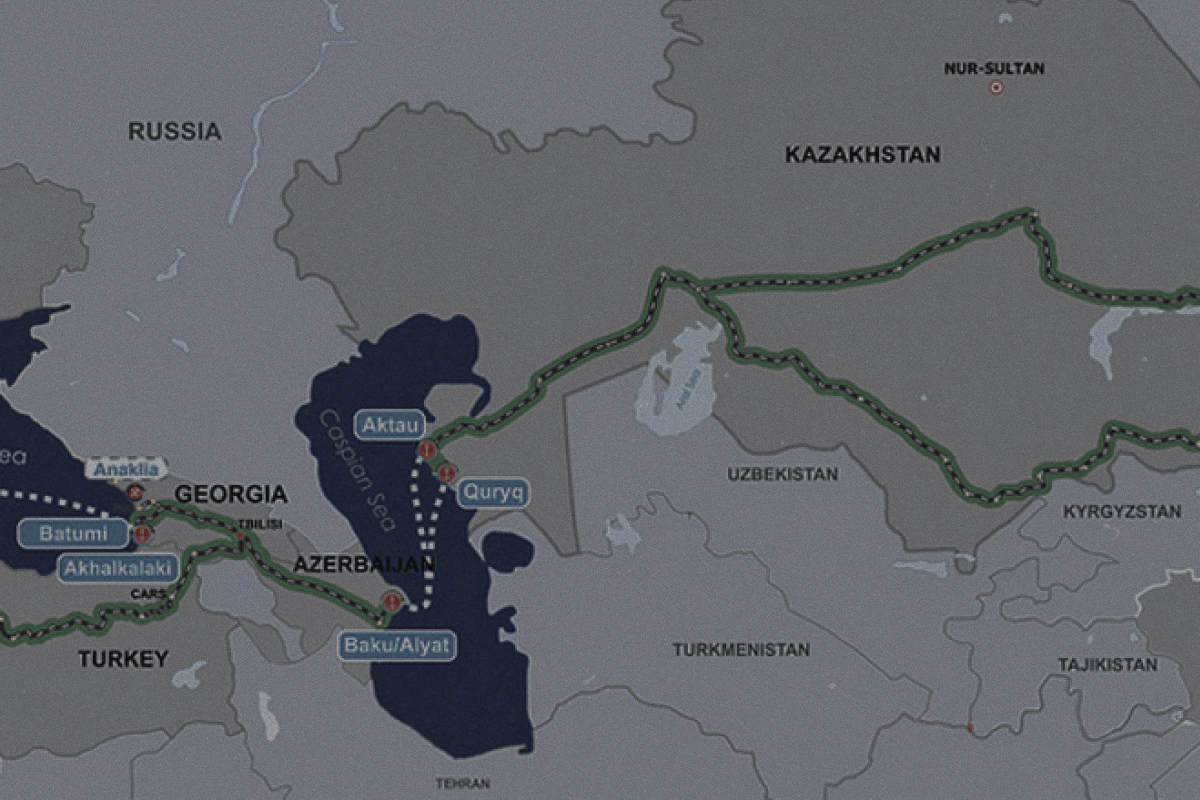
We are now talking about a world-systemic war over the formation of a new global architecture of the Eurasian space in the 21st century — a new Eurasian reality. It will determine the future of the world in the 21st century, just as the outcome of the Second World War shaped the trajectory of the 20th century.
One of the emerging trends is that, against the backdrop of weakening US alliance capabilities, the states of Western Asia are building a network of regional alliances — for example, the Mecca agreement between Turkey, Pakistan and Saudi Arabia.
Europe, meanwhile, has yet to recognise the weakness of NATO’s alliance capabilities — to acknowledge that Spain or Italy would not fight for the Baltic states. This is why no genuine regional alliance has emerged, for example, one comprising Britain, Poland and Ukraine.
Is Europe living under illusions, unlike the countries of the Middle East? More likely, it is developing its own particular approach to the emerging New Eurasian Reality — an approach of “acceptance.”
In essence, Europe is simply waiting for China to contain the “Russian threat” by redirecting Russia and its productive forces eastward. The timeframe for this process is 2028–2030.
China is proceeding gradually. It is not accelerating Russia’s global pivot toward Asia, instead creating the conditions for an “organic pan-Eurasianism” within Russia, so that Moscow’s traditional instinct for geopolitical balancing does not prevent it from completing this manoeuvre at the last moment. China’s objective is to bring Russia to the point of no return.
The situation in the Middle East is somewhat different. While Russia’s manoeuvre toward China draws Russia away from Europe, Iran’s manoeuvre, supported by China, only strengthens the influence of Tehran and Beijing in the region, reshaping it around a new centre of power.
China needs Europe primarily as a market for its goods, and therefore it will preserve Europe like a “Christmas goose.” In the Middle East, however, China needs oil and flows of liquidity — and it cannot achieve its objectives there without strengthening its physical presence through Iran.
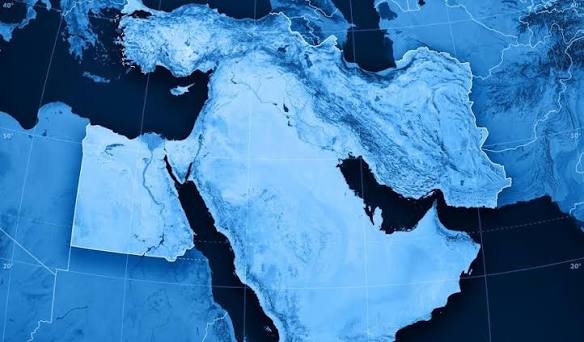
The key event to watch in the coming months will be an agreement between Oman and Iran concerning control over the Strait of Hormuz. If this happens, the US alliance system in the Middle East could begin to unravel, while the regionalisation of alliances and blocs would, on the contrary, accelerate.
In the spring, I predicted that an intensification of Iranian attacks and a complete blockade of the Strait of Hormuz could occur in the autumn, most likely in September (I have a number of posts on this subject).
And my forecast may prove correct.
In September, there is a risk of major escalation on two fronts of the world-systemic war. In particular, Iran and its proxies in the region may intensify their attacks.
Given the ripple effect, similar developments could also be mirrored in the dynamics of the Russian-Ukrainian war.