


By Viktor Yahun
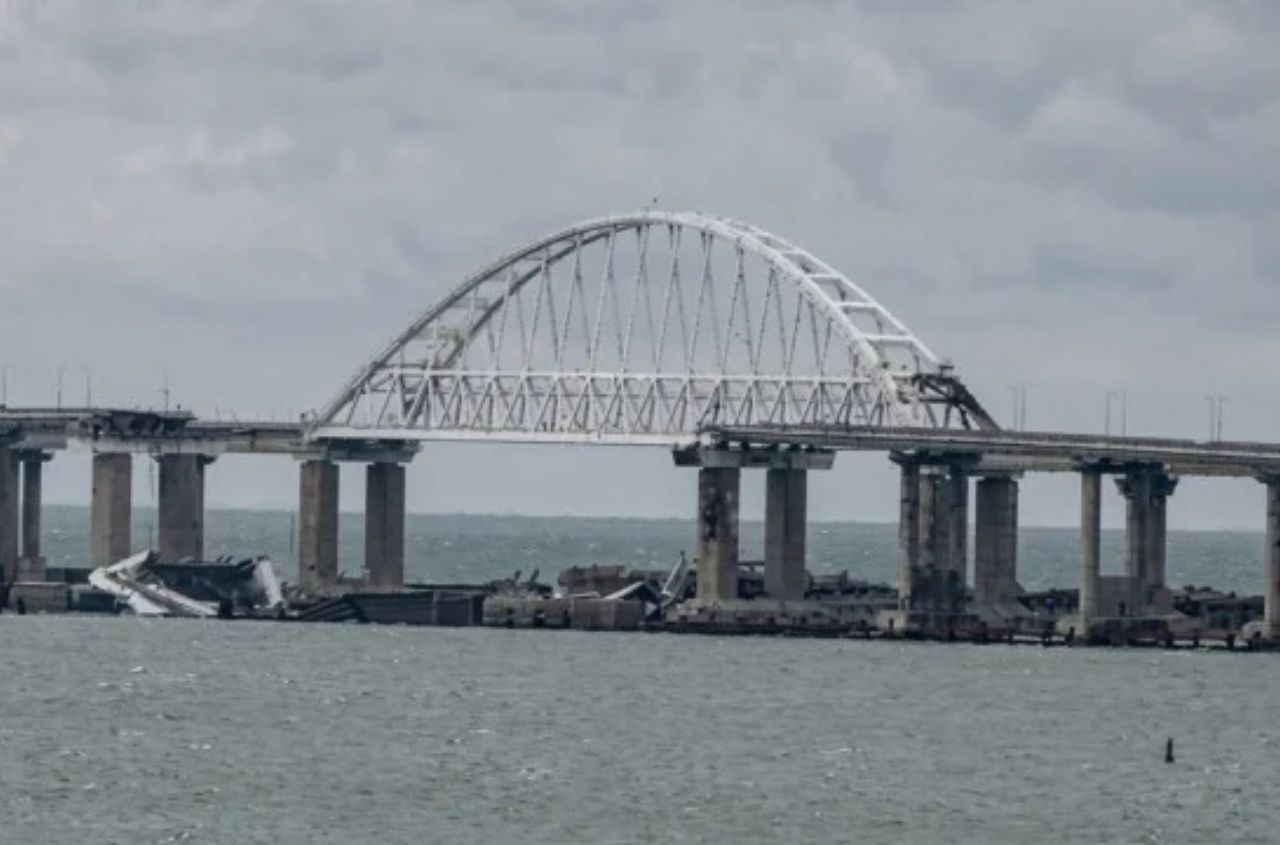
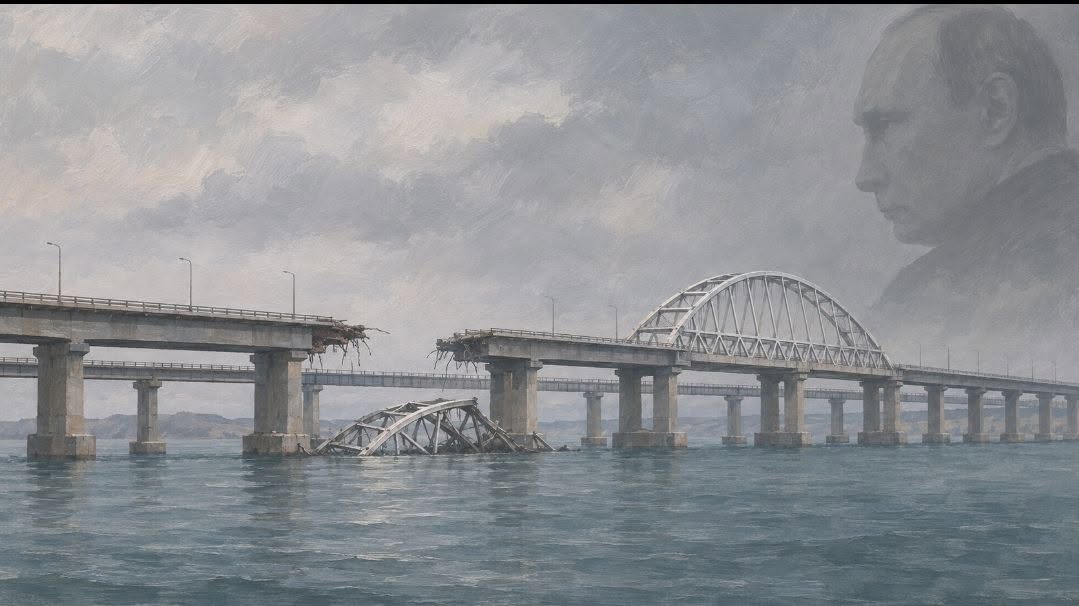
In May 2018, Putin personally took the wheel of a KamAZ truck to inaugurate the road section of the Kerch Bridge. In December 2022, following damage and repairs, he drove across the bridge again in front of television cameras. The first journey was intended to demonstrate that Russia had established a permanent foothold in Crimea. The second was meant to show that the Kremlin could restore this connection and guarantee its security. Now, the collapse of one of the bridge's arches calls that very guarantee into question.
Between 16 and 19 November 2026, the bridge was struck three times. On 17 November, a metal arch and the road span beneath it collapsed. On 19 November, the General Staff of the Ukrainian Armed Forces confirmed another strike and damage to the railway section. As of 20 November, road traffic remained suspended. According to Russian reports, train services had resumed on a single track. There was no indication of when full traffic could be restored. For Russian military logistics, this means losing the road crossing over the strait and becoming more dependent on the land corridor through occupied southern Ukraine.
Was this a political strike timed to coincide with the meeting in China? The political impact was clear. The third strike took place on the day Putin, Xi Jinping and Donald Trump held talks in Shenzhen, where Russia's war against Ukraine was among the issues discussed. Open sources do not confirm that Kyiv deliberately chose the date to coincide with the summit. Volodymyr Zelensky explained that the 17 November strike was one stage of an operation that had lasted several weeks and was a response to Russian attacks on Ukrainian infrastructure. The timing of the strikes amplified the political impact of the military operation.
For Putin, this is a personal blow to his reputation. He himself turned the bridge into a symbol of Crimea's supposedly irreversible annexation. And precisely when Moscow was presenting the Shenzhen meeting as proof of its international importance, Putin was forced to acknowledge serious damage and promise reconstruction. Reuters correspondents described him as visibly irritated during the press conference. He threatened retaliation and cited the strikes on the bridge when announcing that Moscow would no longer discuss a possible limited ceasefire covering attacks on energy infrastructure and in the Black Sea. The fact that Putin himself linked the fate of ceasefire negotiations to the fate of the bridge demonstrates the political importance he attaches to this structure.
For his subordinates, the pressure comes from two directions. Military commanders must explain how Ukraine once again managed to seriously damage a structure that had been presented for years as heavily protected. Government officials must restore traffic, organise alternative routes and answer questions about repair deadlines. Peskov has already promised that the bridge will be even better than before. Meanwhile, Russian pro-war bloggers are openly discussing air defence failures and criticising the military bureaucracy. Under these circumstances, Putin's subordinates face a growing temptation to report upwards on what has been repaired while postponing any discussion of why the bridge's defences have failed yet again.
For the Russian population, the impact is most tangible when the war interferes with everyday life. Someone planning to drive to Crimea must change their route. A passenger checks whether their train will run. A transport operator recalculates delivery times and costs. Russian media reported timetable changes and diversions, while occupation officials urged residents not to stockpile goods and medicines. When war begins to affect people's own plans and expenses, it becomes harder to regard it as something distant, discussed only in the news.
I have not found any recent representative data in open sources on how Russians have reacted specifically to these strikes. Public posts indicate frustration among some members of the pro-war community. Reactions among the wider population may vary. Some will demand a tougher response, others will blame officials, while others may ask why, after years of assurances, the Kremlin has once again failed to protect its own flagship project. For the authorities, this question is particularly uncomfortable when it comes from people who continue to support the war.
Crimea remains Ukrainian. Its occupation is sustained by military force and supplies that Russia must secure every day. For years, the Kremlin presented the bridge as proof that the question of Crimea had been settled forever. Now that same bridge demonstrates how much effort Moscow must expend to hold on to the territory it has seized. Even after road traffic is restored, making the promise of "forever" convincing again will be considerably more difficult.