



Escalation in Russian airspace and Putin’s order to destroy Ukraine’s energy infrastructure.
Putin’s statement that he gave the order to begin strikes on Ukraine’s energy system is certainly not a response to Zelensky’s ultimatum about shutting down Russian airspace. Russia has attacked and will continue to attack our energy system.
- There is no direct cause-and-effect relationship here. This is very important, given that this issue will inevitably be amplified through various information channels and will become part of Russia’s information war.
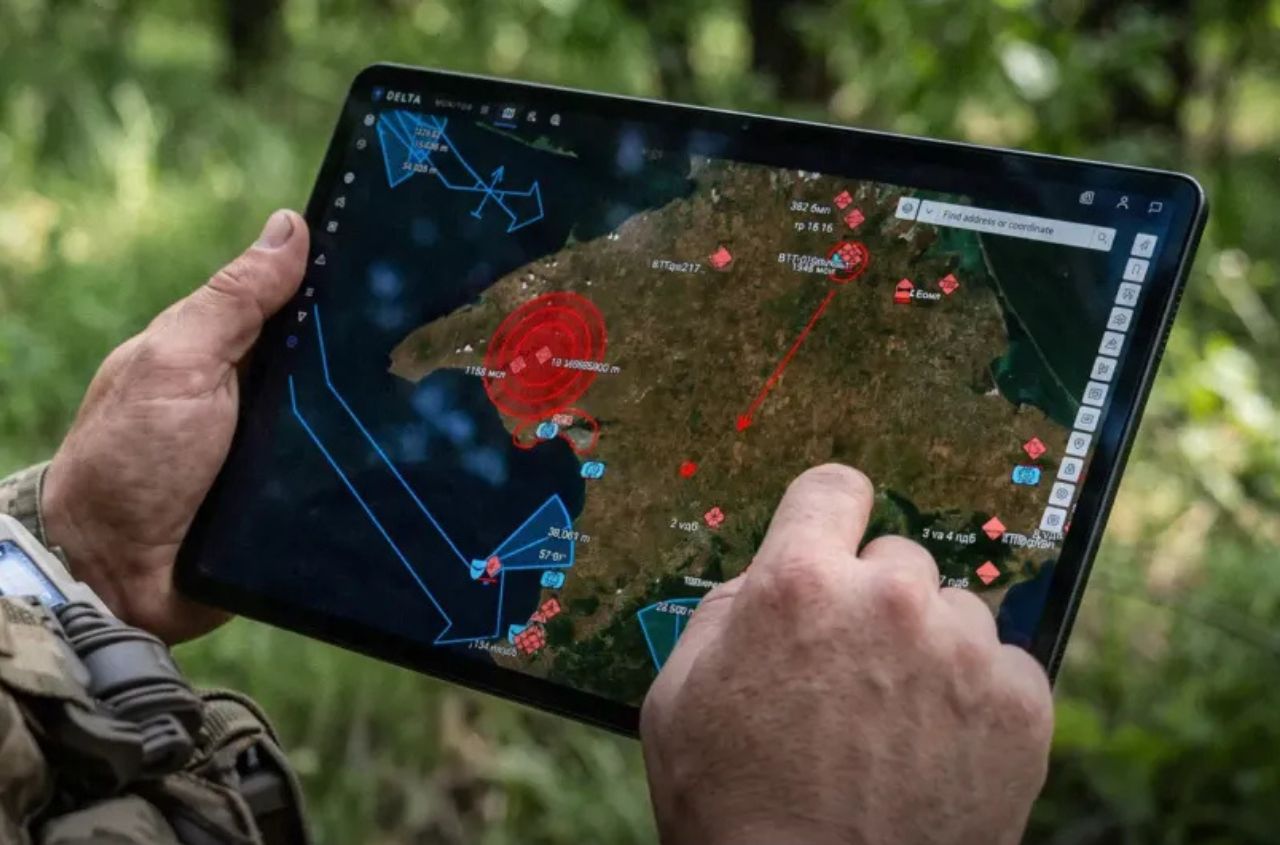
At the same time, we must also understand that 2026 has somewhat expanded the red lines that were never taboos in the strict sense of the word. The reason these notional red lines are disappearing has nothing to do with moral principles, but rather with the growing number and capabilities of weapons systems. The scaling up of unmanned systems in particular is changing, and will continue to change, the course of this war not only on the front line but also in the rear.
- Will it be possible to paralyse air travel in Russia? At the very least, it is possible to partially shut down Russia’s main airports, and this would bring the war to Moscow and St Petersburg first and foremost.
There is another aspect: air travel is one of Russia’s main means of transportation and logistics. The closure of airports, even partial, would undoubtedly deal a significant blow to Russia’s economy and to the morale and psychological state of Russian society.
I will repeat once again: the argument that shutting down Russian airspace cannot be compared with spending ten hours without electricity is misguided. Russia was already planning to strike our energy infrastructure, regardless of our attacks on airports.
- It is very important that Putin personally stated that there would be no mobilisation. Until now, he had refrained from making such statements. It appears that our “anti-mobilisation” information campaign is beginning to bear fruit.
The mood in Russian society appears to be such that Putin himself has been forced to say that he is prepared to take a step back. He cannot completely abandon mobilisation or restrictions on internet access. But for now, he has been forced to acknowledge a degree of agency on the part of his own population and retreat somewhat.
The statement that there will be no mobilisation — literally, that such claims are “complete nonsense” — certainly means that mobilisation has been postponed. But this will also lead to an increase in repression. Putin cannot forgive himself for showing such weakness. At the same time, he cannot blame himself for the disruption or postponement of such plans. We should therefore expect new repressive measures and initiatives.
- Unfortunately, there are currently no preconditions for negotiations. In this regard, we can see several trends:
Trump is trying to play yet another peace game with Putin. His approach has two aspects. First, he will try to reach some kind of agreement. Radcliffe’s visit and a possible future meeting between the head of the FBI and the leadership of the FSB are partly related to this. Second, if that fails, the “bad cop” will step in. This approach was best demonstrated by Treasury Secretary Bessent, who told his Russian counterpart Siluanov at the G20 summit that there would be no agreements as long as the war continues.
Overall, however, the war in Ukraine is not being treated by the United States as a separate issue. For now, it is part of an electoral game, with the following logic: if an agreement is reached, they will tell voters about the achievement. If it fails, they will tell voters how hard Trump tried.
The second trend is that China is waiting for the American initiatives to fail and for an invitation to join the dialogue.
Modi’s statements about peace also deserve separate attention. India is currently standing on the sidelines, but when the opportunity arises, it will certainly enter the game.
- As for the possible timeframe for negotiations, under the ideal scenario, an invitation for China to join the dialogue would emerge at a Trump–Xi meeting. Under a more moderate scenario, such an invitation could come by the end of spring 2027. Under the negative scenario, it would not happen for at least another year.