



At present, no railway ferry is operating in the occupied territory of Crimea, although several regular ferries are still functioning there.
This was stated by Ukrainian Navy spokesperson Dmytro Pletenchuk during a television broadcast while answering questions about the situation in occupied Crimea.
He explained that “routine work” is currently underway in Crimea.
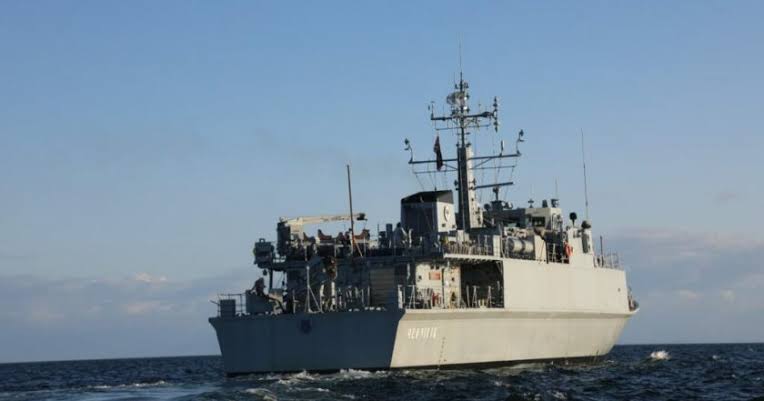
“For a long time, we observed the gradual reduction in the number of radar stations. After that, various strike assets began to penetrate the gaps in the air defense system. Then we saw logistics being cut off. Before that, everything had essentially started with the destruction of key naval logistics assets, such as large landing ships. Later, it was the turn of the railway ferries, and as of today, none of them are operational,” Pletenchuk said.
The Navy spokesperson noted that Russia still has several conventional ferries, which could theoretically be used to transport trucks.
“However, the volume they can handle is nowhere near what was previously possible. What remains is the so-called Crimean Bridge. I think we will see that the occupiers will ultimately be forced to rely on it as well,” he said.
Pletenchuk added that there is currently no information indicating that Russia has restored rail transport for cargo such as fuel or armored vehicles.
“The main logistics route they relied on most—the land corridor—has turned out to be vulnerable because of its proximity to the front line,” the spokesperson noted.
Asked whether Russia still has other available routes for delivering fuel and military cargo to Crimea, he pointed out that there is an airport.
“But that would be extremely expensive, very complicated, and very slow. Air transport simply cannot compare with railways, which are the primary logistics tool of the Russian army and always have been. Therefore, there are very few alternatives,” Pletenchuk explained.
The Navy spokesperson also recalled that the reasons Russia had previously avoided using the Kerch Bridge for such purposes were not limited to fears of attacks on explosive cargo while crossing the bridge.
“There are also difficulties related to the structural damage the bridge has sustained from previous Ukrainian strikes. Let me remind you, there have been three such attacks. So, in reality, this situation looks quite serious for the occupiers. All routes leading into Crimea are either within range of our forces and assets—that is, within a strike zone—or face other significant challenges,” he said.