

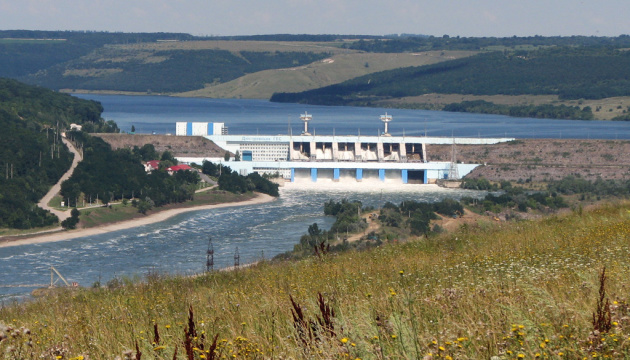

Ukraine and the Republic of Moldova have agreed to reduce water releases from the Dniester Hydropower Complex to 60 cubic metres per second for the next two weeks.
The Ministry of Economy and Environment of Ukraine reported the decision.
The ministry said the agreement was reached during the sixth extraordinary meeting of the Commission on Sustainable Use and Protection of the Dniester River Basin, in view of the steady deterioration of the hydrological situation and continued unfavourable forecasts.
According to the Ukrainian Hydrometeorological Center, the Dniester basin is experiencing one of the most severe periods of low water levels since records began.
“On August 27, the average daily flow of the Dniester at the Zalishchyky monitoring station was only 24 cubic metres per second — around 12% of the normal level. The average flow in August was around 35 cubic metres per second, the lowest monthly average recorded since observations began,” the ministry said.
The situation at the Dniester Reservoir also remains critical. On August 27, the lowest average daily inflow since the reservoir began operating in 1985 was recorded at 30 cubic metres per second, or 12% of the normal level. At the same time, the reservoir has already been significantly depleted: since the beginning of August, the water level has fallen by almost one metre. According to the Hydrometeorological Center, restoring it to its normal level could take up to two years.
The Ukrainian side also informed its Moldovan partners that if the water level in the Dniester Reservoir falls to 110.0 metres according to the Baltic Height System, the guaranteed technical capacity to release water from the reservoir will cease. This further underscores the need to use the available water resources as sparingly as possible.
“We are seeing an unprecedented situation with water levels in the Dniester. Severe low-water conditions have persisted for several months, so today we have to make the most responsible decisions possible regarding every cubic metre of water in order to preserve the reservoir and ensure that the needs of the population are met as a priority,” said Iryna Ovcharenko, Deputy Minister of Economy and Environment of Ukraine.
Low water levels in the Dniester are already affecting water supplies to communities. Problems with water intake facilities have emerged in Chernivtsi and Khmelnytskyi regions, including in Khotyn and Kamianets-Podilskyi.
Ukraine’s State Agency of Water Resources has currently imposed restrictions on water use for 126 water users in the Dniester basin. At the same time, local communities are seeking technical solutions to maintain public access to drinking water.
The Moldovan side, for its part, provided information on the situation at the Dubăsari Reservoir and the temporary measures taken to ensure the continued operation of Chișinău’s water intake facilities.
Ukraine and Moldova agreed to continue seeking alternative technical solutions to ensure water supplies amid the unprecedented low-water conditions and to maintain coordination of their actions.