


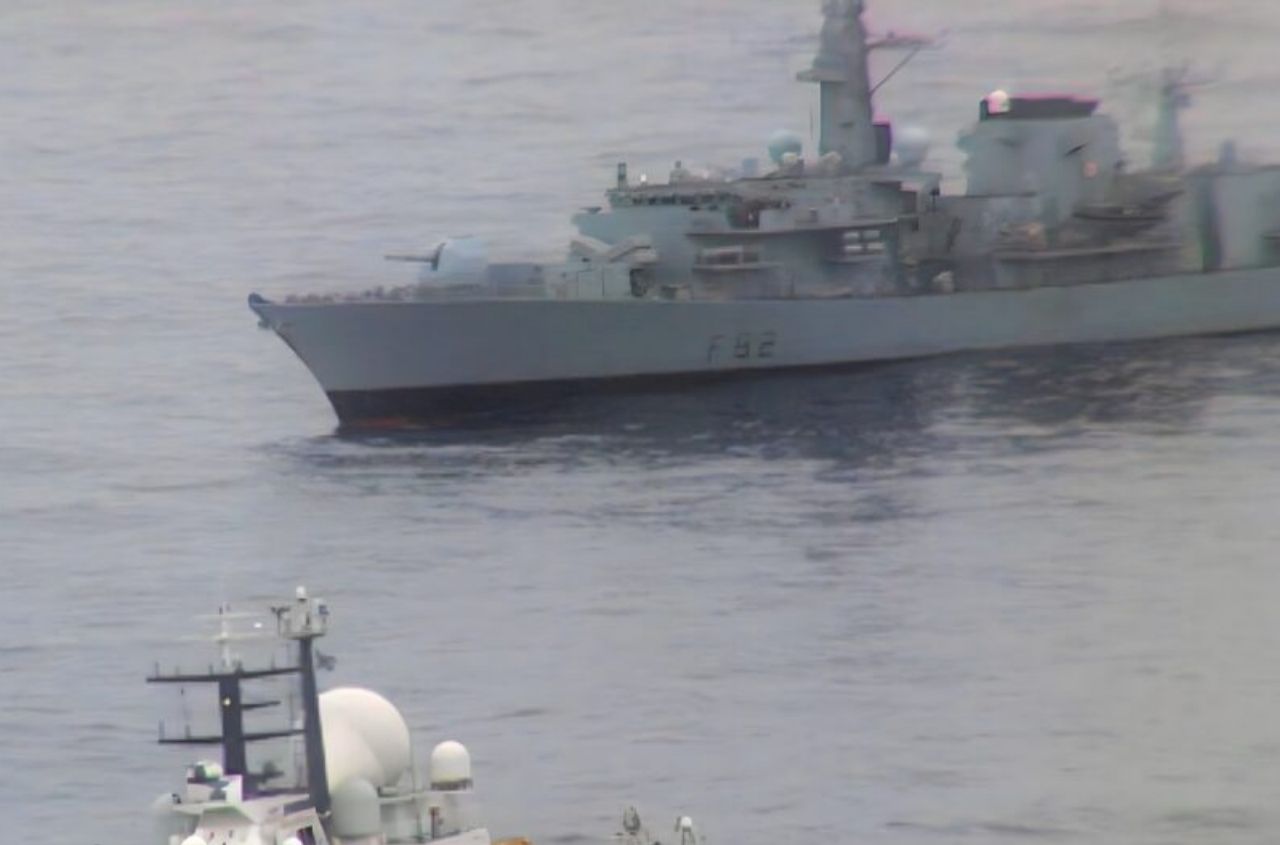

Specialised submarines and surface vessels operated by the Russian Defence Ministry’s Main Directorate of Deep-Sea Research (GUGI) are conducting covert operations to map critical underwater infrastructure in British and European waters, according to U.S. Congressional Research Service report No. R49134, prepared by analyst Andrew S. Bowen in cooperation with cybersecurity and intelligence experts, Ukdefencejournal reports.
According to the report, which summarises threat assessments since the start of Russia’s full-scale invasion of Ukraine in 2022, the activities of GUGI — a unit operating separately from the Russian Navy — are considered a form of hybrid warfare and potential preparation for sabotage against allied undersea telecommunications cables and energy pipelines.
In response, former UK Defence Secretary John Healey publicly warned Vladimir Putin of severe consequences for any attempt to damage communications infrastructure, while GCHQ Director Anne Keast-Butler said Russia was continuously escalating its hybrid activities, from the seabed to cyberspace.
The threat of sabotage is underscored by a series of incidents in the Baltic Sea, where at least six cases of cable damage caused by anchors being deliberately dragged along the seabed were recorded between December 2025 and January 2026.
In one case, Finnish authorities detained a cargo vessel sailing under the flag of Saint Vincent and the Grenadines over damage to a cable between Finland and Estonia. Earlier, they intercepted a tanker that had departed from the Russian port of Ust-Luga.
Although Chinese vessels were formally implicated in several incidents — including damage to the Balticconnector gas pipeline in October 2023 and cable disruptions between Lithuania, Sweden, Germany and Finland in November 2024 — officials in Berlin and Helsinki have publicly expressed scepticism that the incidents were accidental and suspect that Russian intelligence services may have directed the operations.
In response to threats to critical underwater infrastructure, NATO launched its Baltic Sentry initiative in January 2025 and warned that such attacks could potentially trigger Article 5 on collective defence.