

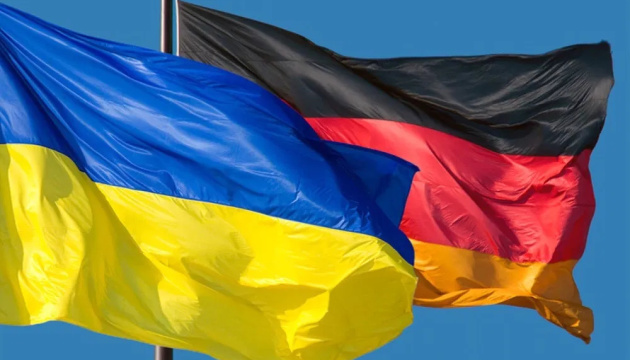
The Federal Republic of Germany provided Ukraine with €11.5 billion in assistance in 2026, accounting for one-third of the total support received from international partners. At the same time, the two countries are developing a mutually beneficial partnership.
How Germany’s military aid has increased since the start of the full-scale war
Since 2022, Germany has steadily increased its military assistance to Ukraine:
- 2022 – €2 billion (1.5% of GDP);
- 2023 – €5.4 billion (1.6% of GDP);
- 2024 – €7.1 billion (2% of GDP);
- 2025 – €8.3 billion (2.4% of GDP);
- 2026 – €11.55 billion (2.6% of GDP).
Over five years, Germany’s annual support for Ukraine has increased almost sixfold, reaching a cumulative total of €34.35 billion. Germany has allocated €11.6 billion in assistance to Ukraine for 2027.
How Germany is strengthening Ukraine’s air defence
Germany has consistently supported Ukraine’s air defence capabilities. In particular, its contribution to the fund for developing interceptor drones against jet-powered Shahed drones has reached €20 million.
Germany also:
- Supplies IRIS-T and Patriot air defence systems and missiles;
- Repairs PAC-2 missiles;
- Participates in the procurement of PAC-3 missiles;
- Provides maintenance for Gepard self-propelled anti-aircraft guns.
This represents a significant contribution to protecting Ukrainian airspace.
What strategic defence agreements have Ukraine and Germany signed?
Between 2024 and 2026, the two countries concluded a series of defence agreements covering security commitments, industrial cooperation, the exchange of combat experience, and technology.
Key strategic documents and agreements include:
- Security Agreement of February 16, 2024 – a ten-year agreement outlining Germany’s security commitments to Ukraine;
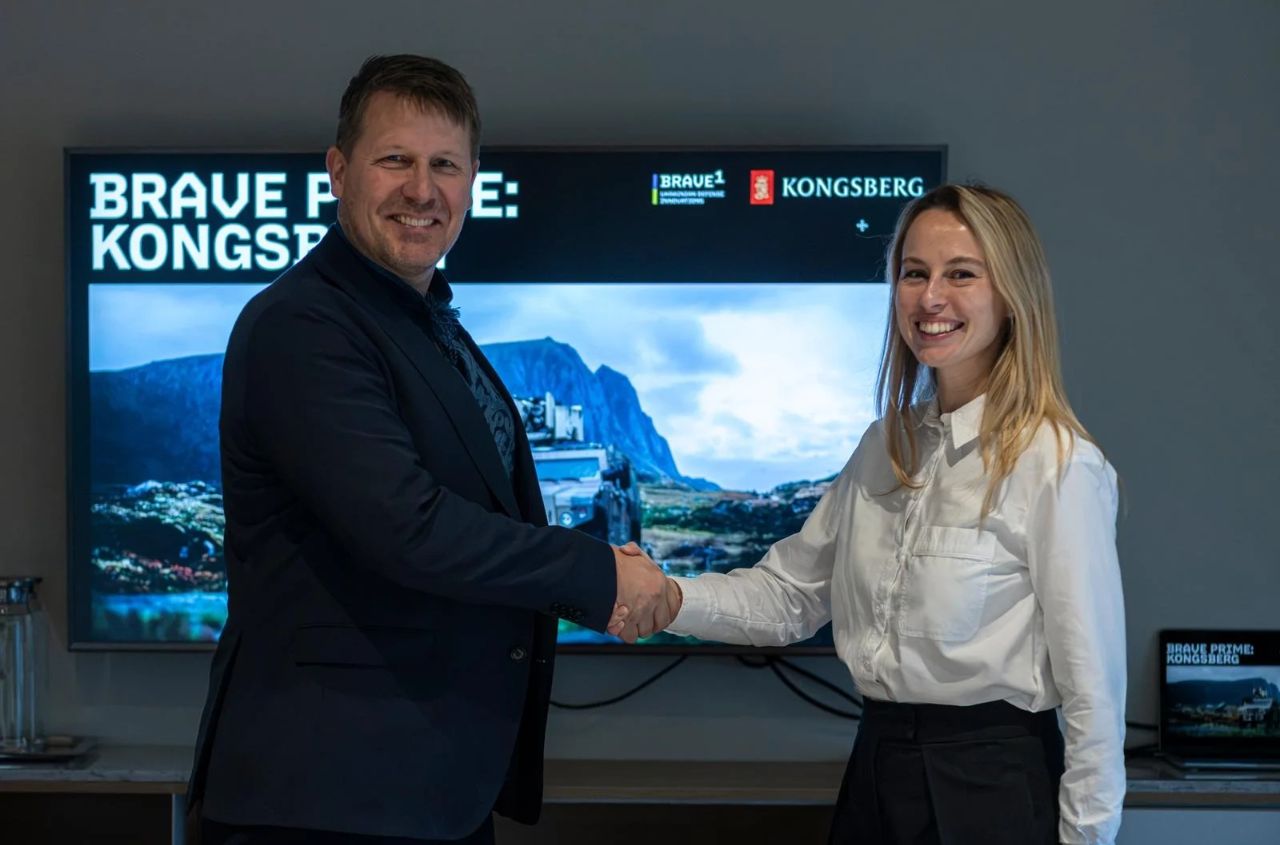
- Memorandum of Understanding on Defence Industry Cooperation of October 15, 2025 – establishes a framework for implementing joint projects in the defence industry, technology, and innovation;
- Agreement on Integrating Ukrainian Instructors into German Armed Forces Training Schools and Centres of February 14, 2026 – provides for Ukrainian specialists to participate in training German military personnel;
- Agreement on Data Cooperation of April 14, 2026 – enables the exchange and joint use of battlefield data and information on the deployment of weapons and military equipment between the two countries.
The Drone Deal initiative is currently under development. Under this initiative, Ukraine would sell its combat-proven drones, technologies, and battlefield expertise to allied countries while establishing joint ventures with them.
Another area of cooperation is the anti-ballistic missile programme launched on June 18, 2026, under the industrial memorandum. The initiative focuses on exchanging data and technologies to develop solutions for protection against ballistic missiles.
What does the Build with Ukraine model offer for joint production?
Germany is a leader in establishing joint defence production facilities with Ukrainian companies. Under the Build with Ukraine model, five projects worth a combined €1.1 billion have been launched. All five implementation agreements provide for the production of unmanned aerial vehicles (UAVs) and unmanned ground vehicles (UGVs) by joint ventures based in Germany, funded by the German government:
- December 17, 2025 – a project to establish a joint venture and manufacture Linza UAVs;
- April 14, 2026 – a project to produce Anubis and Seth-X UAVs;
- June 18, 2026 – a project to manufacture TerMIT unmanned ground vehicles;
- July 8, 2026 – a project to produce Bars jet-powered UAVs;
- October 21, 2026 – a project to manufacture Rys PRO systems.
This model combines Ukrainian engineering developments with German manufacturing capacity and government funding.
Industrial partnership between Ukraine and Germany
As part of their defence cooperation, Ukraine and Germany are also developing industrial partnerships focused on the joint development, production, and maintenance of weapons and military equipment.
Ukrainian and German companies are cooperating in several key areas:
- Air defence – supplying IRIS-T systems and associated missiles;
- Unmanned ground vehicles – joint development, production, and maintenance of UGVs;
- Unmanned systems – engineering partnerships and joint projects;
- Artillery and air defence systems – cooperation on 25 mm and 40 mm air defence systems and 155 mm artillery systems;
- Long-range strike systems – cooperation on serial production and the supply of such systems to Ukraine.
Overall, these partnerships encompass both the procurement of finished products and the integration of engineering expertise, technologies, and manufacturing capabilities from Ukrainian and German companies.
This creates a foundation for long-term defence-industrial cooperation between the two countries.
Which capability coalitions does Germany participate in?
Germany participates in eight capability coalitions, serving as a leader in three and a member in the other five.
In particular, Germany leads efforts within the Integrated Air and Missile Defence Capability Coalition.
Germany’s participation covers the following areas:
- Air and Missile Defence Coalition;
- Electronic Warfare Coalition;
- Drone Coalition;
- Armoured Vehicles Coalition;
- Artillery Coalition;
- Demining Coalition;
- Maritime Capabilities Coalition;
- Information Technology Coalition.
Germany’s extensive involvement in these coalitions helps coordinate procurement, equipment maintenance, and the development of technological capabilities for Ukraine’s Defence Forces alongside other partner countries.
What areas of German-Ukrainian cooperation are expected in 2027?
Germany’s 2027 budget includes €11.6 billion in military assistance for Ukraine. Among the most promising areas of cooperation are:
- Drone production;
- Air defence;
- The Freyja anti-ballistic missile initiative.
The two countries are also working to expand joint production.
Planned areas of cooperation include:
- Manufacturing Leopard tanks, Marder infantry fighting vehicles, Gepard self-propelled anti-aircraft guns, PzH 2000 self-propelled howitzers, Biber armoured bridge-laying vehicles, and Bergepanzer armoured recovery vehicles in Ukraine;
- Joint production of unmanned aerial systems and unmanned ground vehicles in Germany under Ukrainian licences;
- Joint development and production in the fields of air defence and missile systems;
- Supplying German components and chassis for Ukrainian-made equipment;
- Modernising Ukrainian enterprises with German industrial equipment.